
Basic knowledge of surface treatment: What is nickel plating?
author: DJ-02
2024-09-27
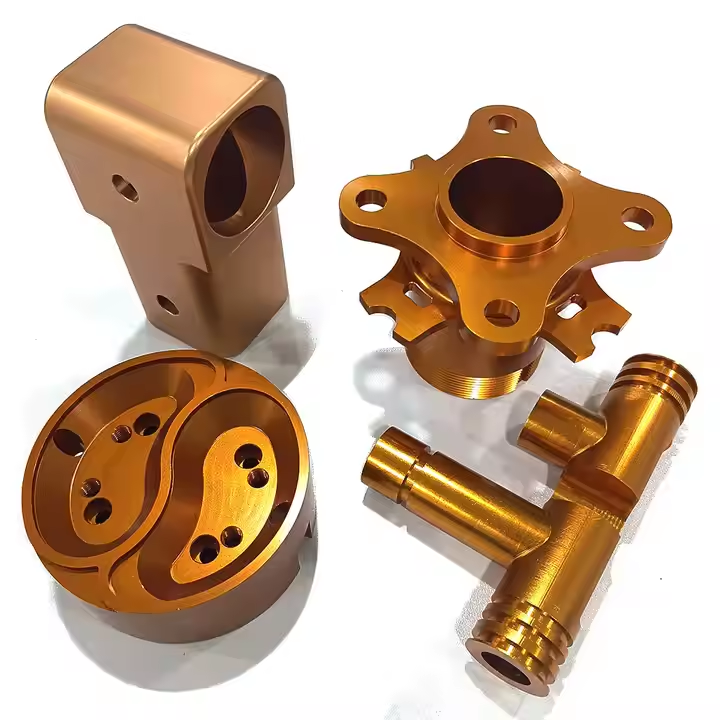
Chemical nickel plating is a method of reducing nickel ions to nickel with the help of a reducing agent and precipitating it on the surface of parts. This process does not require external current and is often used in various fields such as automobiles, electronic products, and industrial processing.
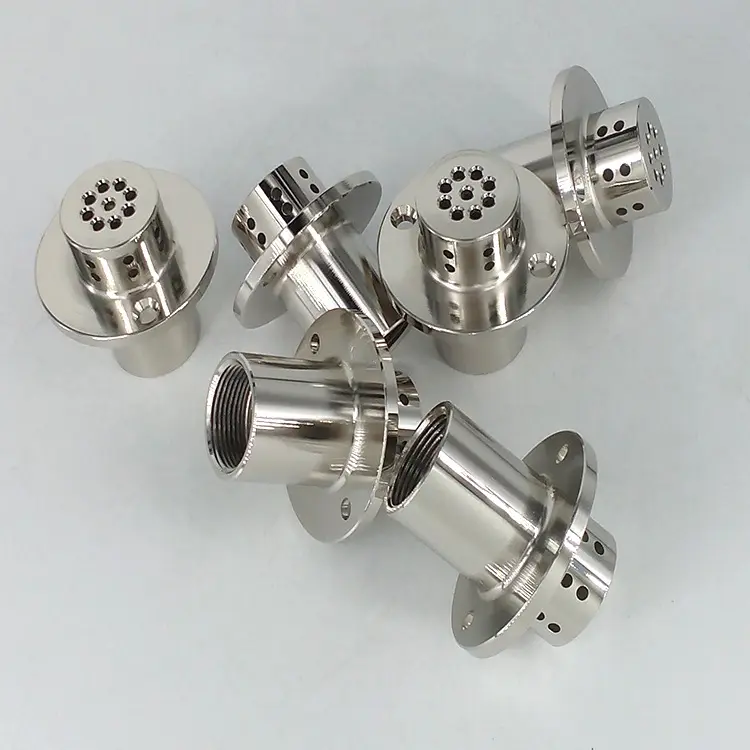
Process of chemical nickel plating
1) Cleaning
The surface to be plated must be thoroughly cleaned to remove any dirt, oil or other contaminants that may affect the adhesion of the chemical nickel layer. Use different chemicals to clean the surface to remove grease, fingerprints, cooling oil and other materials left over from the processing process.
2) Catalysis
The surface of the part is catalyzed by immersion in an acid solution. The purpose of this is to remove the oxide layer, which plays an important role in whether the chemical nickel layer can adhere reliably.
3) Pretreatment
Depending on the substrate material, pretreatment may be required to improve the adhesion and corrosion resistance of the nickel layer. The pretreatment process involves applying zincate or palladium catalysts to the surface of the part to be nickel-plated.
4) Chemical nickel plating
In this step, the part to be nickel-plated is immersed in a solution containing nickel ions, a reducing agent, and other solutions required for chemical nickel plating. Through the reduction action of the reducing agent, the nickel ions are converted into nickel and deposited on the surface of the part.
5) Post-treatment
After electroless nickel plating, some parts may be rinsed, dried, and post-treated to improve adhesion, corrosion resistance, and other properties, depending on industry requirements.
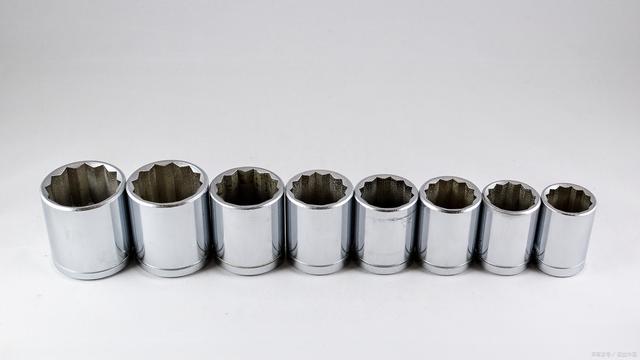
Characteristics of chemical nickel plating
1) Improved corrosion resistance
Since the nickel layer forms a protective layer on the surface of the parts, it helps prevent moisture and other corrosive substances from corroding the parts, protecting the parts from rust or other corrosion.
2) Improved wear resistance of parts
Chemical nickel plating also has excellent wear resistance, which helps to extend the service life of high-wear parts.
3) Uniform nickel layer and consistent thickness
Chemical nickel plating can accurately control the thickness and uniformity of the nickel layer, helping to ensure that the coating provides the best protection and performance.
What is parts surface treatment
Plating and Electroplating Powder Coating
Related Article

This article analyzes the prospects of the custom parts industry from three aspects: market demand, technological innovation, and challenges and opportunities, with specific cases to illustrate its development trends.
Analysis of the Prospects of the Custom Parts Industry
This article details CNC precision technology, covering its definition, applications in aerospace and electronics, advantages like high precision and automation, and its promising future in the manufacturing industry.
CNC Precision Technology: The Core Code of Modern Manufacturing and Its Infinite Potential
This part focuses on the shipbuilding industry, presenting a case of CNC technology application in the processing of large - scale ship propellers. It showcases how CNC technology addresses challenges in this field, improving processing efficiency and product quality, thus highlighting its significance in ship manufacturing.
CNC Technology Application Cases (Part 2)
This article focuses on the medical device manufacturing and 3C product manufacturing fields. Through specific cases, it elaborates on the remarkable achievements of CNC technology in manufacturing complex and precise components and improving product quality, demonstrating its crucial role in related industries.
CNC Technology Application Cases (Part 1)