
CNC Precision Technology: The Core Code of Modern Manufacturing and Its Infinite Potential
author: DJ-03
2025-02-11
CNC Precision Technology: The Core Code of Modern Manufacturing and Its Infinite Potential
Abstract
This article details CNC precision technology, covering its definition, applications in aerospace and electronics, advantages like high precision and automation, and its promising future in the manufacturing industry.

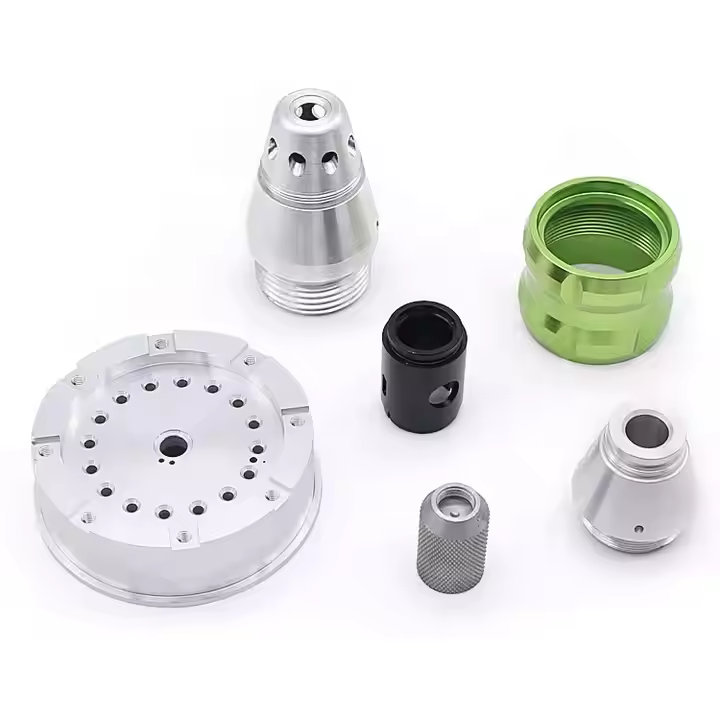
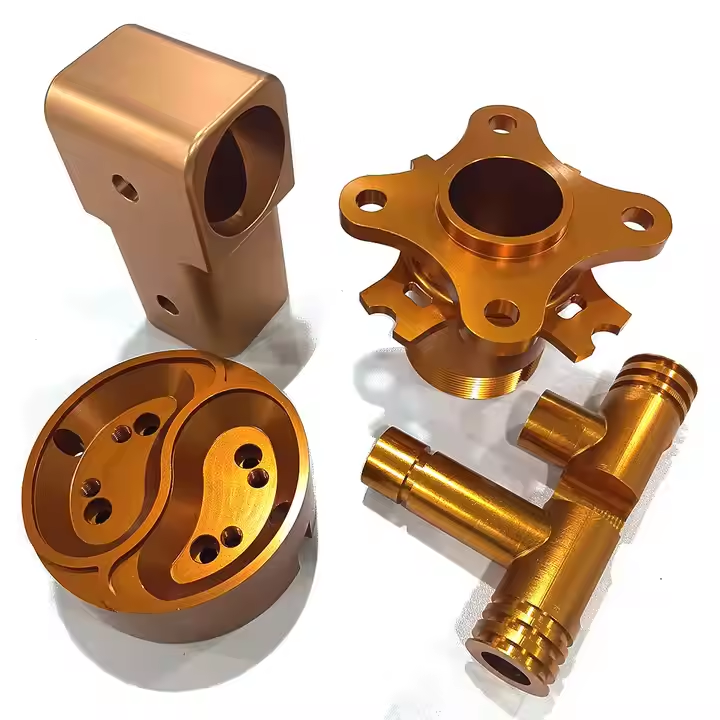
- Definition CNC precision technology, short for Computer Numerical Control precision machining technology, is a crucial part of modern manufacturing. It uses computer - generated programs to precisely control the movement and processing of machine tools, enabling high - precision machining of a wide range of materials.
- Applications
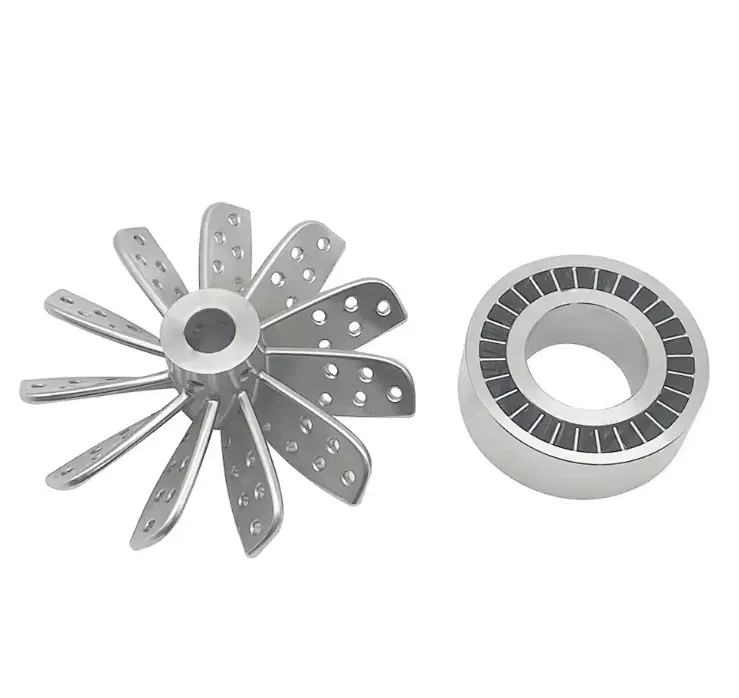
- Aerospace: In the aerospace industry, the manufacture of aircraft engine blades heavily relies on CNC precision technology. These blades have complex shapes and extremely high - precision requirements. Only CNC technology can ensure they meet strict design standards, thus guaranteeing the efficient and stable operation of engines.
- Electronics: In the manufacturing of electronic devices, precision components like chip pins and internal frames of mobile phones and computers are processed by CNC. This meets the demands for miniaturization and high - performance in the electronics field.
- Advantages
- High Precision: The processing accuracy of CNC technology can reach the micron level, which is far beyond that of traditional processing methods.
- Automation: The processing process is highly automated. It can work continuously and stably, greatly improving production efficiency while reducing errors caused by human factors.
- Flexibility: By writing different programs, it can flexibly process parts with various complex shapes, showing strong adaptability.
- Future Prospects With the continuous progress of technology, CNC precision technology is also constantly innovating and developing. In the future, it will play an even more important role in more fields, promoting the manufacturing industry to a higher level.

Analysis of the Prospects of the Custom Parts Industry
CNC Technology Application Cases (Part 2)
Related Article

This article analyzes the prospects of the custom parts industry from three aspects: market demand, technological innovation, and challenges and opportunities, with specific cases to illustrate its development trends.
Analysis of the Prospects of the Custom Parts Industry
This part focuses on the shipbuilding industry, presenting a case of CNC technology application in the processing of large - scale ship propellers. It showcases how CNC technology addresses challenges in this field, improving processing efficiency and product quality, thus highlighting its significance in ship manufacturing.
CNC Technology Application Cases (Part 2)
This article focuses on the medical device manufacturing and 3C product manufacturing fields. Through specific cases, it elaborates on the remarkable achievements of CNC technology in manufacturing complex and precise components and improving product quality, demonstrating its crucial role in related industries.
CNC Technology Application Cases (Part 1)
This article delves into the challenges faced by CNC technology during its development, such as technological bottlenecks, talent shortages, and cost pressures. Correspondingly, it proposes countermeasures including technological innovation, talent cultivation, and cost control to facilitate the continuous development of CNC technology.
Challenges and Countermeasures of CNC Technology