
Application of CNC in the prototype industry
author: DJ-04
2024-12-17
Application of CNC in the prototype industry
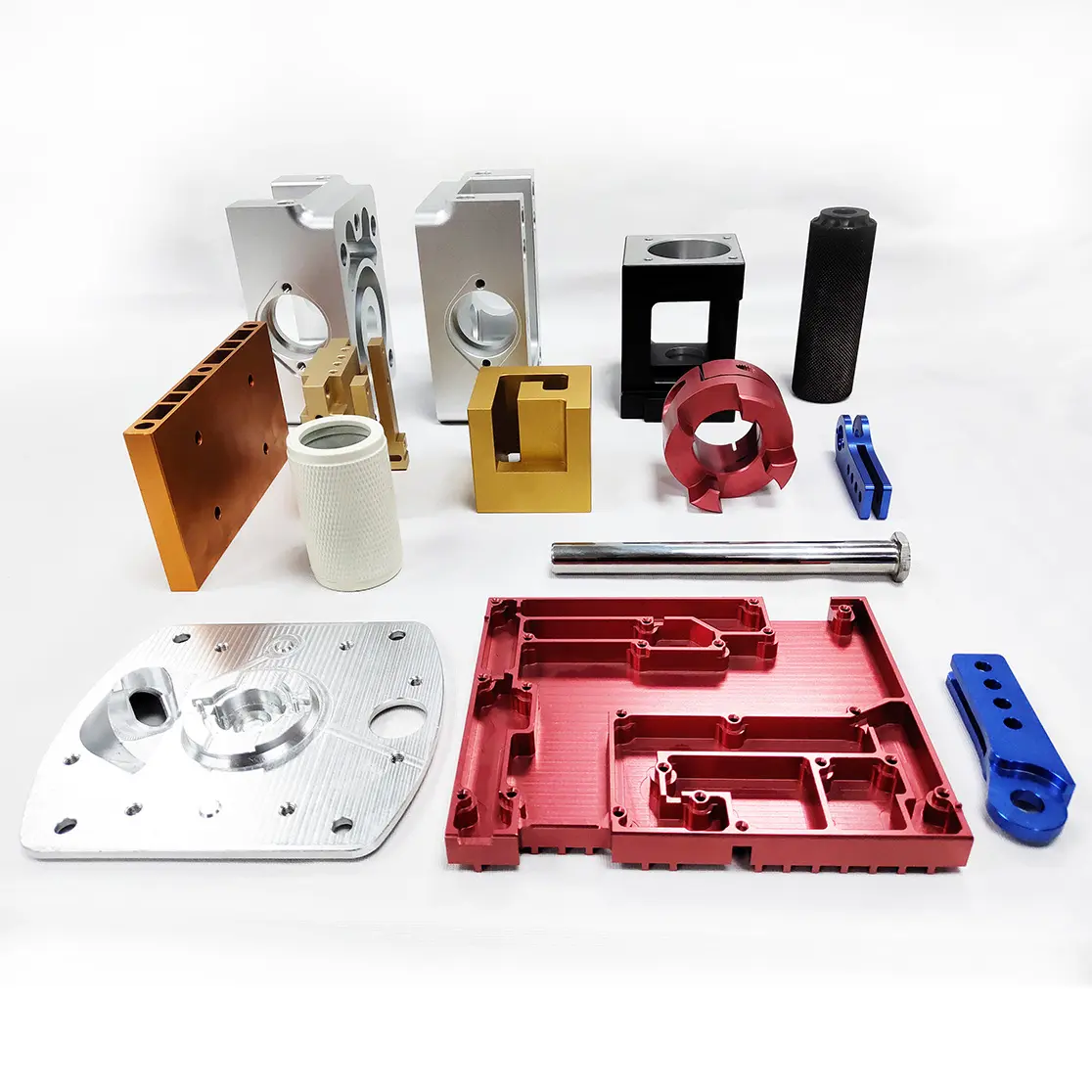
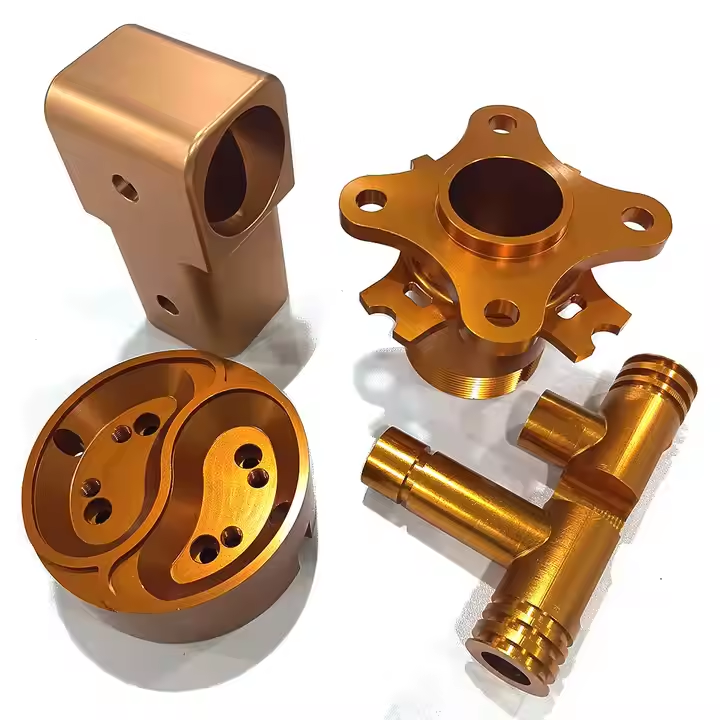
CNC machining is widely used for prototyping due to its accuracy, speed, and ability to produce complex parts with high precision. Here are some ways in which CNC is commonly used in the prototyping process:
Design and Programming:
CAD Design: Prototypes are typically designed using Computer Aided Design (CAD) software, where engineers create detailed 3D models of the part.
CAM Programming: Once the design is finalized, the CAD model is converted into toolpaths using Computer Aided Manufacturing (CAM) software. These toolpaths determine the movements of the cutting tools on the CNC machine.
Material Selection:
A variety of materials can be used for prototyping, including plastics, metals, and composites. The choice of material depends on factors such as the part's function, appearance, and required properties.
CNC Machining Process:
Toolpath Simulation: Before machining begins, the CAM software simulates the toolpath to ensure the part is machined correctly and collision-free.
Fixture: The workpiece is securely fixed on the CNC machine using a fixture to prevent it from moving during machining.
Machining operations: CNC machines remove material from the workpiece following a programmed toolpath to create a prototype part layer by layer.
Tool changes: CNC machines can automatically change tools during the machining process, allowing different tools to be used for different operations.
Quality control:
During and after machining, quality control checks are performed to ensure the prototype meets design specifications. Measurements can be made using a coordinate measuring machine (CMM) or other inspection tools.
Iterative process:
CNC machining allows for rapid iteration during the prototyping phase. If changes are needed, the CAD model can be updated and the CNC program can be modified to reflect the changes.
Advantages of CNC in prototyping:
Speed: CNC machining allows for rapid production of prototypes, reducing lead times compared to traditional methods.
Accuracy: CNC machines have high accuracy and repeatability, ensuring each prototype is made to exact specifications.
Complexity: CNC machining can create complex shapes and intricate features that would be difficult or impossible to do by hand.
Overall, CNC machining plays a vital role in the prototyping process by enabling engineers and designers to quickly and accurately bring their ideas to life, test functionality, and iterate on designs before moving to full-scale production.
Precision parts: the micro foundation of modern industry
Role Differences between Metal and Plastic Parts in Precision Machinery from the Perspective of Mechanical Properties
Related Article

This article analyzes the prospects of the custom parts industry from three aspects: market demand, technological innovation, and challenges and opportunities, with specific cases to illustrate its development trends.
Analysis of the Prospects of the Custom Parts Industry
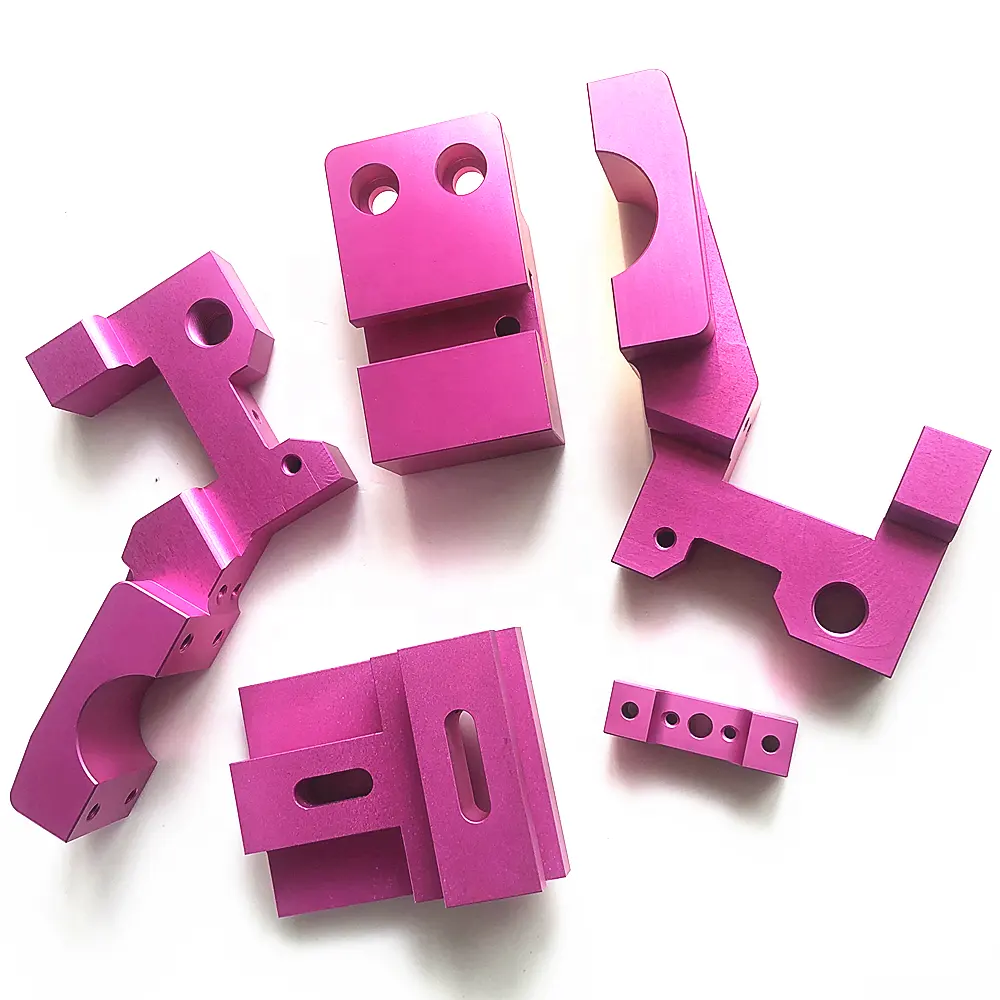
This article details CNC precision technology, covering its definition, applications in aerospace and electronics, advantages like high precision and automation, and its promising future in the manufacturing industry.
CNC Precision Technology: The Core Code of Modern Manufacturing and Its Infinite Potential
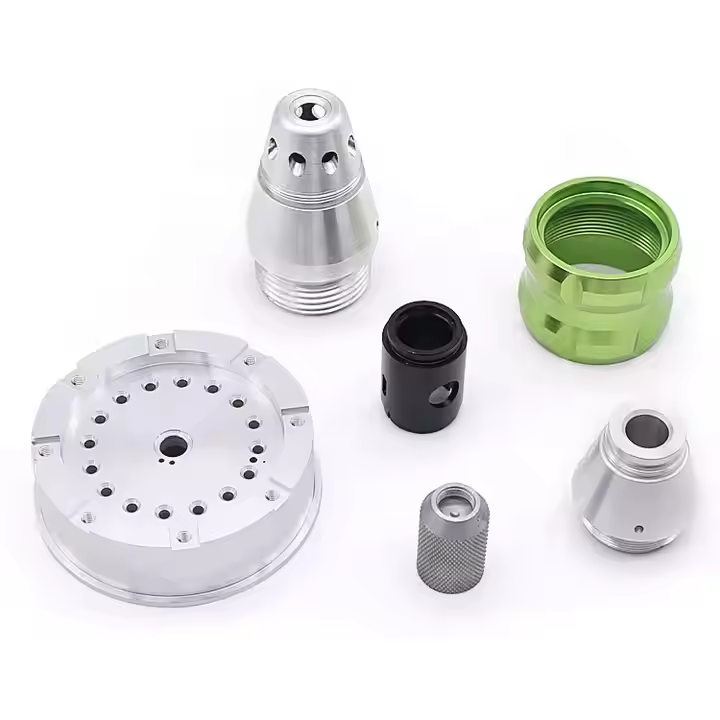
This part focuses on the shipbuilding industry, presenting a case of CNC technology application in the processing of large - scale ship propellers. It showcases how CNC technology addresses challenges in this field, improving processing efficiency and product quality, thus highlighting its significance in ship manufacturing.
CNC Technology Application Cases (Part 2)
This article focuses on the medical device manufacturing and 3C product manufacturing fields. Through specific cases, it elaborates on the remarkable achievements of CNC technology in manufacturing complex and precise components and improving product quality, demonstrating its crucial role in related industries.
CNC Technology Application Cases (Part 1)