
Metal surface treatment process - grinding
author: DJ-03
2024-09-24
Metal surface treatment process - grinding
Grinding is an important process in metal surface treatment, aimed at removing defects such as burrs, oxide scales, scratches, etc. on the metal surface through physical means, improving the surface smoothness and flatness, and thus improving the appearance and performance of the metal. The following is a detailed introduction to grinding in metal surface treatment processes:
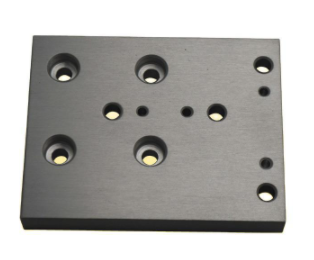
1、 Purpose of grinding
- Remove surface defects such as burrs, oxide scales, scratches, etc., to make the metal surface smoother.
- Improving surface smoothness: By grinding, the roughness of the metal surface can be reduced, and the smoothness and flatness of the surface can be improved.
- Enhance coating adhesion: The grinded metal surface is easier for the coating to adhere, improving the adhesion and durability of the coating.
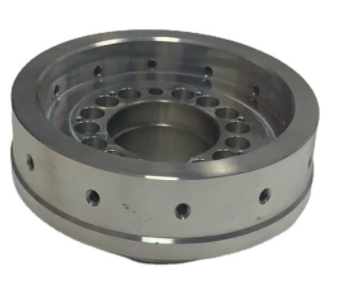
2、 Method of grinding
- Hand grinding: suitable for small or complex shaped metal surfaces. Hand grinding requires selecting suitable sandpaper or grinding wheel and grinding along the texture direction of the metal surface to avoid scratching the surface.
- Mechanical grinding: suitable for large-area or high-efficiency grinding operations. Mechanical grinding usually uses electric grinding machines, grinding wheel machines, and other equipment to grind metal surfaces through rotating grinding wheels or sand belts.
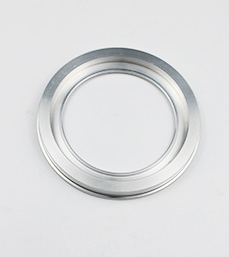
3、 The steps of grinding
- Rough grinding: Use coarse sandpaper or grinding wheel to remove large particle impurities and obvious defects on the metal surface.
- Medium grit grinding: Use medium grit sandpaper or grinding wheel to further refine the metal surface and remove the marks left by rough grinding.
- Fine grinding: Use fine sandpaper or grinding wheel for final grinding to achieve the desired smoothness and flatness on the metal surface.
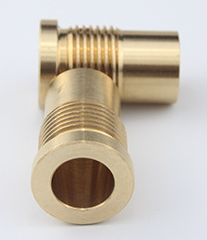
4、 Precautions for grinding
- Choose the appropriate polishing tool: Select the appropriate polishing tool and sandpaper or grinding wheel according to the type, shape, and surface requirements of the metal.
- Control the granding force: Avoid excessive granding that may cause deformation or damage to the metal surface.
- Pay attention to the granding direction: try to polish along the texture direction of the metal surface as much as possible to obtain a better surface effect.
- Timely cleaning of dust generated during granding: A large amount of dust will be generated during the polishing process, and it should be cleaned in a timely manner to avoid harm to the environment and human health.
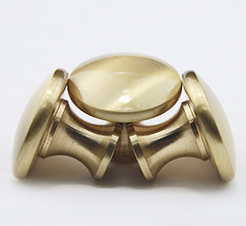
5、 Application areas of grinding
-
grinding technology is widely used in fields such as metal processing, mechanical manufacturing, automotive manufacturing, aerospace, etc. By granding, the surface quality of metal parts can be improved to meet different usage requirements.
In summary, grinding is an important process in metal surface treatment, which improves the appearance and performance of metals by removing defects, improving surface smoothness and flatness, and enhancing coating adhesion. In practical applications, it is necessary to select appropriate grinding methods and steps based on the type, shape, and surface requirements of the metal, and pay attention to controlling details such as grinding force and direction.
Common surface treatments for CNC metal processing
Overview of Metal Aftertreatment Process - Polishing Process
Related Article

This article analyzes the prospects of the custom parts industry from three aspects: market demand, technological innovation, and challenges and opportunities, with specific cases to illustrate its development trends.
Analysis of the Prospects of the Custom Parts Industry
This article details CNC precision technology, covering its definition, applications in aerospace and electronics, advantages like high precision and automation, and its promising future in the manufacturing industry.
CNC Precision Technology: The Core Code of Modern Manufacturing and Its Infinite Potential
This part focuses on the shipbuilding industry, presenting a case of CNC technology application in the processing of large - scale ship propellers. It showcases how CNC technology addresses challenges in this field, improving processing efficiency and product quality, thus highlighting its significance in ship manufacturing.
CNC Technology Application Cases (Part 2)
This article focuses on the medical device manufacturing and 3C product manufacturing fields. Through specific cases, it elaborates on the remarkable achievements of CNC technology in manufacturing complex and precise components and improving product quality, demonstrating its crucial role in related industries.
CNC Technology Application Cases (Part 1)