
Principle of Ultrasonic Wire Drawing
author: DJ-02
2025-01-23

Ultrasonic wire drawing is a process that uses ultrasonic vibration technology to treat the metal surface. Its principle and process are relatively complex, mainly including the following aspects:
Principle
Ultrasonic vibration:
Ultrasonic waves refer to sound waves with a frequency higher than 20 kHz. During ultrasonic wire drawing, the ultrasonic generator generates high-frequency sound waves, which are converted into mechanical vibrations through the transducer.
These mechanical vibrations are transmitted to special tools or grinders, causing them to vibrate at high speed.
Friction and grinding:
When the ultrasonic vibrating tool contacts the metal surface, it will produce tiny friction and grinding effects.
The friction and grinding forces remove tiny particles on the metal surface, forming fine textures and wire drawing effects.
Liquid medium:
In many ultrasonic wire drawing applications, liquids (such as water or some kind of detergent) are usually used as the medium. This can help reduce heat generation and improve the grinding effect.
The flow of liquid also helps to carry away metal chips and impurities generated during the grinding process, keeping the processed surface clean.
Process
Equipment preparation:
Prepare ultrasonic generators, transducers, and special wire drawing tools. These devices need to be adjusted according to the material to be processed and the desired effect.
Workpiece fixation:
The metal workpiece to be processed is fixed on the workbench to ensure that it does not move during the processing.
Tool contact:
The vibrating tool is gently touched to the metal surface to start ultrasonic vibration.
Adjustment parameters:
According to the properties of the material and the desired wire drawing effect, adjust the parameters such as ultrasonic frequency, amplitude and processing time.
Processing completion:
After a certain period of treatment, a uniform wire drawing texture will be formed on the metal surface. The workpiece can be rinsed with clean water to remove the residual grinding particles on the surface.
Advantages
Fine control: Ultrasonic wire drawing can achieve very fine textures and is suitable for products with high precision requirements.
Low thermal impact: Due to the use of ultrasonic vibration, less heat is generated, avoiding thermal deformation and thermal damage.
Wide range of applications: It can be used for a variety of metal materials, especially for parts that are easy to deform or require fine surface treatment.
Summary
Ultrasonic wire drawing is an efficient and precise metal surface treatment technology that combines the vibration characteristics of ultrasound and grinding action to form a beautiful wire drawing effect without damaging the substrate. This process has been widely used in high-end machinery, medical devices, electronic products and other fields.
Chromium plating
What are the different types of wire drawing processes?
Related Article

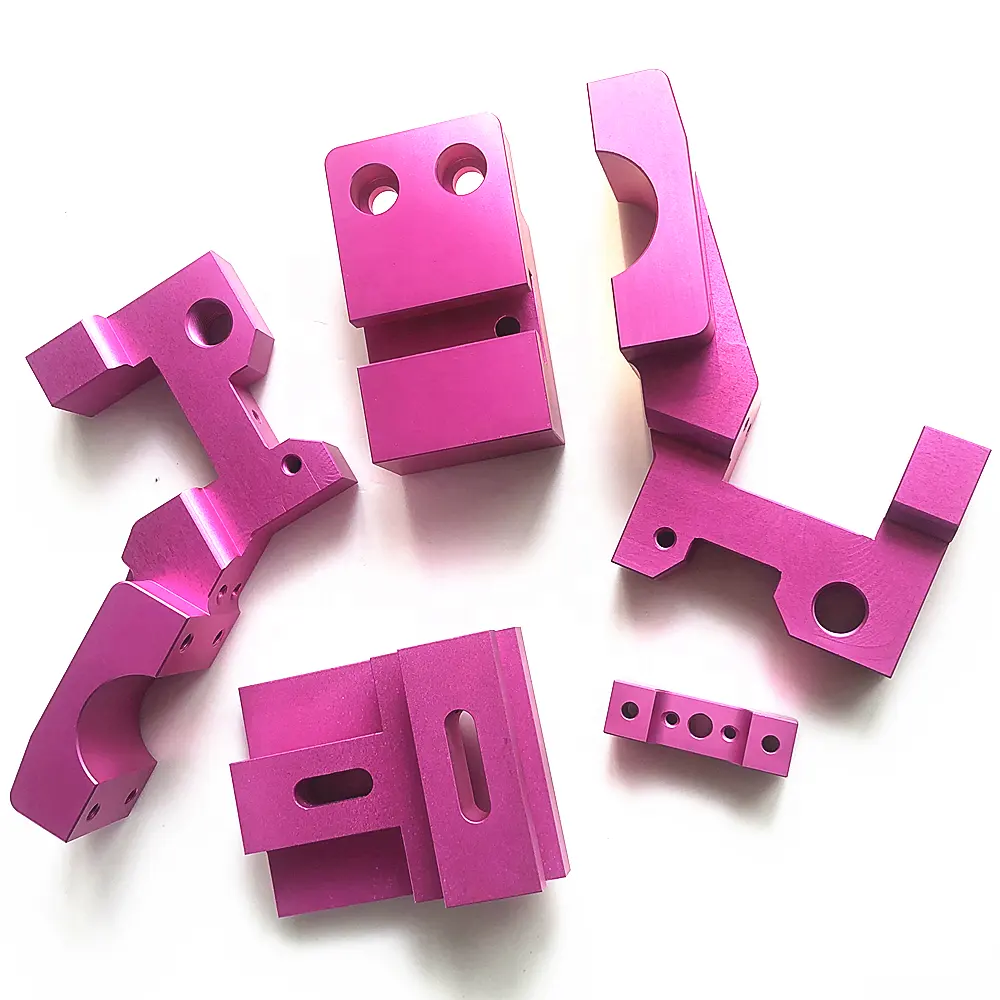
This article analyzes the prospects of the custom parts industry from three aspects: market demand, technological innovation, and challenges and opportunities, with specific cases to illustrate its development trends.
Analysis of the Prospects of the Custom Parts Industry
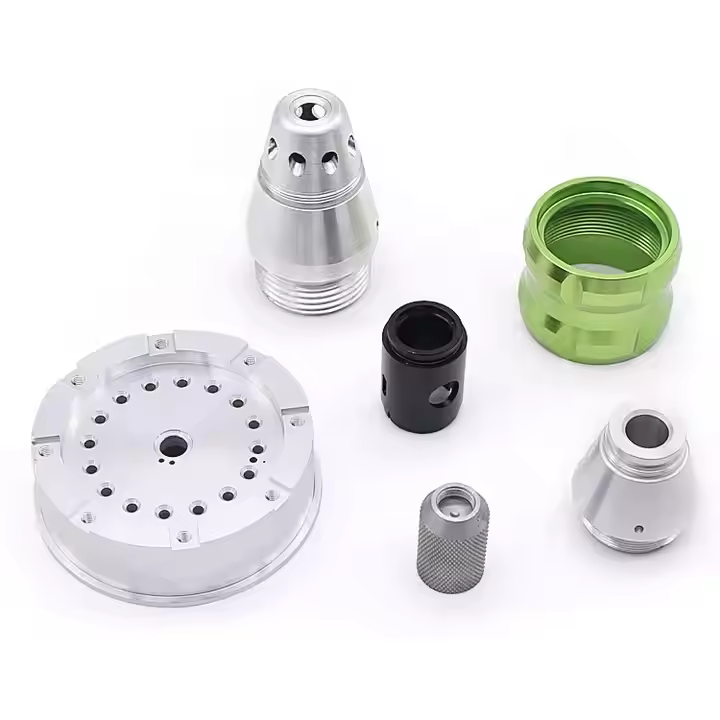
This article details CNC precision technology, covering its definition, applications in aerospace and electronics, advantages like high precision and automation, and its promising future in the manufacturing industry.
CNC Precision Technology: The Core Code of Modern Manufacturing and Its Infinite Potential
This part focuses on the shipbuilding industry, presenting a case of CNC technology application in the processing of large - scale ship propellers. It showcases how CNC technology addresses challenges in this field, improving processing efficiency and product quality, thus highlighting its significance in ship manufacturing.
CNC Technology Application Cases (Part 2)
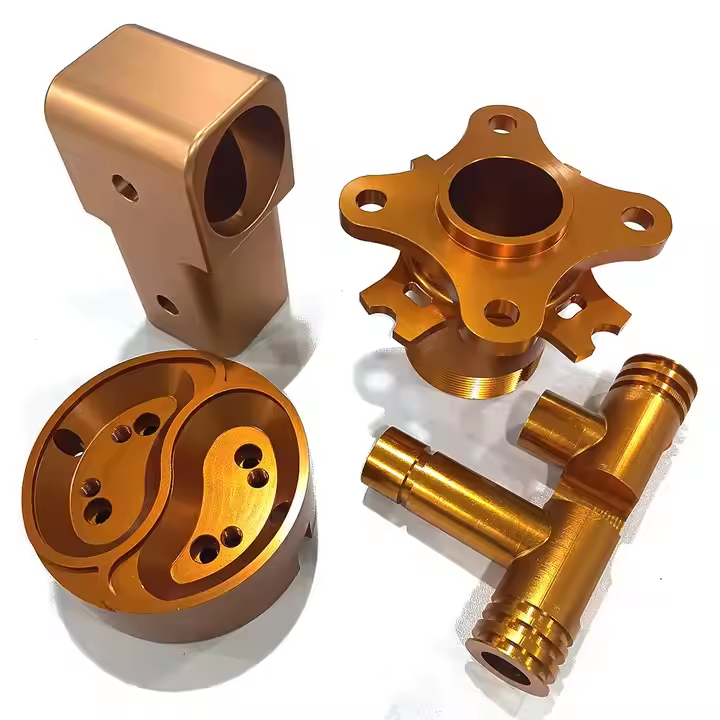
This article focuses on the medical device manufacturing and 3C product manufacturing fields. Through specific cases, it elaborates on the remarkable achievements of CNC technology in manufacturing complex and precise components and improving product quality, demonstrating its crucial role in related industries.
CNC Technology Application Cases (Part 1)