
What are the different types of wire drawing processes?
author: DJ-02
2025-01-23
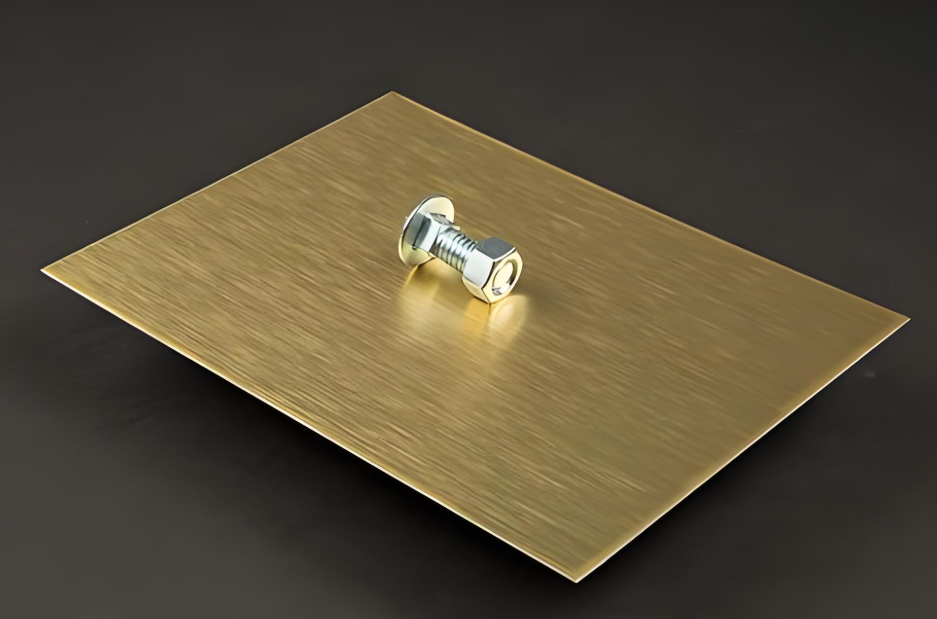
There are many different types of wire drawing processes, each of which differs in surface treatment effects, applicable materials, and application scenarios. Here are some common types of wire drawing processes:
1. Hand Brushed
Features: Hand-brushed by workers using sandpaper, abrasives and other tools for processing, usually used for small batches or customized products.
Advantages: The texture direction and depth can be flexibly adjusted according to needs, suitable for objects with complex shapes.
Applications: Commonly used in high-end home appliances, artworks, and custom furniture.
2. Machine Brushed
Features: Use a dedicated wire drawing machine to treat the metal surface, usually used for mass production.
Advantages: High production efficiency, good surface treatment consistency, suitable for large-scale manufacturing.
Applications: Widely used in home appliances, automotive parts, and architectural decoration.
3. Chemical Etching
Features: The metal surface is corroded by chemical agents to form a wire drawing effect.
Advantages: Very fine patterns and textures can be achieved, suitable for complex designs.
Application: Commonly used in electronic components, decorations and precision instruments.
4. Ultrasonic Brushing
Features: Use ultrasonic vibration tools to form a brushed effect on the metal surface.
Advantages: Less damage to the metal surface, suitable for the processing of precision parts.
Application: Suitable for medical devices, optical equipment and high-end electronic products.
5. Water Jet Brushing
Features: Use high-pressure water jets to treat the metal surface to form a brushed effect.
Advantages: Can process thicker materials without heat-affected zones.
Application: Commonly used in metal parts in heavy machinery, construction and shipbuilding industries.
6. Abrasive Blasting
Features: Use abrasive jets to form a brushed effect on the metal surface.
Advantages: High efficiency and can process large areas, suitable for large-scale production.
Application: Commonly used in ships, automobile manufacturing and large equipment.
Summary
Different types of wire drawing processes are suitable for different materials and application scenarios. The selection of the appropriate wire drawing process can be determined based on the product design requirements, production scale and cost-effectiveness to ensure the best surface effect and performance.
Principle of Ultrasonic Wire Drawing
Rubber painting
Related Article

This article analyzes the prospects of the custom parts industry from three aspects: market demand, technological innovation, and challenges and opportunities, with specific cases to illustrate its development trends.
Analysis of the Prospects of the Custom Parts Industry
This article details CNC precision technology, covering its definition, applications in aerospace and electronics, advantages like high precision and automation, and its promising future in the manufacturing industry.
CNC Precision Technology: The Core Code of Modern Manufacturing and Its Infinite Potential
This part focuses on the shipbuilding industry, presenting a case of CNC technology application in the processing of large - scale ship propellers. It showcases how CNC technology addresses challenges in this field, improving processing efficiency and product quality, thus highlighting its significance in ship manufacturing.
CNC Technology Application Cases (Part 2)
This article focuses on the medical device manufacturing and 3C product manufacturing fields. Through specific cases, it elaborates on the remarkable achievements of CNC technology in manufacturing complex and precise components and improving product quality, demonstrating its crucial role in related industries.
CNC Technology Application Cases (Part 1)