
Application of Sheet Metal Processing in the Prototype Industry
author: DJ-02
2024-11-08
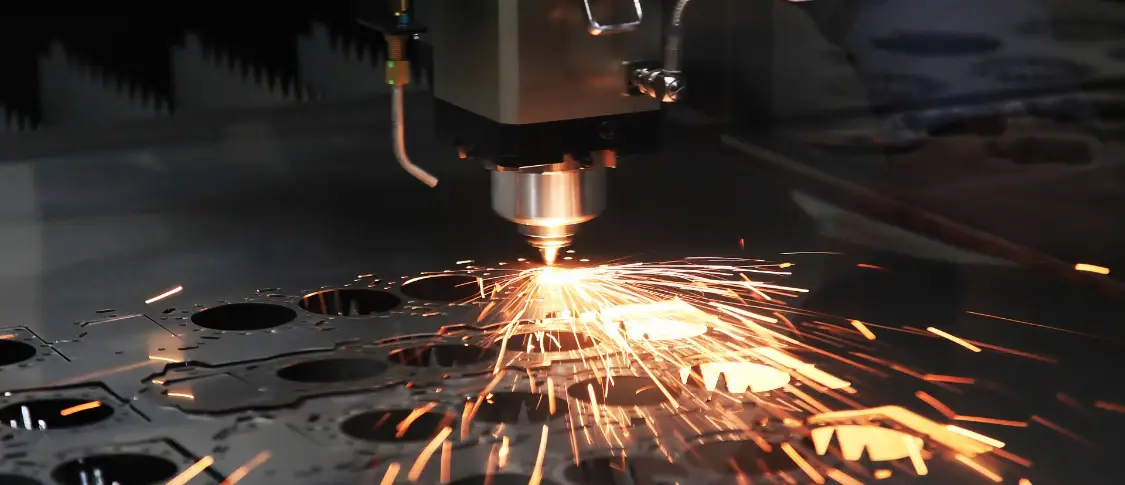
1. Rapid prototyping
Application: Sheet metal processing can quickly produce prototypes of complex shapes, helping designers and engineers to verify and test in the early stages of product development. This rapid prototyping can be used to evaluate the feasibility and functionality of the design.
Advantage: Compared with traditional casting or injection molding methods, sheet metal processing can produce prototypes faster and shorten the product development cycle.
2. Small batch production
Application: In the prototype industry, sheet metal processing is suitable for small batch production needs, such as customized equipment housings, housings or instrument housings. Enterprises can flexibly produce according to the specific needs of customers.
Advantage: The flexibility of sheet metal processing enables enterprises to quickly adjust production plans according to market demand and reduce inventory risks.
3. Precision cutting and forming
Application: Sheet metal processing technologies such as laser cutting and stamping can achieve high-precision cutting and forming, suitable for a variety of complex geometric shapes. This is particularly important in prototype production to ensure the fit and function of components.
Advantages: High-precision processing can reduce assembly errors and improve the overall quality of the product.
4. Material diversity
Application: Sheet metal processing can use a variety of materials, such as stainless steel, aluminum alloy and carbon steel, to meet the needs of different prototypes. Designers can choose the right material to achieve the design goals according to the actual situation.
Advantages: The diversity of materials makes the product have better performance and adaptability to meet the needs of different markets.
5. Surface treatment and assembly
Application: After sheet metal processing, various surface treatments can be performed, such as spraying, anodizing or electroplating, to improve the appearance and durability of the prototype. In addition, sheet metal processing can also be assembled with other components to form a complete product.
Advantages: Complete surface treatment and assembly capabilities make the prototype closer to the final product in appearance and function, which is convenient for customers to evaluate and feedback.
6. Functional testing and verification
Application: The produced prototype can be used for functional testing and verification, such as mechanical strength testing, corrosion resistance testing, etc. These tests help the design team optimize product design.
Advantages: Functional testing in advance can reduce risks in later product development and save costs and time.
7. Customized service
Application: Customers in the prototype industry often have special needs, and sheet metal processing can flexibly meet these customized requirements, such as prototypes of different sizes, shapes or functions.
Advantages: Providing personalized services can enhance customer satisfaction and improve the market competitiveness of enterprises.
Through these applications, sheet metal processing plays an important role in the prototype industry, helping enterprises to quickly respond to market needs and achieve efficient and flexible product development.
Specific applications of CNC technology in medical device manufacturing
Understanding Tapping - A Key Machining Process
Related Article

This article analyzes the prospects of the custom parts industry from three aspects: market demand, technological innovation, and challenges and opportunities, with specific cases to illustrate its development trends.
Analysis of the Prospects of the Custom Parts Industry
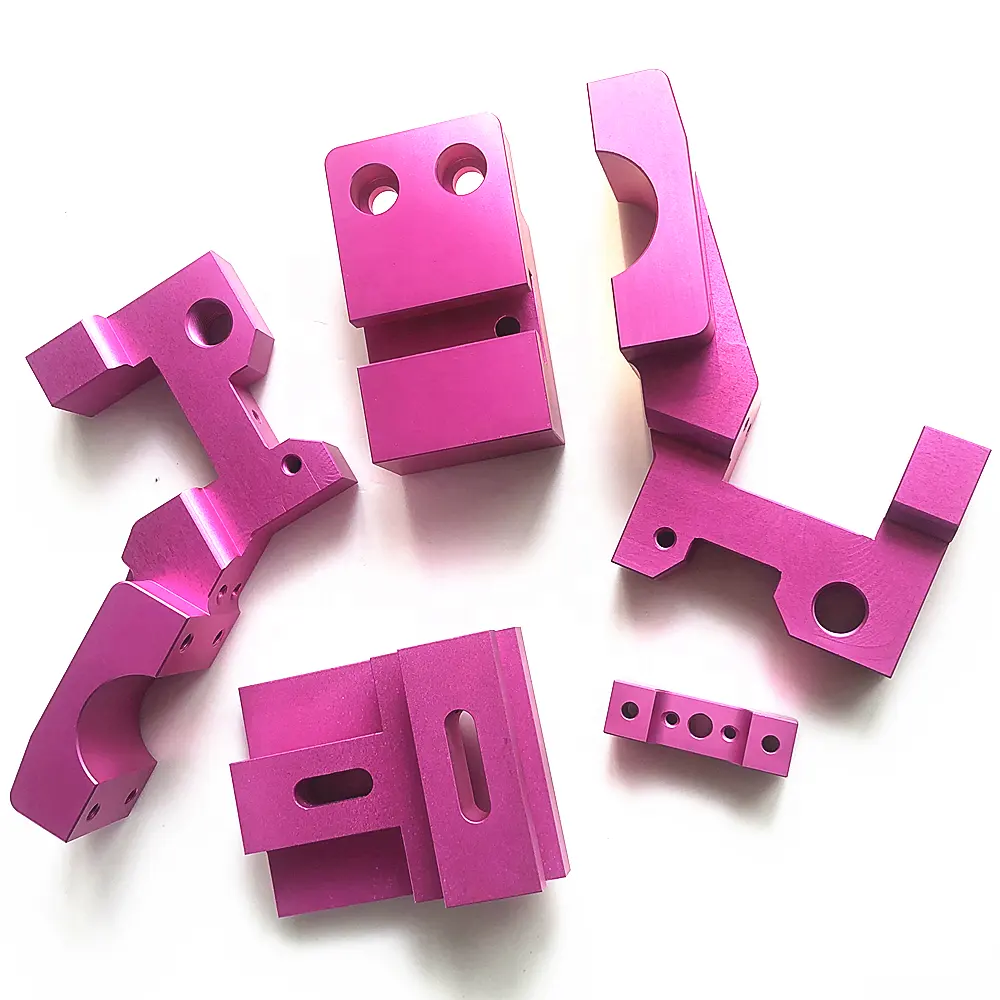
This article details CNC precision technology, covering its definition, applications in aerospace and electronics, advantages like high precision and automation, and its promising future in the manufacturing industry.
CNC Precision Technology: The Core Code of Modern Manufacturing and Its Infinite Potential
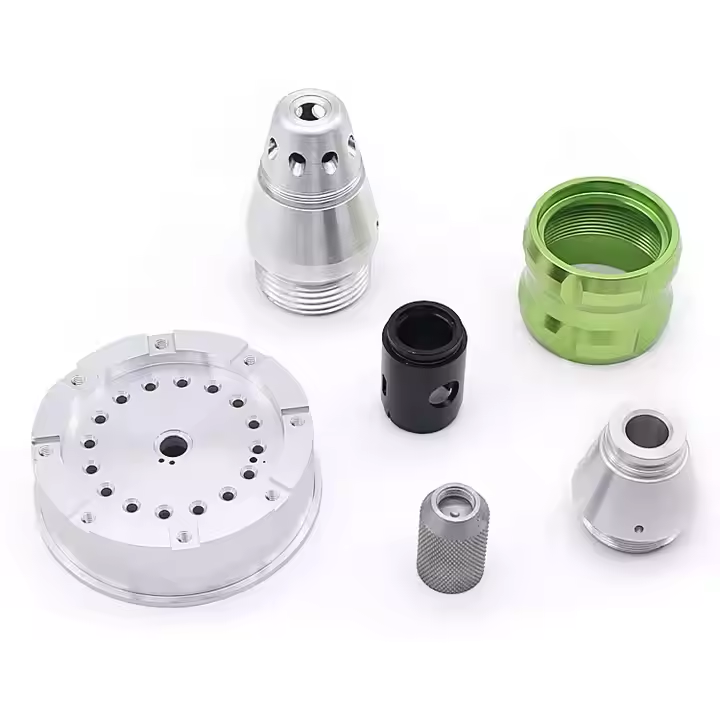
This part focuses on the shipbuilding industry, presenting a case of CNC technology application in the processing of large - scale ship propellers. It showcases how CNC technology addresses challenges in this field, improving processing efficiency and product quality, thus highlighting its significance in ship manufacturing.
CNC Technology Application Cases (Part 2)
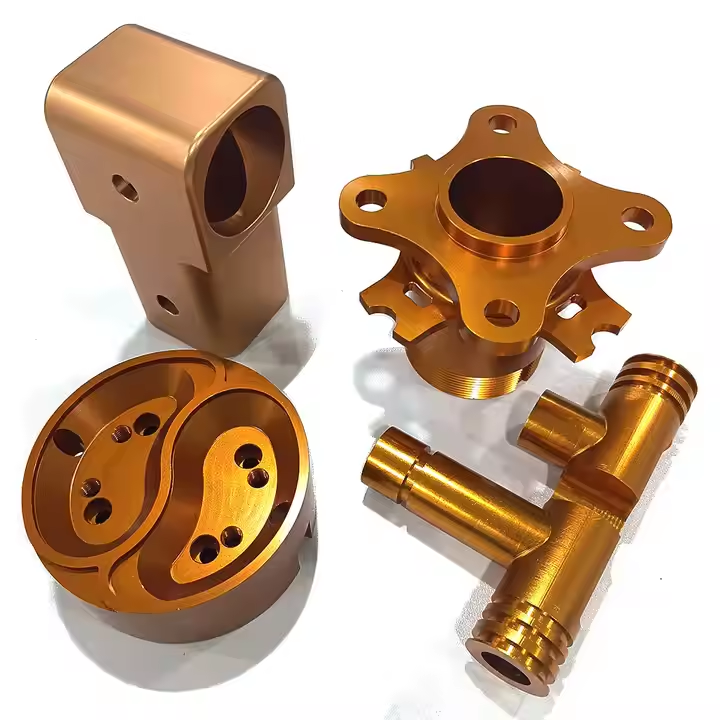
This article focuses on the medical device manufacturing and 3C product manufacturing fields. Through specific cases, it elaborates on the remarkable achievements of CNC technology in manufacturing complex and precise components and improving product quality, demonstrating its crucial role in related industries.
CNC Technology Application Cases (Part 1)