Vacuum Laminating: An Innovative Craft for Material Bonding
author: DJ-03
2024-12-04
Vacuum Laminating: An Innovative Craft for Material Bonding
In the era where technology and aesthetics blend together, vacuum laminating is just like a magical magician, quietly changing the appearance and quality of numerous things around us. Whether it's the exquisite furniture at home, the dazzling decorations in shopping malls, or the eye-catching packaging of products, the vacuum laminating process is exerting its unique charm in them all, endowing materials with new vitality and infinite possibilities.
I. Process Principle
-
Preparation work: Place the substrate that needs to be laminated on a special platform, ensuring its surface is clean, flat and free of impurities. Then cover it with a pre-cut high-molecular film (such as PVC, PET, PP, etc.), and the edge of the film should extend beyond the edge of the substrate.
-
Vacuum bonding: Use a vacuum pump to extract the air inside the laminating equipment to create a vacuum. The air between the film and the substrate is drawn out, creating a low-pressure area, and the external atmospheric pressure makes the film closely adhere to the substrate.
-
Heating reinforcement: Cooperate with a heating device to heat and soften the film. Under the action of temperature and pressure, the distance between the molecules of the film and the substrate is shortened, and the interaction force is strengthened, achieving a firm bond. After maintaining the pressure and cooling, the laminating process is completed.
II. Application Advantages
-
Strong decorative effect: It can provide a rich variety of choices in surface textures, colors and gloss levels, and can simulate the textures of natural wood, stone, metal and so on, making the appearance of products unique and beautiful and increasing their added value.
-
Excellent protective performance: High-molecular films have properties such as wear resistance, corrosion resistance and weather resistance, which can effectively protect the substrate from external environmental factors such as ultraviolet rays, moisture and chemical substances, and extend the service life of products.
-
High production efficiency: The process is relatively simple, easy to standardize and automate. The operating speed of the equipment is fast, and it has good adaptability to the shape and size of the substrate, which is suitable for large-scale production and can reduce costs and improve economic benefits.
-
Environmental protection and sustainability: Most of the high-molecular polymer films used are recyclable. After the products are scrapped, they can be recycled, and compared with traditional processes such as painting and electroplating, it generates less pollutants, conforming to the concept of environmental protection.
III. Application Fields
-
Furniture manufacturing: It can be used for the surface decoration and edge sealing of boards to create furniture in different styles, such as wood-grain style, modern minimalist style, European classical style, etc., making the furniture both beautiful and durable.
-
Interior decoration: It is applied to wall decorative panels, ceilings, door and window frames, etc., creating unique decorative effects such as imitating marble and metal textures, improving the quality of commercial and residential spaces.
-
Packaging industry: It is used for the packaging of high-end products, making the packaging exquisite and having functions such as moisture-proof and anti-wear, protecting the safety of products during transportation and storage, and enhancing the grade and brand image of products.
-
Automotive interior: It is used for laminating the surfaces of instrument panels, center consoles, door interior panels, etc., providing a variety of color and texture options and enhancing the comfort and aesthetics of the interior.
What are the issues worth noting about tapping?
Unveiling the Sandblasting Process: The Versatile Magic of Reshaping Metal Surfaces in Multiple Forms
Related Article
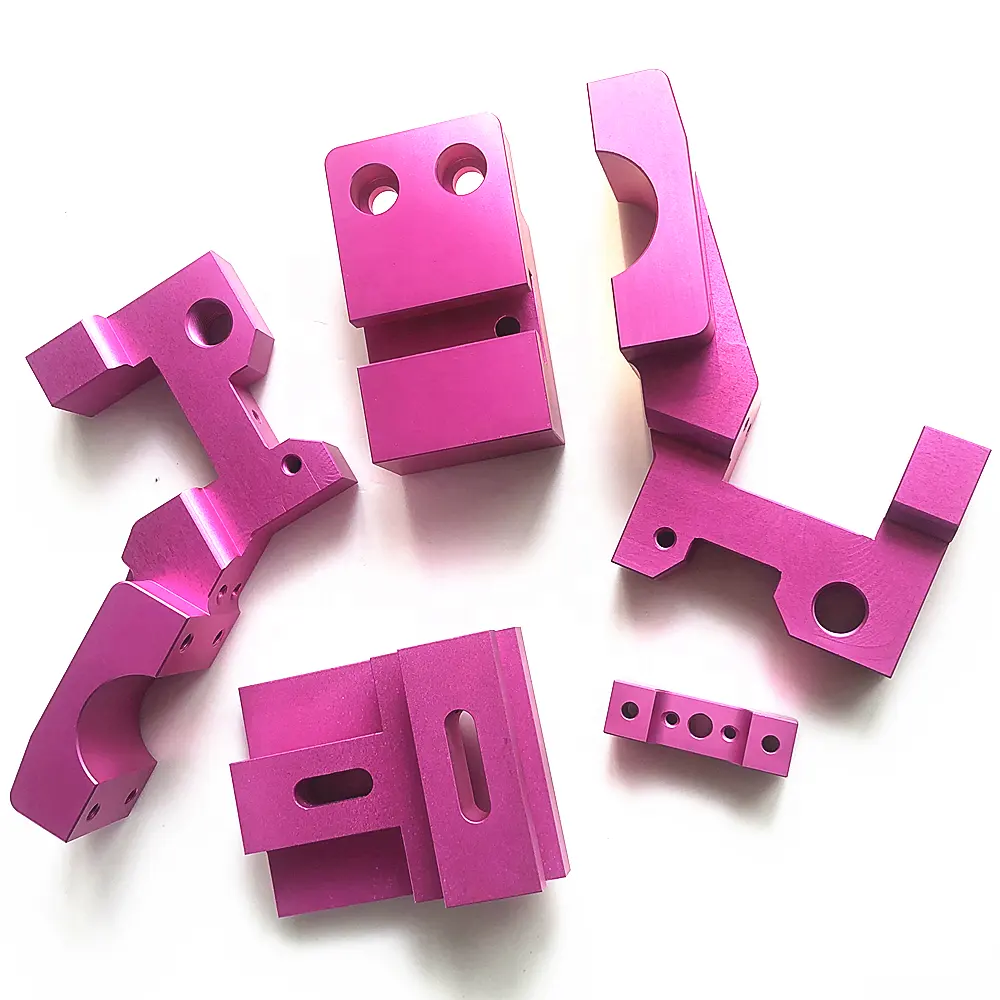
This article analyzes the prospects of the custom parts industry from three aspects: market demand, technological innovation, and challenges and opportunities, with specific cases to illustrate its development trends.
Analysis of the Prospects of the Custom Parts Industry
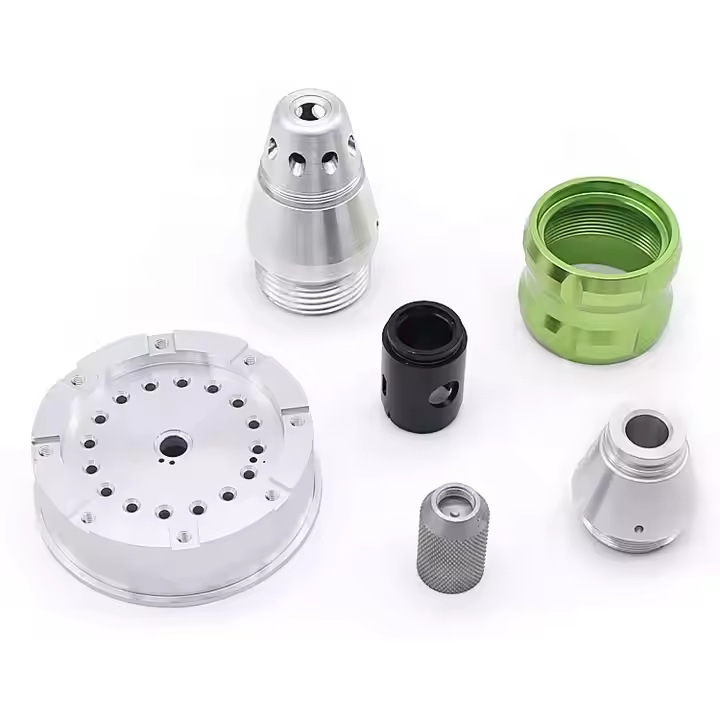
This article details CNC precision technology, covering its definition, applications in aerospace and electronics, advantages like high precision and automation, and its promising future in the manufacturing industry.
CNC Precision Technology: The Core Code of Modern Manufacturing and Its Infinite Potential
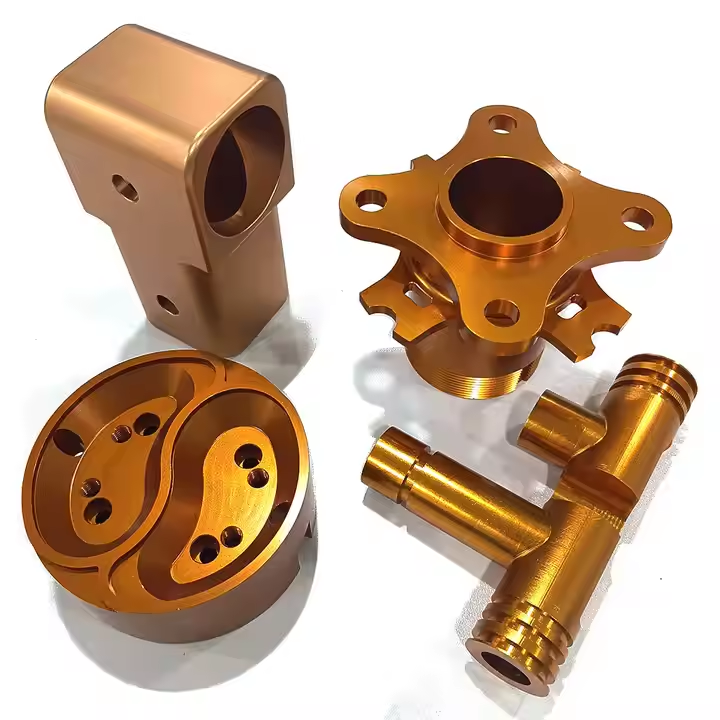
This part focuses on the shipbuilding industry, presenting a case of CNC technology application in the processing of large - scale ship propellers. It showcases how CNC technology addresses challenges in this field, improving processing efficiency and product quality, thus highlighting its significance in ship manufacturing.
CNC Technology Application Cases (Part 2)
This article focuses on the medical device manufacturing and 3C product manufacturing fields. Through specific cases, it elaborates on the remarkable achievements of CNC technology in manufacturing complex and precise components and improving product quality, demonstrating its crucial role in related industries.
CNC Technology Application Cases (Part 1)