
Optimization of Heat Treatment Processes for Metal Parts
author: DJ-03
2024-12-23
Optimization of Heat Treatment Processes for Metal Parts
-
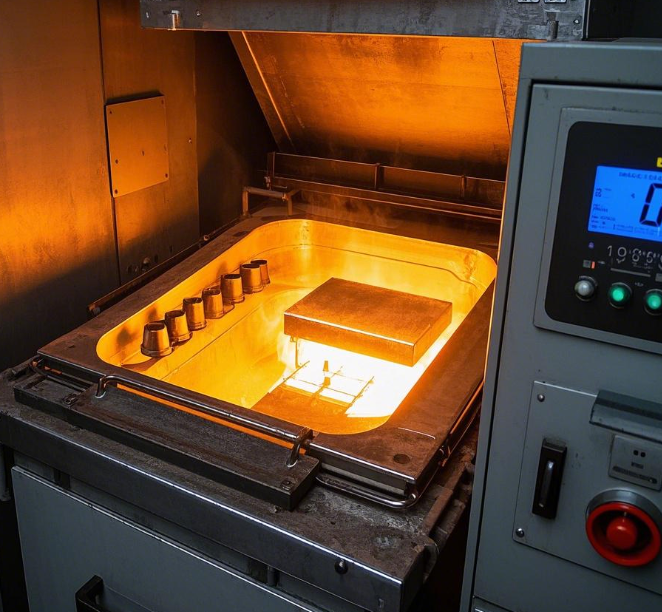
In the manufacturing of metal parts, heat treatment is vital. It can change the microstructure and properties of metals to meet various engineering requirements and is the core for improving quality and competitiveness.
-
-
Basic Principles:
-
Based on the law of microstructure transformation of metals at different temperatures. For instance, iron-carbon alloys have austenitization when heated and form different microstructures during cooling. Process parameters are controlled to regulate part properties.
-
Common Processes and Their Influences:
-
Annealing: Heat, hold, and slowly cool. It eliminates residual stresses, improves uniformity, and reduces hardness for subsequent processing.
-
Normalizing: Heat above the critical temperature, hold, and cool in air. The microstructure is finer, with higher strength and hardness, often used for improving machinability and refining grains.
-
Quenching: Heat, hold, and rapidly cool to form a high-hardness martensite microstructure, increasing strength and hardness but may cause deformation or cracking if not controlled properly.
-
Tempering: Heat the quenched parts below the critical temperature range, hold, and cool. It eliminates internal stresses, reduces brittleness, and adjusts the hardness-toughness balance, divided into low, medium, and high-temperature tempering.
-
Optimization Methods and Strategies:
-
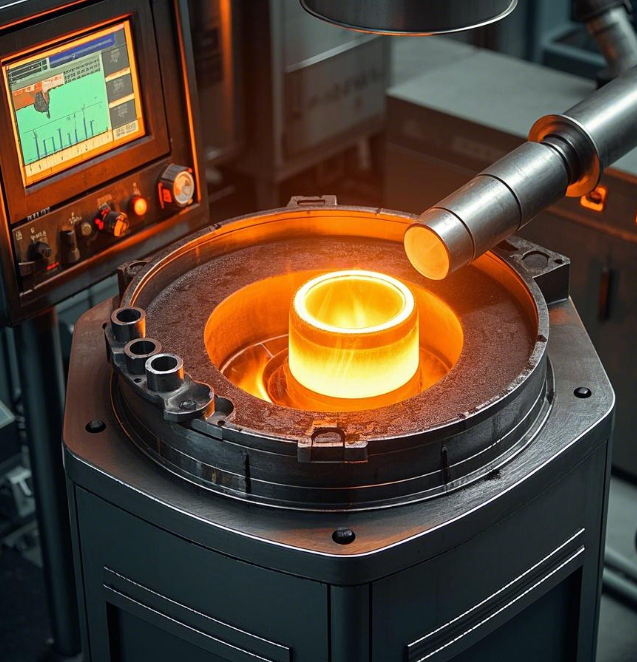
Precise Parameter Control: Use advanced equipment to precisely control temperature, holding time, and cooling rate to reduce the risk of deformation and cracking.
-
Computer Simulation and Optimization: Employ finite element analysis to simulate temperature, stress, and microstructure transformation. Predict performance changes, optimize processes and part designs.
-
Alloying Design: Adopt multi-element alloying and micro-alloying. Add alloy elements to change phase diagrams, refine grains, and improve hardenability.
-
Innovative Processes: Utilize waste heat heat treatment to save energy and improve properties. Combine multiple processes, like carburizing quenching and high-temperature tempering for better performance.

-
Automobile Engine Crankshaft: The original process had issues like large quenching deformation. After computer simulation optimization and micro-alloying design, deformation decreased, the hardened layer became more uniform, and the fatigue life increased by over 30%.
-
Die Steel: The traditional process had problems with tempering stability. Through multi-element alloying and optimized high-temperature quenching and multiple tempering, its high-temperature strength and toughness improved, and the die life was significantly extended.
-
Conclusion:
-
Optimization of heat treatment processes is crucial for improving the performance and durability of metal parts. Multiple optimization means can meet manufacturing needs, and it will remain a key technology in the future to support industrial development.
Application of Ergonomics in Plastic Parts Design: Enhancing User Experience and Product Competitiveness
Several factors can affect the accuracy of CNC drilling:
Related Article

This article analyzes the prospects of the custom parts industry from three aspects: market demand, technological innovation, and challenges and opportunities, with specific cases to illustrate its development trends.
Analysis of the Prospects of the Custom Parts Industry
This article details CNC precision technology, covering its definition, applications in aerospace and electronics, advantages like high precision and automation, and its promising future in the manufacturing industry.
CNC Precision Technology: The Core Code of Modern Manufacturing and Its Infinite Potential
This part focuses on the shipbuilding industry, presenting a case of CNC technology application in the processing of large - scale ship propellers. It showcases how CNC technology addresses challenges in this field, improving processing efficiency and product quality, thus highlighting its significance in ship manufacturing.
CNC Technology Application Cases (Part 2)
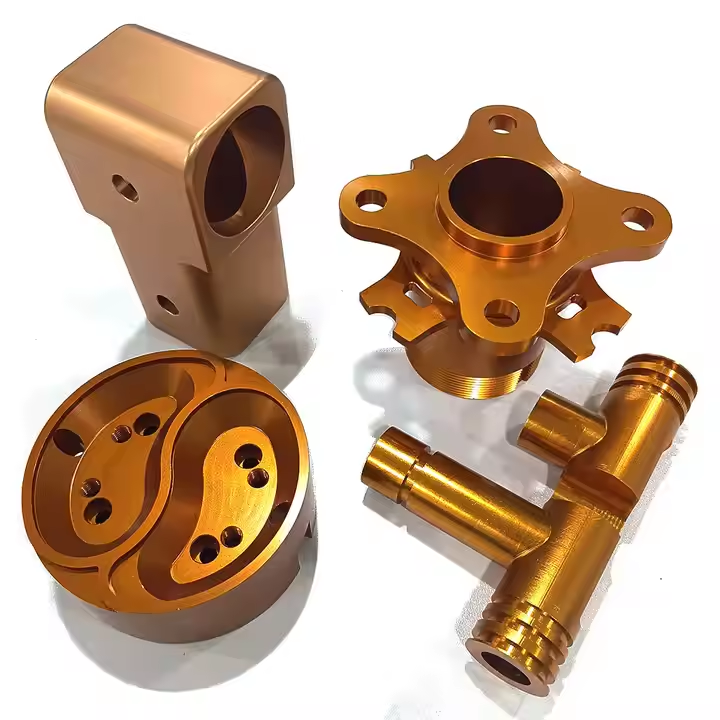
This article focuses on the medical device manufacturing and 3C product manufacturing fields. Through specific cases, it elaborates on the remarkable achievements of CNC technology in manufacturing complex and precise components and improving product quality, demonstrating its crucial role in related industries.
CNC Technology Application Cases (Part 1)