
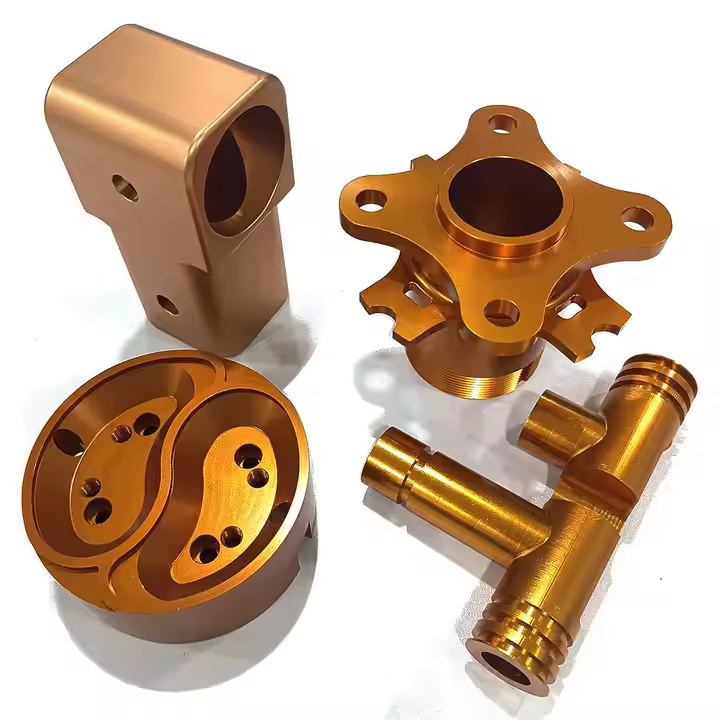
Optimization of Precision Machining Parts Process
author: DJ-03
2024-12-24
Optimization of Precision Machining Parts Process
Abstract: This paper focuses on optimizing the process of precision machining parts. It elaborates on key aspects like cutting parameters, tool selection, fixture design and programming, aiming to enhance quality and efficiency.
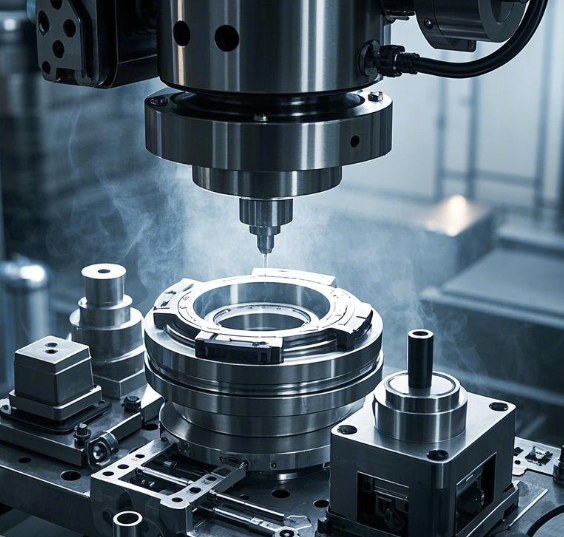
Introduction:
-
The quality of precision machining parts affects product quality. Process optimization is crucial as it can improve precision, quality and efficiency, promoting the development of the industry.
Optimization of Cutting Parameters:
-
Cutting Speed: It is determined according to the materials of parts and tools to prevent tool overheating and built-up edge, and the optimal speed is selected to ensure quality and efficiency.
-
Feed Rate: It is related to precision and roughness. It is selected based on size, tool and machine tool performance. A small feed rate is used for high-precision surfaces.
-
Cutting Depth: A larger cutting depth can be used for rough machining to remove allowance, and the depth is reduced for finish machining to ensure precision. There are different requirements for shaft machining at different stages.
Selection and Innovation of Tools:

-
High-performance Tool Materials: For example, CBN is suitable for high-hardness materials, and PCD is good for machining non-ferrous metals, each having its own advantages.
-
Tool Geometric Parameters: The rake angle, clearance angle, etc. affect cutting force. They are optimized by combining finite element analysis with experiments, and there are different combinations for machining different materials.
-
Tool Coating Technology: Coatings such as TiN and TiAlN improve performance. TiAlN is good for high-temperature cutting, such as in machining titanium alloys.
Optimization of Fixture Design and Clamping Scheme:
-
Structure of Precision Fixtures: Special fixtures have accurate positioning and stable clamping, with high stiffness and precision. The manufacturing precision is higher than the part tolerance.
-
Clamping Scheme: It is selected according to the part. For complex parts, the sequence and datum of multiple clamping are well planned, and auxiliary supports are used to improve stability.
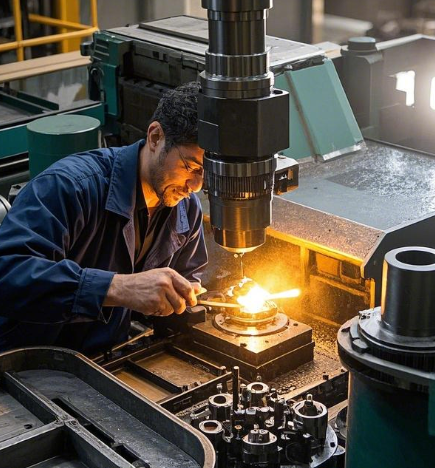
Optimization of Machining Path Planning and Programming:
-
Efficient Machining Path: Generated by CAM software. For contour machining, circular milling, etc. are used, and for plane machining, parallel milling, etc. are selected. Parameters are planned according to the shape.
-
NC Programming Code: Optimized to reduce program segments and improve execution efficiency. For example, macro programs achieve parametric programming for flexible control.
Specific types of spraying processe
What are the specific steps of electropolishing?
Related Article

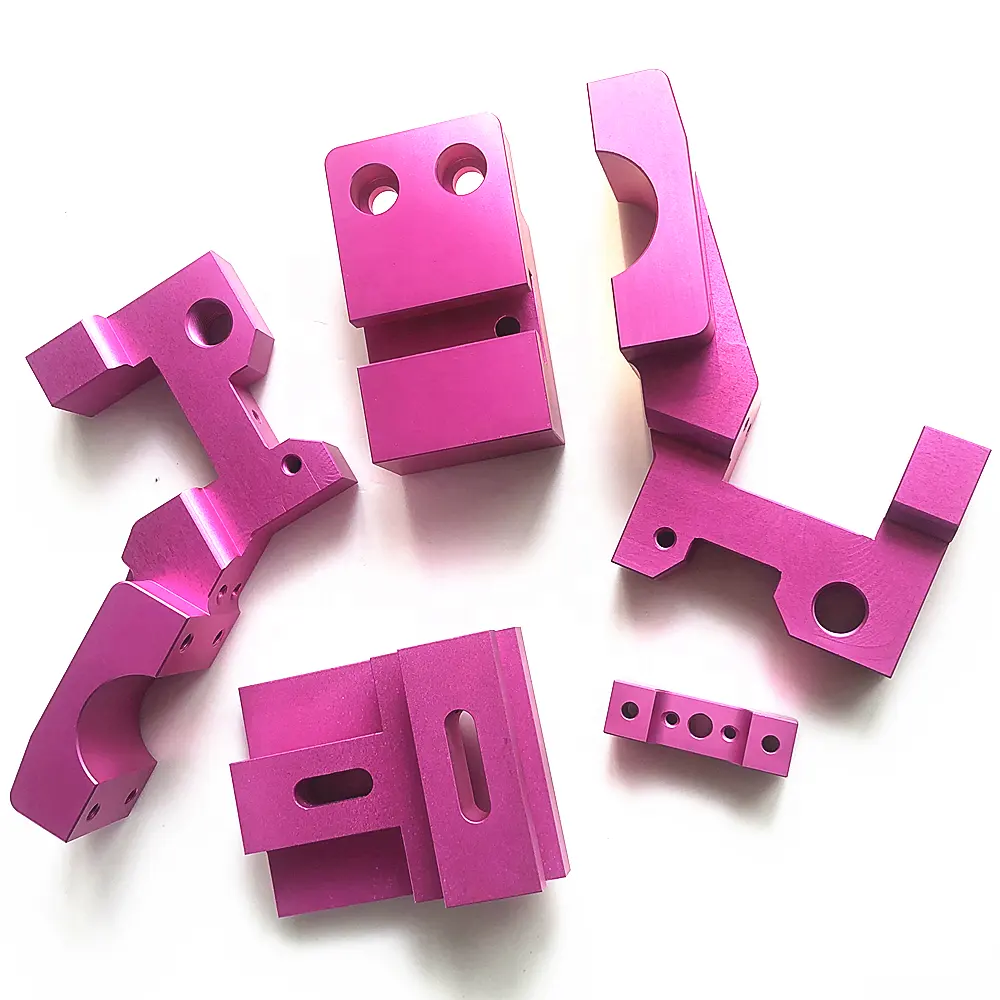
This article analyzes the prospects of the custom parts industry from three aspects: market demand, technological innovation, and challenges and opportunities, with specific cases to illustrate its development trends.
Analysis of the Prospects of the Custom Parts Industry
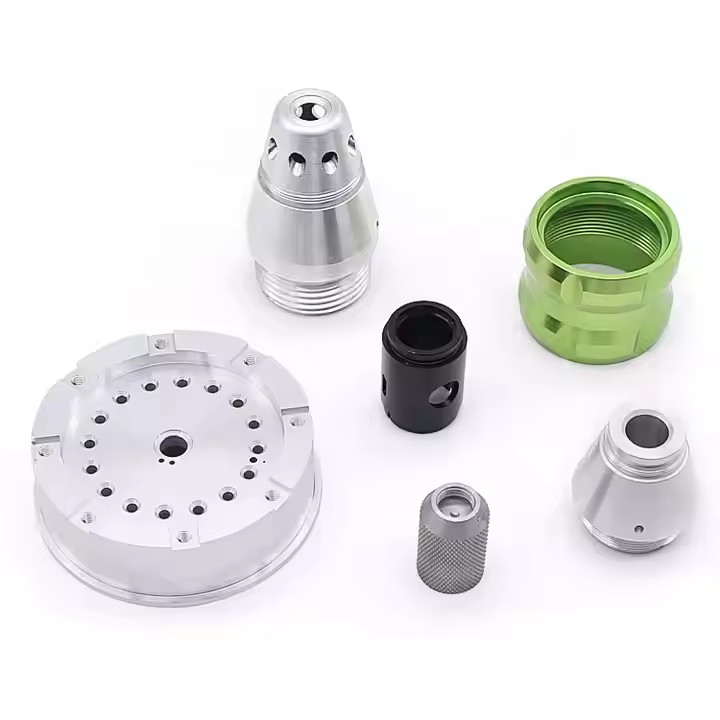
This article details CNC precision technology, covering its definition, applications in aerospace and electronics, advantages like high precision and automation, and its promising future in the manufacturing industry.
CNC Precision Technology: The Core Code of Modern Manufacturing and Its Infinite Potential
This part focuses on the shipbuilding industry, presenting a case of CNC technology application in the processing of large - scale ship propellers. It showcases how CNC technology addresses challenges in this field, improving processing efficiency and product quality, thus highlighting its significance in ship manufacturing.
CNC Technology Application Cases (Part 2)
This article focuses on the medical device manufacturing and 3C product manufacturing fields. Through specific cases, it elaborates on the remarkable achievements of CNC technology in manufacturing complex and precise components and improving product quality, demonstrating its crucial role in related industries.
CNC Technology Application Cases (Part 1)