
Blue Oxidation: Properties, Preparation and Diverse Applications
author: DJ-03
2024-12-24
Blue Oxidation: Properties, Preparation and Diverse Applications
Abstract: This paper introduces blue oxidation, covering its properties, preparation methods, exploring its applications in multiple fields, and analyzing the challenges and prospects, so as to contribute to relevant research and industrial development.
In the field of materials science, blue oxidation has attracted much attention. It generally refers to a collection of various transition metal oxides that appear blue. Due to their unique structures and properties, they play a crucial role in many fields and have become a research hotspot.
- Optical Properties: It has excellent light absorption and emission performance. Some copper-containing blue oxides have a photoluminescence quantum efficiency exceeding 30% in the blue light band (450 - 480 nm), which is beneficial for applications such as blue LEDs and fluorescent labeling.
- Electrical Properties: Some possess semiconductor properties. For example, cuprous oxide (Cu₂O) can reach an electron mobility of 100 - 300 cm²/V·s at room temperature, making it available for electronic devices.
- Catalytic Properties: It has abundant surface active sites and high catalytic activity. For instance, cobalt blue oxide (Co₃O₄) can catalyze the degradation of organic dyes at a fast rate, promoting chemical reactions.
- Chemical Precipitation Method: The metal salt solution reacts with the precipitating agent, and by controlling parameters such as pH and temperature, blue oxide precipitates are obtained. For example, when preparing cuprous oxide, a copper hydroxide precursor is first prepared and then calcined. Under appropriate conditions, the product has high purity and uniform particle size.
- Sol - Gel Method: Using metal alkoxides or inorganic salts as raw materials, through hydrolysis and condensation to form a sol and then gelation, and finally obtaining the product by high-temperature sintering. When preparing titanium blue oxide, tetrabutyl titanate is selected, and by controlling the temperature and humidity, the obtained gel has excellent crystallinity and good dispersibility after sintering.
- Physical Vapor Deposition Method: In a high-temperature and high-vacuum environment, metal atoms are vaporized and react with oxygen to deposit blue oxide films. For example, when preparing zinc oxide (ZnO) blue variant films, the parameters of magnetron sputtering can be adjusted to obtain the desired films.
- Electronic Field: In the blue LED industry, it is used as a phosphor conversion material to improve the color rendering index; it is also used in transistor manufacturing to enhance device performance. For example, Cu₂O-based transistors have the potential to break through the bottleneck.
- Catalytic Field: It is used to degrade organic pollutants in water pollution treatment and participates in photocatalytic water splitting to produce hydrogen, contributing to clean energy preparation.
- Environmental Protection Field: It is made into gas sensors to monitor air pollutants; it is also used in soil remediation to adsorb heavy metal ions.
Currently, although there have been achievements in blue oxidation research, there are also problems. The preparation cost is high, and the performance stability is poor. In the future, it is necessary to explore low-cost preparation methods, improve stability, expand applications, and tap its potential.
Specific process of chemical deburring
What are the differences between deburring methods for different materials?
Related Article

This article analyzes the prospects of the custom parts industry from three aspects: market demand, technological innovation, and challenges and opportunities, with specific cases to illustrate its development trends.
Analysis of the Prospects of the Custom Parts Industry
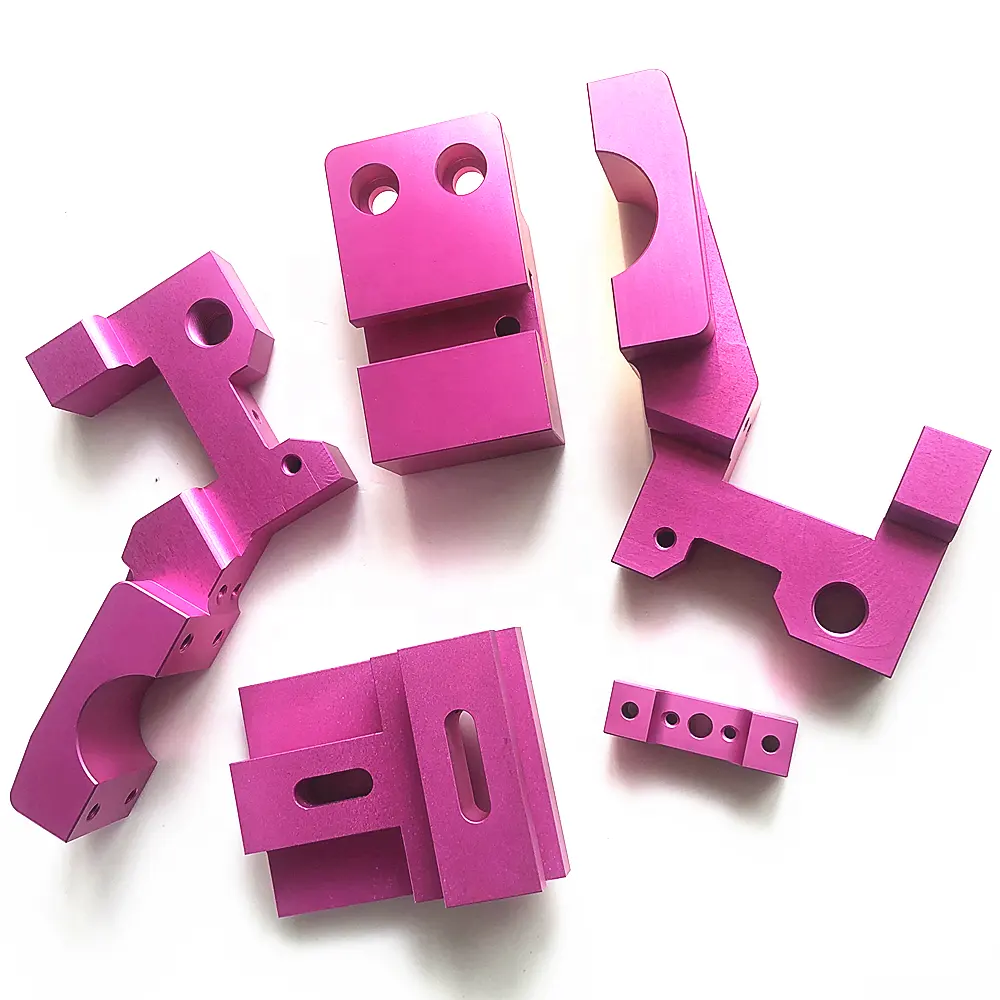
This article details CNC precision technology, covering its definition, applications in aerospace and electronics, advantages like high precision and automation, and its promising future in the manufacturing industry.
CNC Precision Technology: The Core Code of Modern Manufacturing and Its Infinite Potential
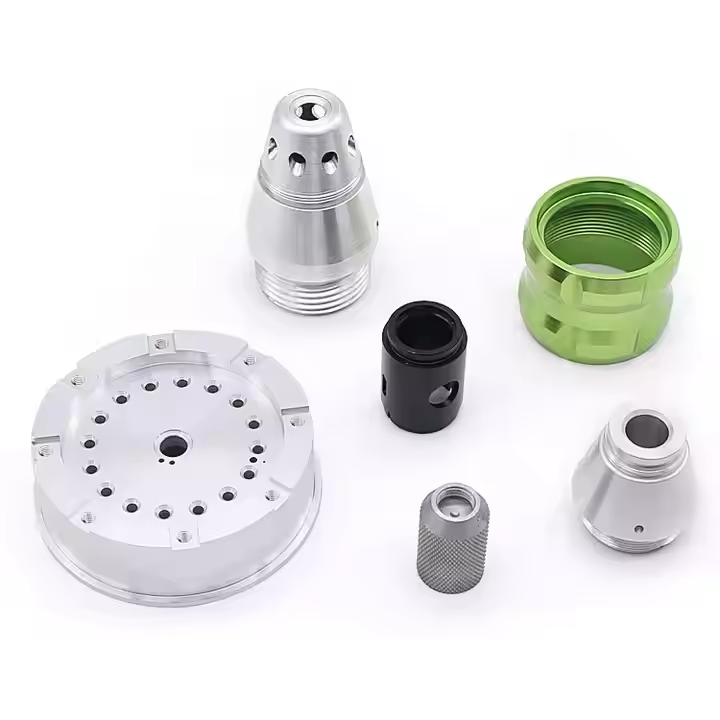
This part focuses on the shipbuilding industry, presenting a case of CNC technology application in the processing of large - scale ship propellers. It showcases how CNC technology addresses challenges in this field, improving processing efficiency and product quality, thus highlighting its significance in ship manufacturing.
CNC Technology Application Cases (Part 2)
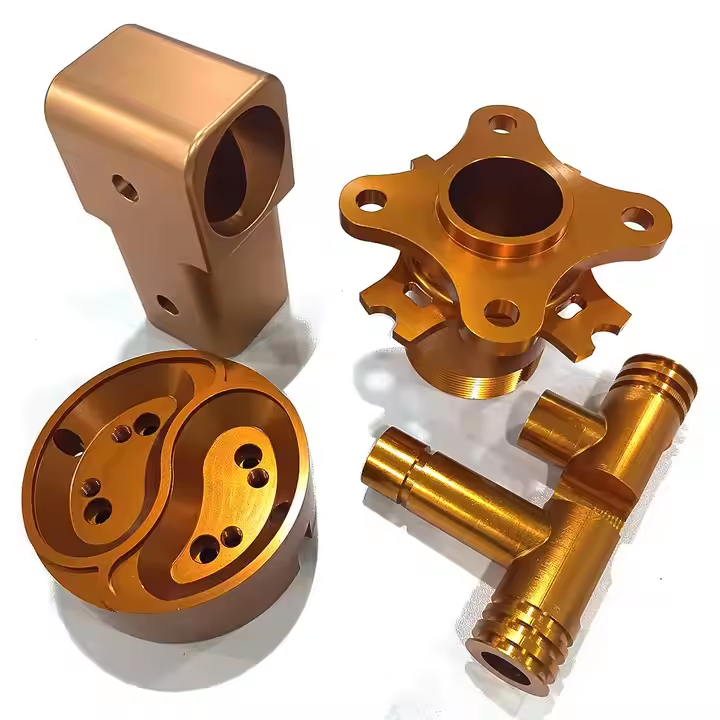
This article focuses on the medical device manufacturing and 3C product manufacturing fields. Through specific cases, it elaborates on the remarkable achievements of CNC technology in manufacturing complex and precise components and improving product quality, demonstrating its crucial role in related industries.
CNC Technology Application Cases (Part 1)