
Carbon Fiber Materials: Detailed Explanation of Characteristics and Production Processes
author: DJ-03
2024-10-21
Carbon Fiber Materials: Detailed Explanation of Characteristics and Production Processes
Carbon fiber materials have many characteristics, and their production processes are also relatively complex.
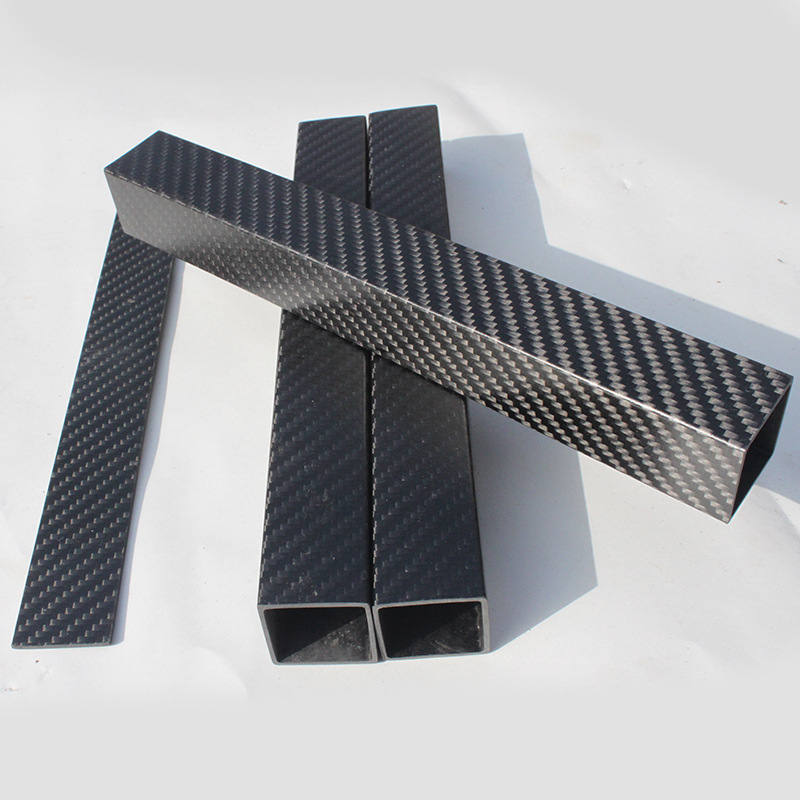
**I. Characteristics of carbon fiber materials**
1. High strength and high modulus: Several times stronger than steel. When subjected to force, it has high rigidity and plays an outstanding role in fields such as aerospace and racing.
2. Low density: Much lower than metal materials, making products lightweight. Suitable for fields such as aerospace and sporting goods that pursue weight reduction.
3. Strong corrosion resistance: Stable performance in harsh environments, no rust or corrosion, prolonging service life and reducing maintenance costs.
4. Good thermal stability: Can maintain performance at relatively high temperatures and can be used in high-temperature environments.
5. Good electrical conductivity: Conductivity can be adjusted through treatment to meet different needs.
6. Strong designability: The weaving structure and layup angle can be selected according to needs to achieve the best mechanical properties.
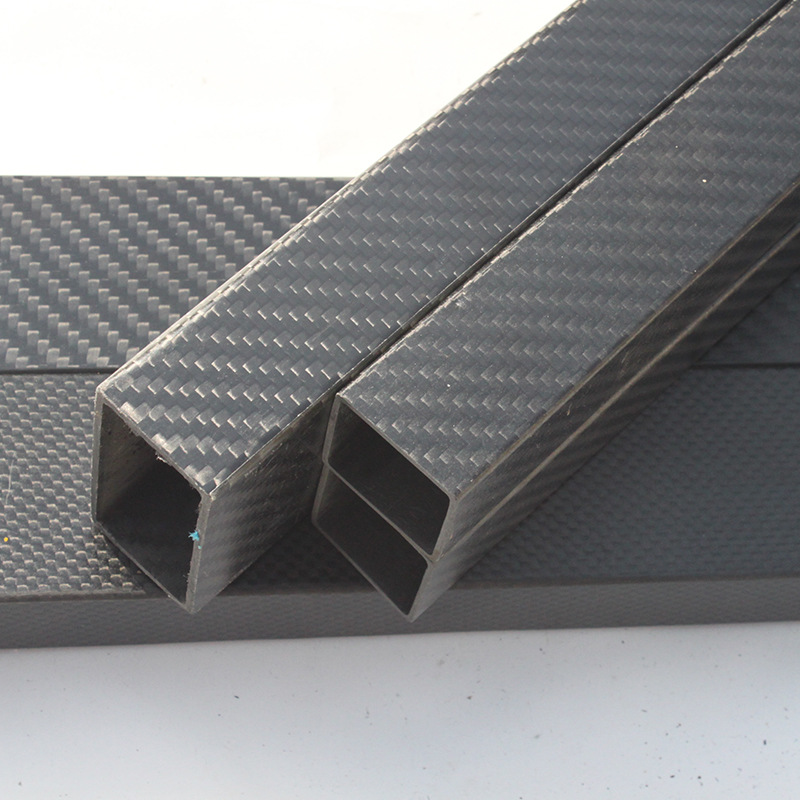
**II. Production process of carbon fiber materials**
1. Preparation of precursor:
-
- Polymerization reaction: Using PAN, asphalt or rayon as raw materials. For example, in PAN-based carbon fiber, acrylonitrile monomers are polymerized through free radical addition reaction. One-step or two-step methods can be used to prepare polymerization solutions.
-
- Spinning: There are wet spinning and dry-jet wet spinning. Wet spinning is simple to operate but the quality of precursor is low. Dry-jet wet spinning can produce high-performance precursor but has high requirements.
2. Pre-oxidation treatment: In air at 200 - 300°C, the linear molecular chains of the precursor are transformed into heat-resistant trapezoidal structures to improve thermal stability and oxidation resistance.
3. Carbonization stage: Under the protection of inert gas, it is heated to 1000 - 1500°C for high-temperature carbonization to remove non-carbon atoms and form carbon fiber with high carbon content.
4. Graphitization treatment: At a higher temperature, the crystallinity and orientation degree are further improved to enhance performance.
5. Surface treatment: Give the fiber chemical activity to better combine with resins and others. 6. Sizing treatment: Protect the fiber and improve affinity with resin. 7. Winding and packaging: Form product output.
Latest developments in the CNC machining industry
The accuracy of 5-axis CNC machining is affected by many factors
Related Article

This article analyzes the prospects of the custom parts industry from three aspects: market demand, technological innovation, and challenges and opportunities, with specific cases to illustrate its development trends.
Analysis of the Prospects of the Custom Parts Industry
This article details CNC precision technology, covering its definition, applications in aerospace and electronics, advantages like high precision and automation, and its promising future in the manufacturing industry.
CNC Precision Technology: The Core Code of Modern Manufacturing and Its Infinite Potential
This part focuses on the shipbuilding industry, presenting a case of CNC technology application in the processing of large - scale ship propellers. It showcases how CNC technology addresses challenges in this field, improving processing efficiency and product quality, thus highlighting its significance in ship manufacturing.
CNC Technology Application Cases (Part 2)
This article focuses on the medical device manufacturing and 3C product manufacturing fields. Through specific cases, it elaborates on the remarkable achievements of CNC technology in manufacturing complex and precise components and improving product quality, demonstrating its crucial role in related industries.
CNC Technology Application Cases (Part 1)