
3D Printing: Opening a New Era of Manufacturing
author: DJ-03
2025-01-14
3D Printing: Opening a New Era of Manufacturing
Abstract: This article introduces 3D printing technology, expounds its principles and materials, showcases its applications in various fields, explores its development trends, and reveals its revolutionary significance for the manufacturing industry.
I. Definition of 3D Printing

3D printing, also known as additive manufacturing, is a technology that constructs objects by layer - by - layer printing based on digital model files. It uses bondable materials such as powdered metals or plastics. Different from traditional subtractive manufacturing, which removes parts from raw materials, 3D printing builds objects from scratch through layer - by - layer accumulation.
II. Working Principle

A 3D printer first reads the three - dimensional model data created by design software and slices it into a series of two - dimensional layers. Subsequently, according to the information of these slices, starting from the bottom layer, the printer deposits materials layer by layer through methods such as extruding materials from a nozzle, curing resin with light, or sintering powder, ultimately forming a three - dimensional entity.
III. Commonly Used Materials

- Plastics: Such as PLA (polylactic acid), ABS (acrylonitrile - butadiene - styrene copolymer), etc. PLA is environmentally friendly and easy to print, while ABS has high strength and good heat resistance.
- Metals: Stainless steel, titanium alloy, aluminum alloy, etc. These are often used in fields with high requirements for strength and performance, such as aerospace and automotive manufacturing.
- Ceramics: It can print ceramic products with complex shapes and is applied in artistic creation, electronic components, etc.
- Biomaterials: Such as hydrogels and biocompatible polymers that can be used in tissue engineering, bringing new breakthroughs to the medical field.
IV. Application Fields
- Medical Field: Print personalized prosthetics and implants, such as customized hip joints and dental aligners, improving treatment effects and patient comfort.
- Manufacturing Industry: Rapidly manufacture product prototypes, shortening the product development cycle; produce small - batch complex parts, reducing production costs.
- Construction Industry: Print building components or even entire buildings, improving construction efficiency and reducing labor costs.
- Art and Design: Artists can quickly transform their creative ideas into physical objects, creating unique works of art.
V. Development Trends

With the continuous progress of technology, 3D printing will develop towards higher precision, larger size, and faster speed. At the same time, multi - material printing and integration with artificial intelligence will also become research hotspots, further expanding its application scope and changing the traditional manufacturing model.
The Prototype Industry: The Cornerstone and New Journey of Innovation in the Manufacturing Industry
Can CNC machining achieve the production of complex internal structures, and what are the limitations?
Related Article

This article analyzes the prospects of the custom parts industry from three aspects: market demand, technological innovation, and challenges and opportunities, with specific cases to illustrate its development trends.
Analysis of the Prospects of the Custom Parts Industry
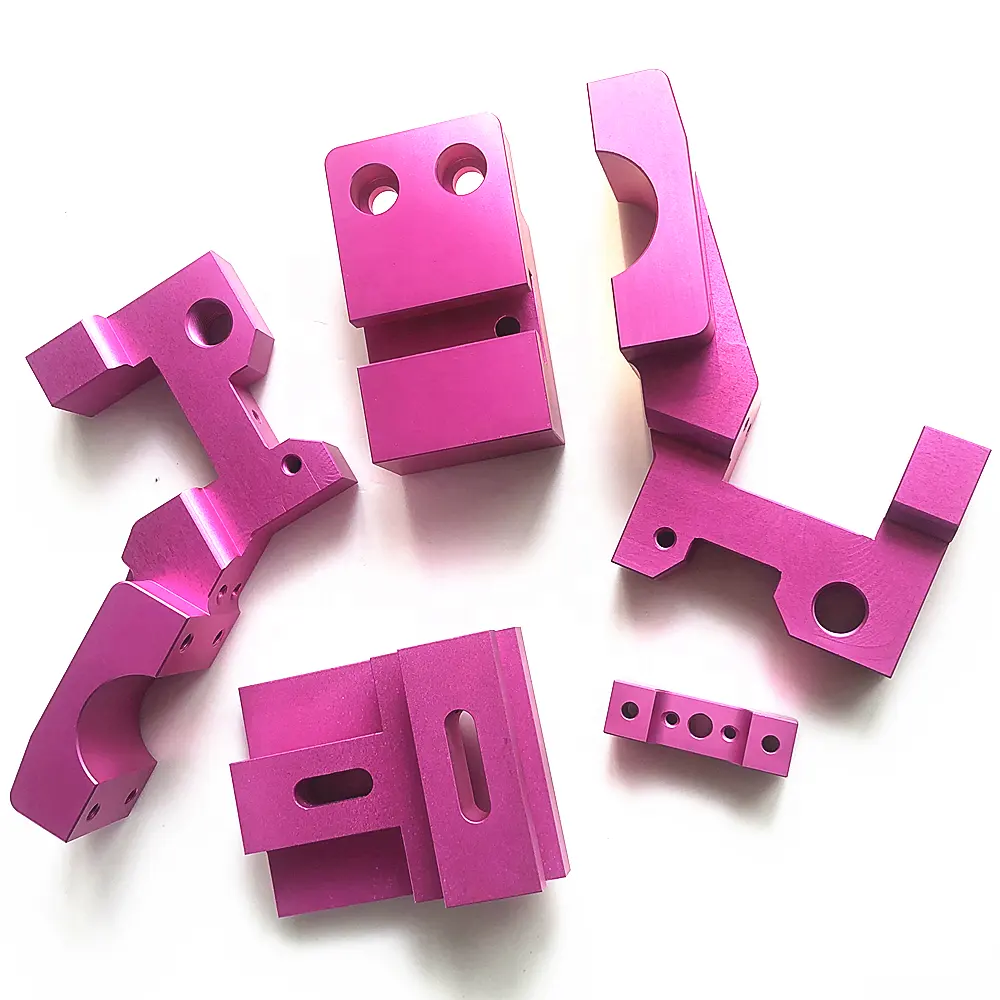
This article details CNC precision technology, covering its definition, applications in aerospace and electronics, advantages like high precision and automation, and its promising future in the manufacturing industry.
CNC Precision Technology: The Core Code of Modern Manufacturing and Its Infinite Potential
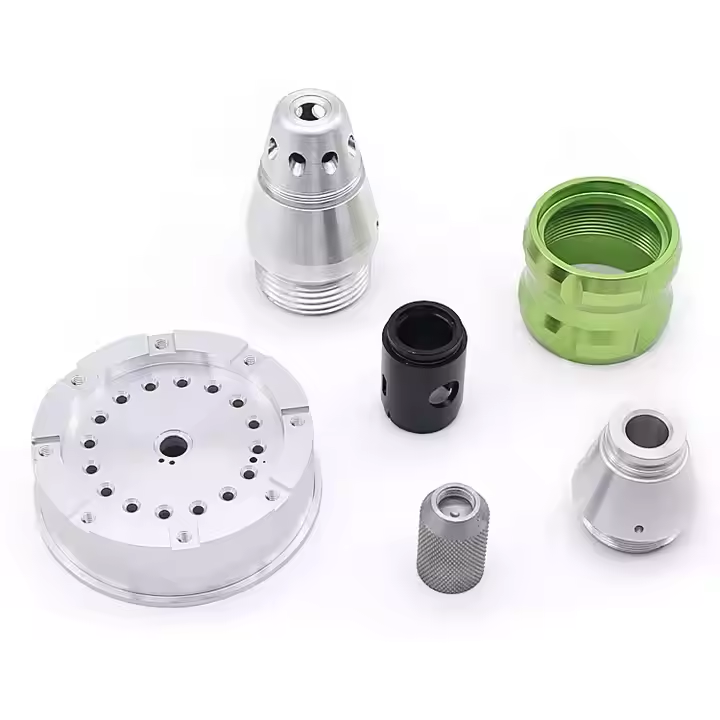
This part focuses on the shipbuilding industry, presenting a case of CNC technology application in the processing of large - scale ship propellers. It showcases how CNC technology addresses challenges in this field, improving processing efficiency and product quality, thus highlighting its significance in ship manufacturing.
CNC Technology Application Cases (Part 2)
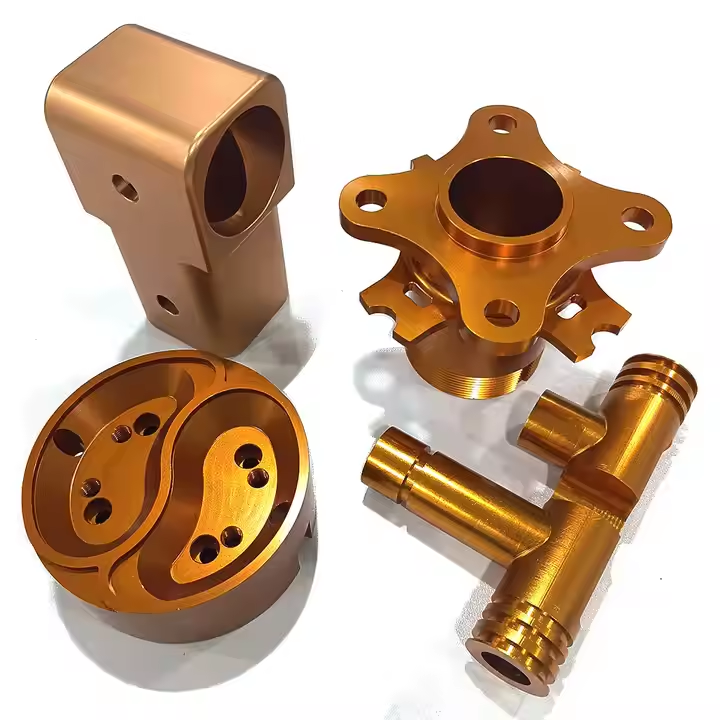
This article focuses on the medical device manufacturing and 3C product manufacturing fields. Through specific cases, it elaborates on the remarkable achievements of CNC technology in manufacturing complex and precise components and improving product quality, demonstrating its crucial role in related industries.
CNC Technology Application Cases (Part 1)