
Key points for quality control of CNC turned parts machining
author: DJ-03
2025-01-06
Key points for quality control of CNC turned parts machining

-
Raw material control:
Select raw material suppliers based on part design and performance requirements, and comprehensively consider the chemical composition, physical properties, and supplier quality control system and production stability of the materials.
Strictly inspect incoming raw materials with the help of spectral analysis, metallographic testing, etc. to ensure that they meet precise standards, such as strict control of impurity content in aviation high-strength alloys.
-
Programming and process planning:
Programmers have a deep understanding of part drawings, combine machining allowances, tolerance requirements, and surface roughness, use professional software to generate optimized tool trajectories, and use adaptive milling programming strategies for complex surface machining.
According to the material and structure of the parts, the machining process is carefully arranged, including the sequence of rough turning and fine turning and the allocation of allowances, and the timing of the heat treatment process is reasonably selected to avoid quality problems such as deformation and residual stress.
-
Tool management:
Select the appropriate tool material according to the part material and processing characteristics, such as cubic boron nitride tools for machining high-hardness hardened steel, and optimize the tool geometry parameters to ensure the cutting effect.
The machining process uses acoustic emission sensors and power monitors to monitor tool wear in real time, replace excessive wear in time, and regularly grind and repair the tool coating to extend its service life.

-
Real-time monitoring:
Sensors are installed at key parts of the machine tool such as the spindle, tool holder, and workpiece to collect cutting force, vibration, and temperature data in real time.
A sudden change in cutting force indicates that the tool is damaged or the workpiece is loosely clamped. Abnormal vibration reflects process parameters or machine tool failure. Excessive temperature affects high-precision processing. Timely adjustment or maintenance is carried out based on the monitoring results.
-
Personnel improvement:
The company regularly organizes training, covering machine tool operation skills, programming knowledge updates, and quality awareness enhancement.
Operators are proficient in the functions of the new CNC system, standardize operations, and fill in processing records truthfully; quality management personnel are proficient in quality inspection tools and statistical analysis methods to capture quality fluctuation trends.
-
Improvement of the inspection system:
Equipped with advanced inspection equipment such as three-coordinate measuring machines, profilometers, and roughness meters, and rigorous inspection processes and standards are formulated according to part drawings.
Full-size inspection of finished parts, random inspection at key process nodes, and statistical process control (SPC) analysis data to draw control charts to ensure stable and consistent processing quality.

Case harden(表面硬化)
Which post-processing technologies are developing fastest?
Related Article

This article analyzes the prospects of the custom parts industry from three aspects: market demand, technological innovation, and challenges and opportunities, with specific cases to illustrate its development trends.
Analysis of the Prospects of the Custom Parts Industry
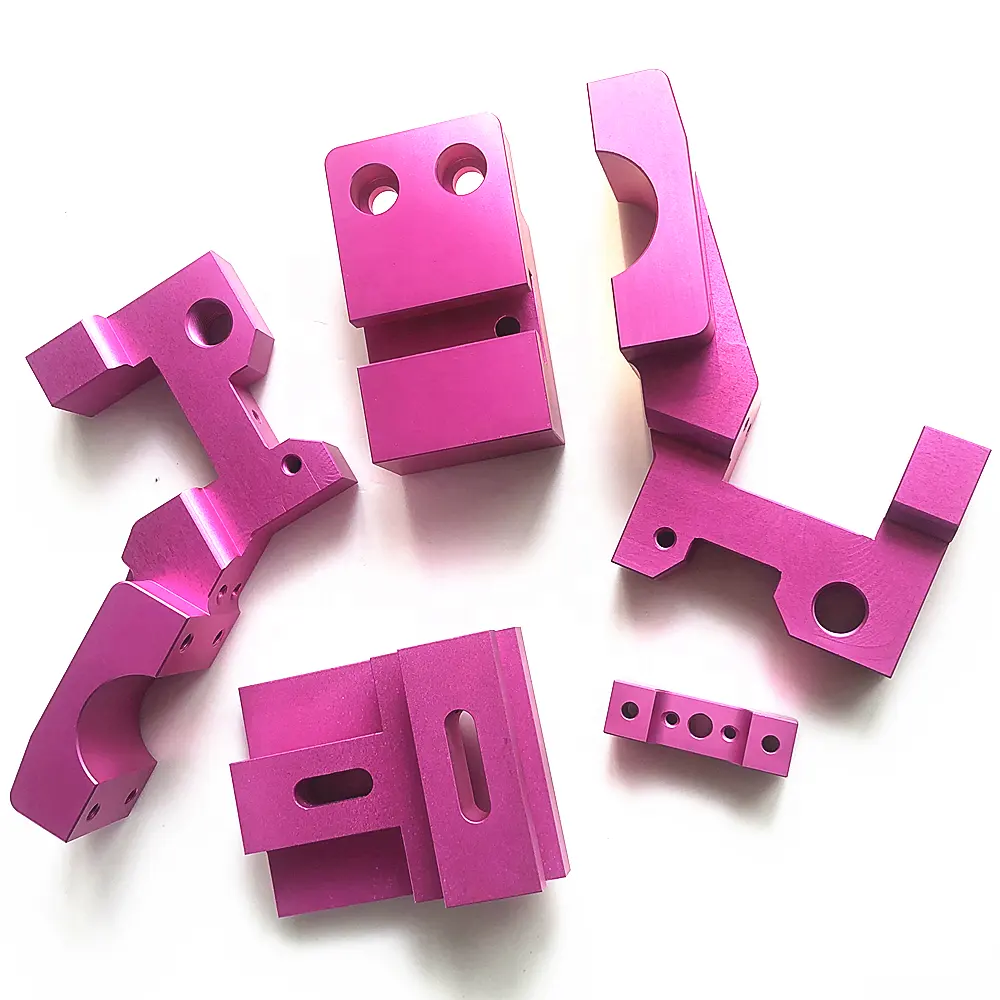
This article details CNC precision technology, covering its definition, applications in aerospace and electronics, advantages like high precision and automation, and its promising future in the manufacturing industry.
CNC Precision Technology: The Core Code of Modern Manufacturing and Its Infinite Potential
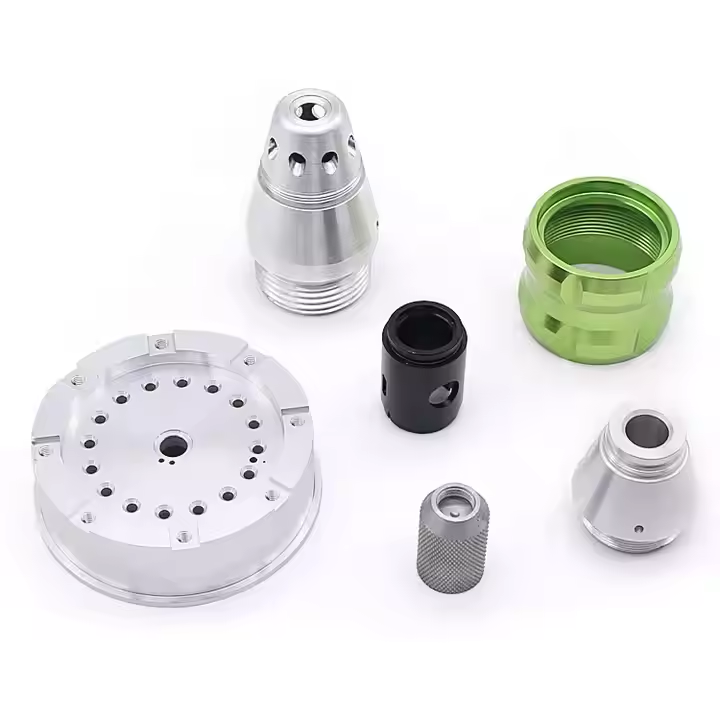
This part focuses on the shipbuilding industry, presenting a case of CNC technology application in the processing of large - scale ship propellers. It showcases how CNC technology addresses challenges in this field, improving processing efficiency and product quality, thus highlighting its significance in ship manufacturing.
CNC Technology Application Cases (Part 2)
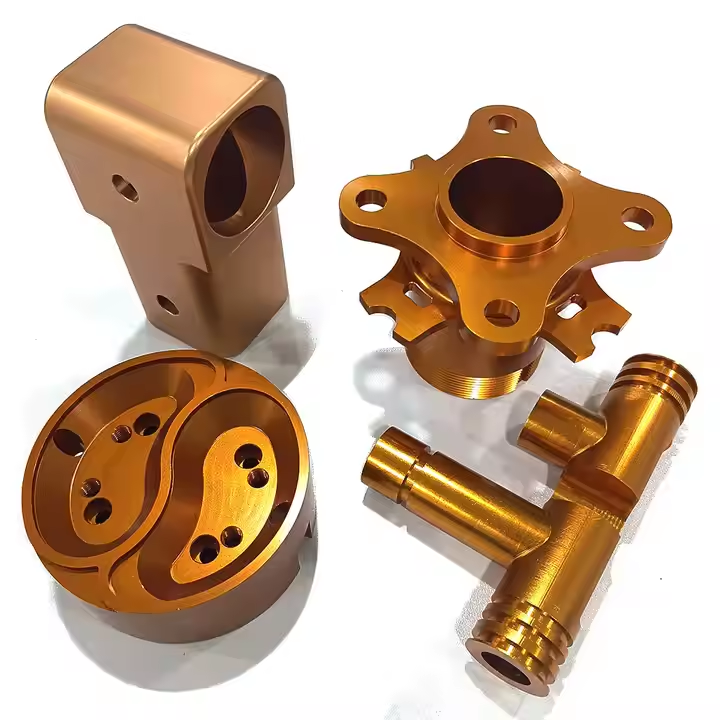
This article focuses on the medical device manufacturing and 3C product manufacturing fields. Through specific cases, it elaborates on the remarkable achievements of CNC technology in manufacturing complex and precise components and improving product quality, demonstrating its crucial role in related industries.
CNC Technology Application Cases (Part 1)