
Unlocking the Treasure House of 3D Printing
author: DJ-03
2025-01-13
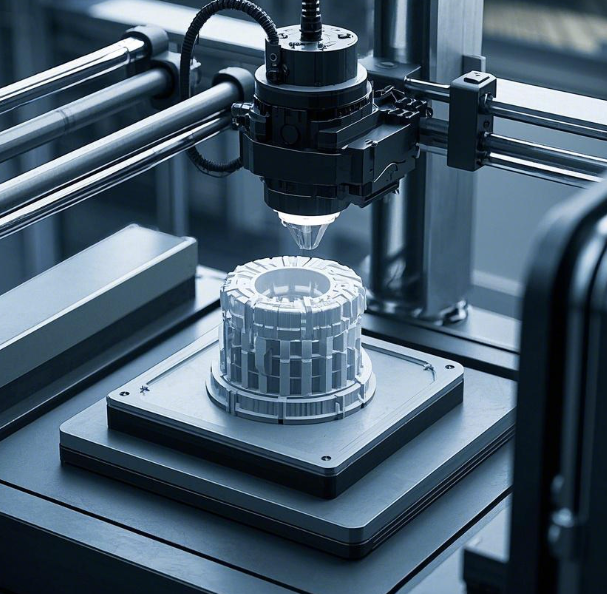
Unlocking the Treasure House of 3D Printing
-
Polymer Materials
-
Thermoplastic Plastics
-
Polylactic Acid (PLA): Biodegradable, with a low melting point, no unpleasant odor, relatively weak in strength, and used for models, handicrafts, etc.
-
Acrylonitrile Butadiene Styrene (ABS): Durable, elastic, requiring a high printing temperature and emitting an odor during printing, and used for toys, tools, etc.
-
Polyethylene Terephthalate Glycol (PETG): Combining the advantages of others, easy to print, with good heat resistance and chemical resistance, and used for food containers, etc.
-
Thermoplastic Polyurethane (TPU): Good flexibility, excellent elasticity and flexibility, used for insoles, etc., but with a relatively high printing difficulty.
-
Nylon (PA): High in strength and wear resistance, emitting an odor during printing, and used for mechanical parts and tool components.
-
-
Thermosetting Plastics: Such as epoxy resin, etc., with high strength and good fire resistance, suitable for powder laser sintering molding.
-
Photosensitive Resin: Capable of high-precision and complex geometric shape printing, with a smooth surface, but posing potential health risks, and used for micro parts, etc.
-
-
Metal Materials
-
Stainless Steel: With good corrosion resistance, high strength and good toughness, used for mechanical parts and medical devices.
-
Titanium Alloy: High in strength, lightweight, with strong corrosion resistance and good biocompatibility, used for aerospace components and medical implants.
-
Aluminum Alloy: Low in density, with good thermal conductivity and relatively high strength, used for parts in the automotive, aerospace and other fields.
-
-
Ceramic Materials
-
Alumina Ceramic: High in hardness, strength, capable of withstanding high temperatures, wear-resistant and electrically insulating, used for electronic devices, cutting tools, etc.
-
Zirconia Ceramic: With good biocompatibility, high toughness and strength, used for dental restoration and jewelry.
-
-
Biomaterials
-
Biodegradable Polymers: With good biocompatibility and biodegradability, used for tissue engineering scaffolds, etc.
-
Hydroxyapatite: A bioactive ceramic, used for bone tissue repair.
-
Cellular Biomaterials: Used for printing human tissues and organs, still in the research stage.
-
-
Other Materials
-
Gypsum Materials: Low in cost and easy to form, used for models and handicrafts.
-
Starch Materials: Widely sourced, low in cost and biodegradable, but poor in mechanical properties, often used in combination or after modification.
-
Rubber Materials: With good elasticity and flexibility, used for shock-absorbing and sealing parts.

-
Appearance Prototype
Introduction to Epoxy Resin
Related Article

This article analyzes the prospects of the custom parts industry from three aspects: market demand, technological innovation, and challenges and opportunities, with specific cases to illustrate its development trends.
Analysis of the Prospects of the Custom Parts Industry

This article details CNC precision technology, covering its definition, applications in aerospace and electronics, advantages like high precision and automation, and its promising future in the manufacturing industry.
CNC Precision Technology: The Core Code of Modern Manufacturing and Its Infinite Potential
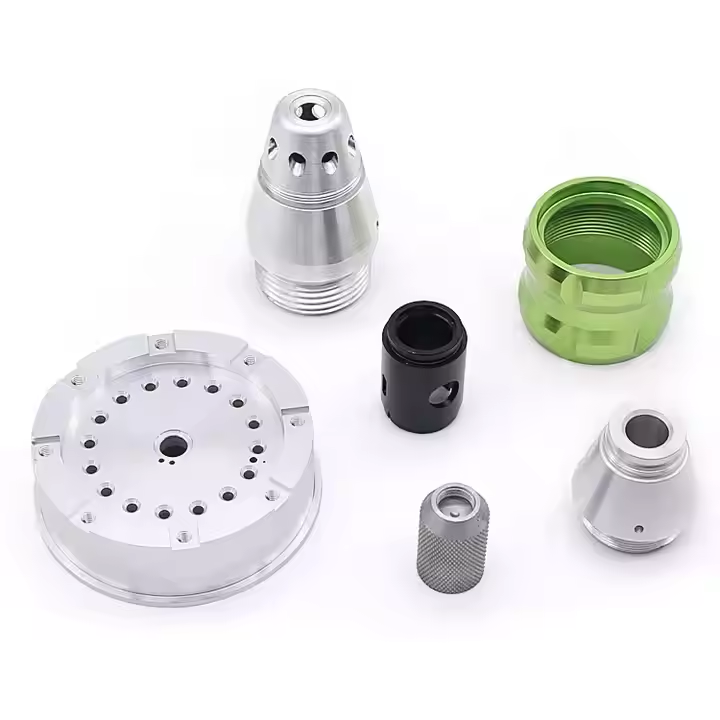
This part focuses on the shipbuilding industry, presenting a case of CNC technology application in the processing of large - scale ship propellers. It showcases how CNC technology addresses challenges in this field, improving processing efficiency and product quality, thus highlighting its significance in ship manufacturing.
CNC Technology Application Cases (Part 2)
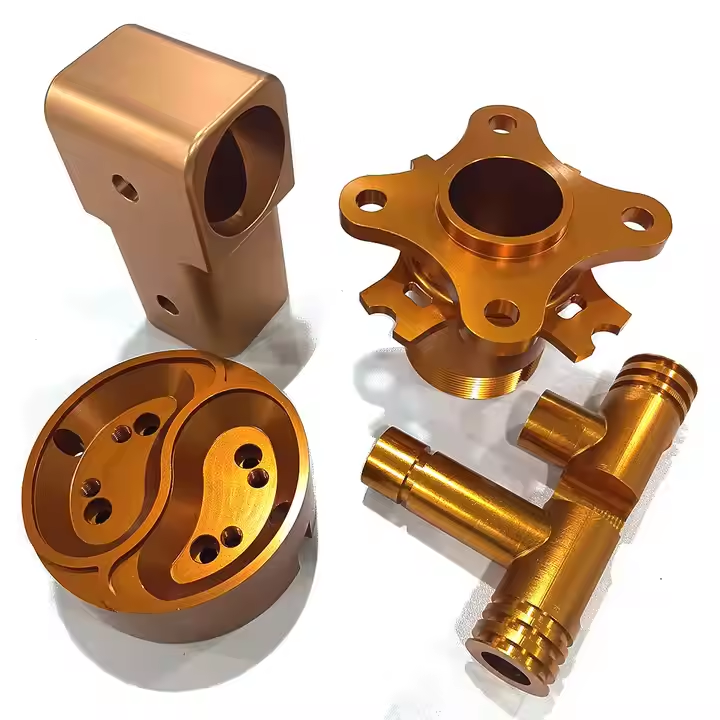
This article focuses on the medical device manufacturing and 3C product manufacturing fields. Through specific cases, it elaborates on the remarkable achievements of CNC technology in manufacturing complex and precise components and improving product quality, demonstrating its crucial role in related industries.
CNC Technology Application Cases (Part 1)