
Introduction to Epoxy Resin
author: DJ-03
2025-01-10
Introduction to Epoxy Resin
Abstract: This article introduces epoxy resin from multiple aspects, covering its structure, characteristics, classification, applications, production and market, helping you to comprehensively understand this important polymer material.
- Molecular Structure: The molecule contains two or more epoxy groups and is mostly formed by the condensation polymerization of epichlorohydrin and bisphenol A or other polyols.
- Characteristics:
-
- Excellent mechanical properties, with high strength and high modulus.
-
- Strong adhesion, capable of bonding a variety of materials.
-
- Low shrinkage, ensuring stable dimensional accuracy.
-
- Good electrical insulation, chemical stability and excellent mold resistance.

- Classification:
-
- According to the chemical structure, there are glycidyl ether type epoxy resins and so on.
-
- According to the application, basic and special epoxy resins are different.
-
- According to the curing method, there are self-hardening type and thermosetting type.

- Application Areas:
-
- In the coating industry, used as anti-corrosion coatings, primers, etc.
-
- In the electronic and electrical field, used for insulation encapsulation and potting.
-
- In the composite materials field, used to manufacture components for aerospace and other industries.
-
- In the adhesive field, used for bonding a variety of materials.
-
- In other fields, such as mold making and cultural relic restoration.

- Production and Market: The global epoxy resin industry has entered a mature stage. China is the largest producer and consumer country, and it is expected to maintain stable growth in the future.
Unlocking the Treasure House of 3D Printing
How to choose the right abrasive grit to achieve the best surface roughness?
Related Article

This article analyzes the prospects of the custom parts industry from three aspects: market demand, technological innovation, and challenges and opportunities, with specific cases to illustrate its development trends.
Analysis of the Prospects of the Custom Parts Industry

This article details CNC precision technology, covering its definition, applications in aerospace and electronics, advantages like high precision and automation, and its promising future in the manufacturing industry.
CNC Precision Technology: The Core Code of Modern Manufacturing and Its Infinite Potential
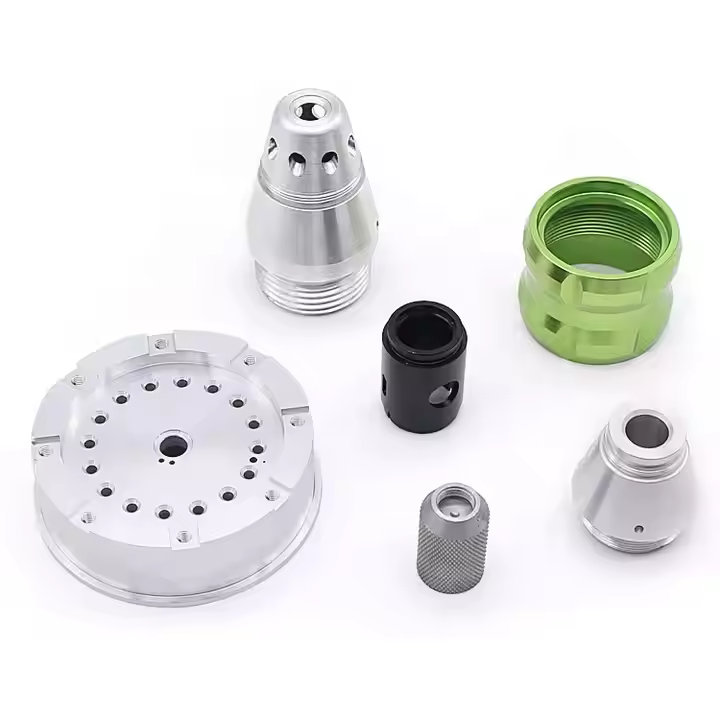
This part focuses on the shipbuilding industry, presenting a case of CNC technology application in the processing of large - scale ship propellers. It showcases how CNC technology addresses challenges in this field, improving processing efficiency and product quality, thus highlighting its significance in ship manufacturing.
CNC Technology Application Cases (Part 2)
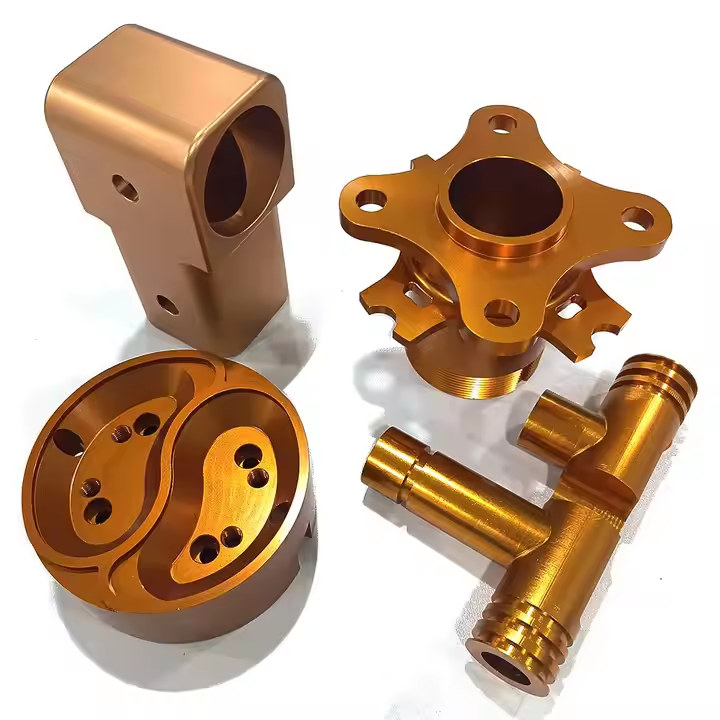
This article focuses on the medical device manufacturing and 3C product manufacturing fields. Through specific cases, it elaborates on the remarkable achievements of CNC technology in manufacturing complex and precise components and improving product quality, demonstrating its crucial role in related industries.
CNC Technology Application Cases (Part 1)