
Introduction to Polystyrene
author: DJ-03
2025-01-09
Introduction to Polystyrene
Abstract: Polystyrene is a common type of plastic with a wide range of applications. It has stable chemical properties and comes in several varieties, though it also poses some environmental issues.
-
Chemical Structure and Basic Properties
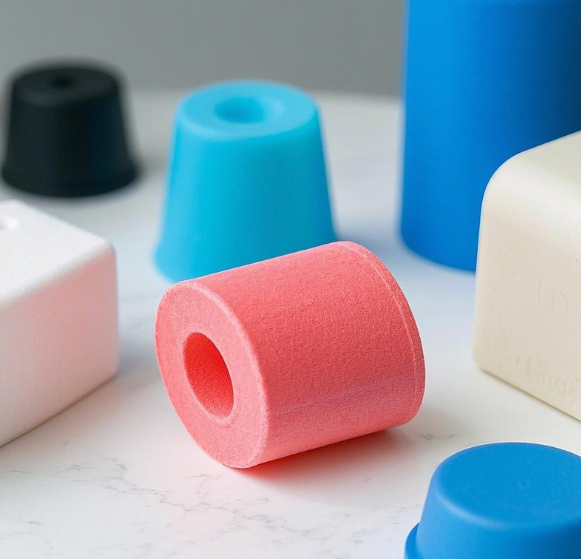
- Polystyrene is a high-molecular polymer formed by the polymerization of styrene monomers. Its molecular chains contain benzene ring structures, endowing it with relatively high hardness and rigidity.
- Generally, it is a colorless and transparent thermoplastic with high transparency, good luster, and a relatively low density, ranging from approximately 1.04 to 1.09 g/cm³.
-
Main Types
- General-purpose polystyrene (GPPS): It has excellent optical properties and good processability, and is mainly used in manufacturing packaging materials, stationery, toys, etc.
- High-impact polystyrene (HIPS): By adding rubber components to polystyrene, its impact resistance is significantly improved, and it is used for products like electrical appliance shells.

-
Processing Methods
- Injection molding can be used to manufacture products with various complex shapes, such as plastic tableware and electronic accessories.
- Extrusion molding is also a commonly used method, which can produce polystyrene sheets and pipes. For example, it can be used to make heat insulation boards in construction.

-
Wide Range of Application Fields
- In the packaging industry, it is used to make food packaging, electronic product packaging, etc., as it can provide good protection and display effects.
- In the construction field, it can be used to produce thermal insulation materials and decorative materials, helping to improve the energy-saving performance and aesthetics of buildings.
-
Environmental Impact and Recycling Issues
- Polystyrene is difficult to degrade in the natural environment, and a large amount of discarded polystyrene will cause white pollution.
- Recycling it has certain difficulties, but through appropriate recycling technologies, such as pyrolysis recycling, it can be converted into other useful chemicals or materials.
How to choose the right abrasive grit to achieve the best surface roughness?
What is the effect of different abrasives on the sandblasting effect?
Related Article

This article analyzes the prospects of the custom parts industry from three aspects: market demand, technological innovation, and challenges and opportunities, with specific cases to illustrate its development trends.
Analysis of the Prospects of the Custom Parts Industry

This article details CNC precision technology, covering its definition, applications in aerospace and electronics, advantages like high precision and automation, and its promising future in the manufacturing industry.
CNC Precision Technology: The Core Code of Modern Manufacturing and Its Infinite Potential
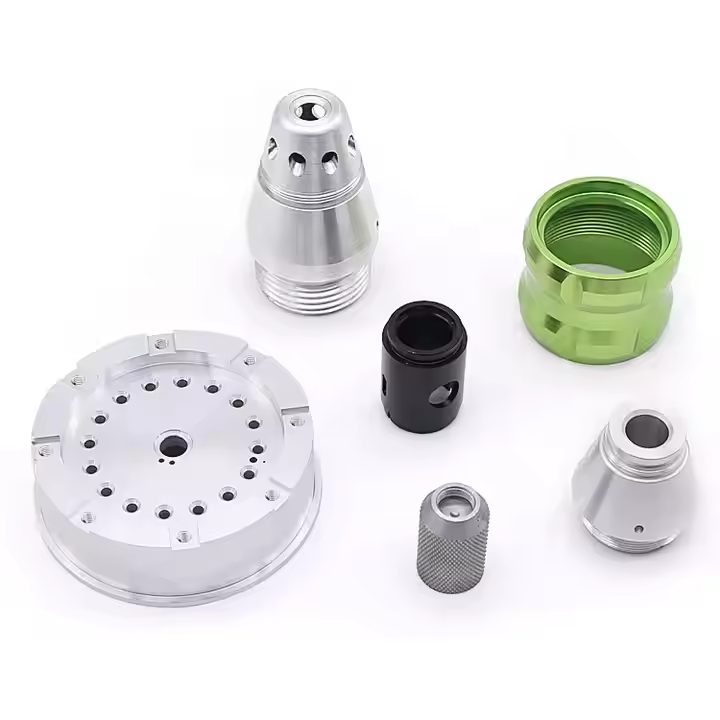
This part focuses on the shipbuilding industry, presenting a case of CNC technology application in the processing of large - scale ship propellers. It showcases how CNC technology addresses challenges in this field, improving processing efficiency and product quality, thus highlighting its significance in ship manufacturing.
CNC Technology Application Cases (Part 2)
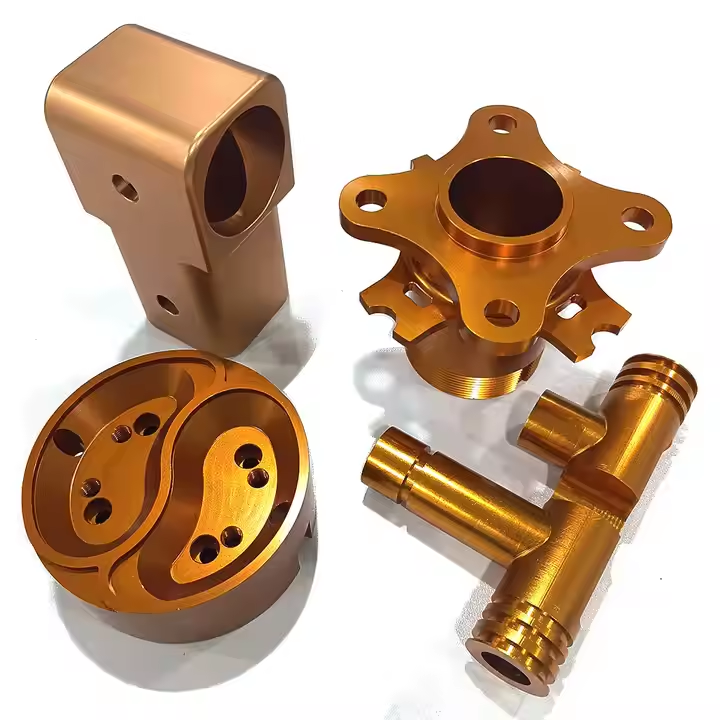
This article focuses on the medical device manufacturing and 3C product manufacturing fields. Through specific cases, it elaborates on the remarkable achievements of CNC technology in manufacturing complex and precise components and improving product quality, demonstrating its crucial role in related industries.
CNC Technology Application Cases (Part 1)