
Precision Engineering: The Role of Machined Parts in Aerospace Innovation
author: DJ-03
2025-01-22
Precision Engineering: The Role of Machined Parts in Aerospace Innovation

The aerospace industry has very strict requirements on the precision and reliability of parts. Take aircraft engines as an example. The manufacturing process of turbine blades, as key components, is highly dependent on machining. Turbine blades need to work in extreme environments of high temperature, high pressure and high-speed rotation, which requires the blades to have precise shapes and sizes to ensure the efficient operation of the engine.

Machining uses advanced equipment such as five-axis linkage machining centers and complex CNC programming to control the manufacturing accuracy of blades to the micron level. For example, when an aircraft engine manufacturer produces new engine blades, it uses machining technology to achieve precise forming of the blade profile, and the blade thickness error is controlled within ±0.05mm.

This high-precision processing greatly improves the combustion efficiency and thrust of the engine, while reducing fuel consumption, providing a strong driving force for the development of the aviation industry.
Precision Manufacturing: Revolutionizing Personalized Artificial Hip Joint Production in Healthcare
Entering machining
Related Article

This article analyzes the prospects of the custom parts industry from three aspects: market demand, technological innovation, and challenges and opportunities, with specific cases to illustrate its development trends.
Analysis of the Prospects of the Custom Parts Industry
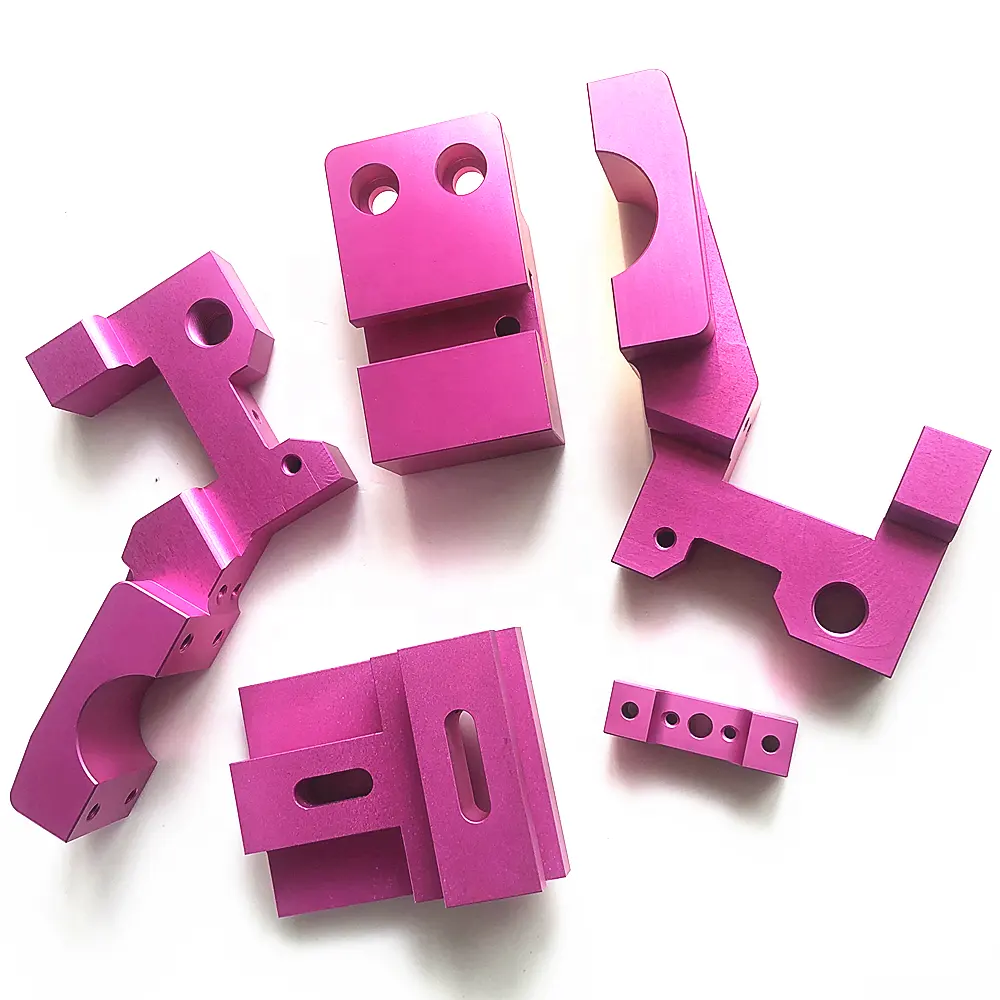
This article details CNC precision technology, covering its definition, applications in aerospace and electronics, advantages like high precision and automation, and its promising future in the manufacturing industry.
CNC Precision Technology: The Core Code of Modern Manufacturing and Its Infinite Potential
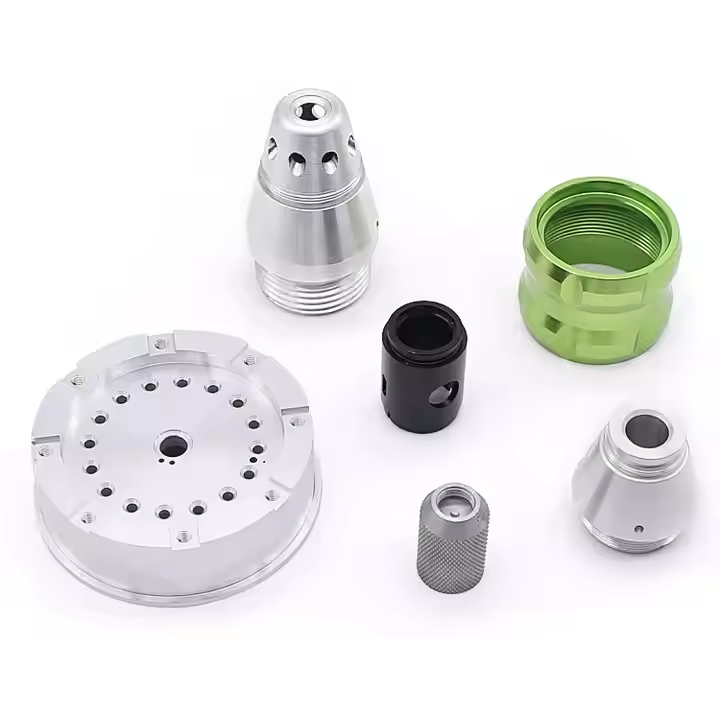
This part focuses on the shipbuilding industry, presenting a case of CNC technology application in the processing of large - scale ship propellers. It showcases how CNC technology addresses challenges in this field, improving processing efficiency and product quality, thus highlighting its significance in ship manufacturing.
CNC Technology Application Cases (Part 2)
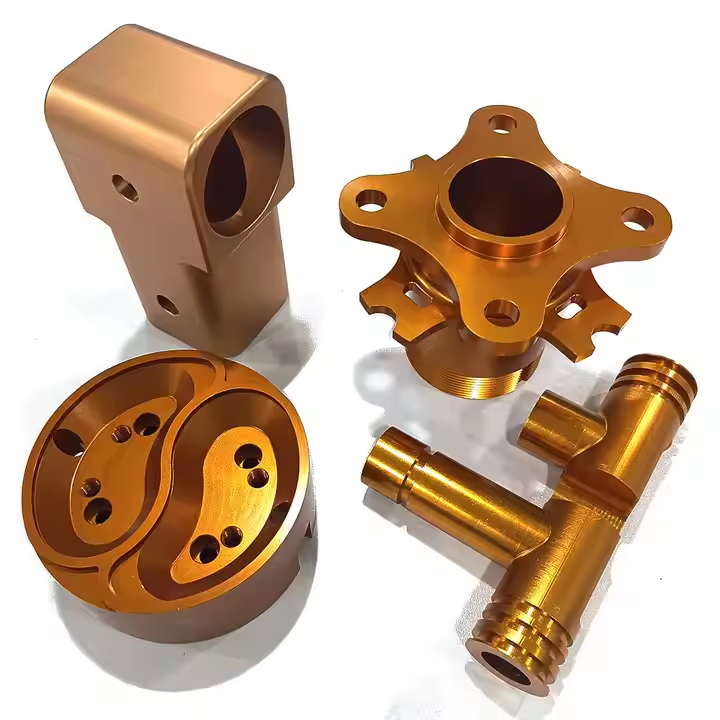
This article focuses on the medical device manufacturing and 3C product manufacturing fields. Through specific cases, it elaborates on the remarkable achievements of CNC technology in manufacturing complex and precise components and improving product quality, demonstrating its crucial role in related industries.
CNC Technology Application Cases (Part 1)