
Introduction to common stainless steel surface polishing levels in CNC machining
author: DJ-02
2024-09-25
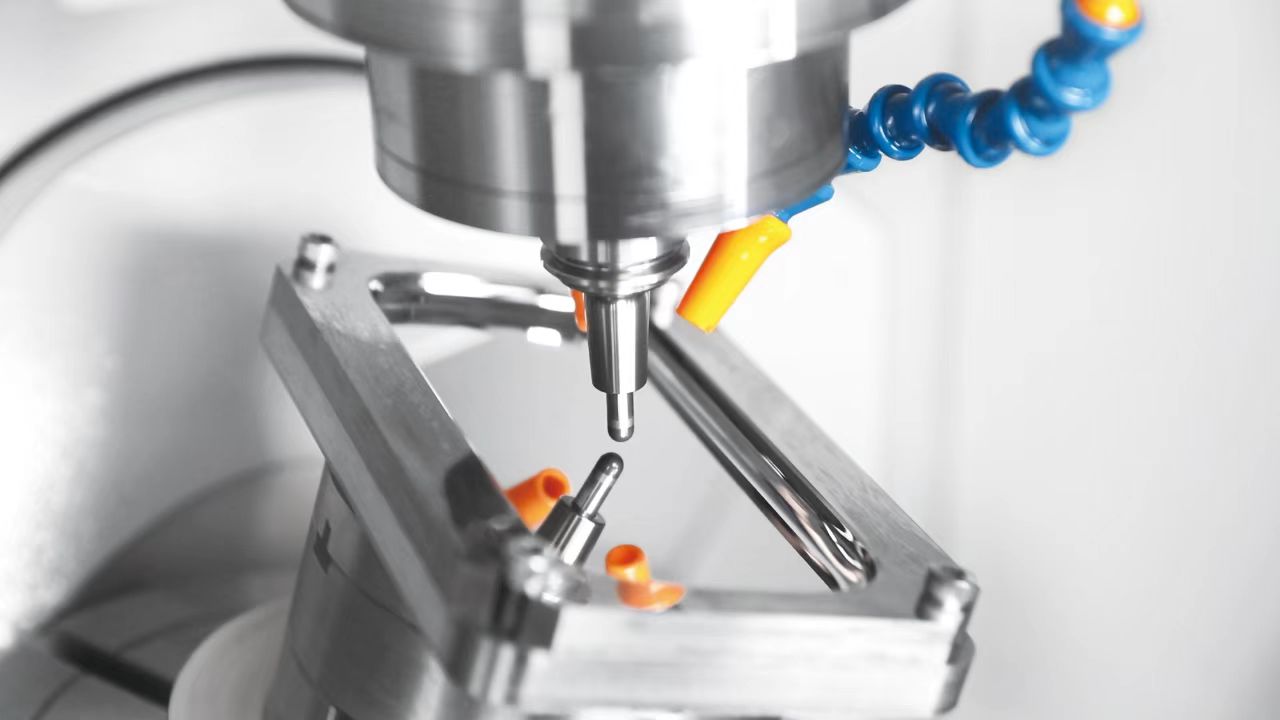
#2B/Mill Finish
The 2B finish, also often referred to as the "mill finish," describes the unpolished cold-rolled steel plate itself as it arrives from the production plant. It may sometimes show a slight sheen from the rolling process, but no reflections.
Some parts machined from stainless steel plate have a 2B finish

#3 Satin Finish.
The No. 3 brushed finish is achieved by polishing the metal product using a coated abrasive belt on a wide belt conveyor. This results in a rougher appearance because the final polish is done with a 100-120 grit belt. This common finish is most commonly applied to 304 stainless steel and is used in a wide range of industries.
The No. 3 brushed finish is the most commonly used polishing finish and is the least expensive

#4 Satin Finish.
The No. 4 brushed finish is similar to the No. 3, except that it looks more refined and has a smoother appearance. After the initial polish, the final finish is achieved by polishing with a 120-180 grit belt. This particular finish is most commonly applied to 304 stainless steel and is used in a wide range of industries.
#4 Brushed Finish is also a fairly common finish and is less expensive

Cross-Grain Satin.
Cross-grain brushed finish is achieved by using a coated abrasive pad to sand in a cross-grain pattern. This special finish is often used on stainless steel parts used in construction projects, such as glass clamps, stainless steel railings, etc.
The effect of cross-grain brushed finish is between #4 brushed finish and #6 brushed finish.

#6 Satin Finish
Similar to #4, but with a finer, smoother appearance. After the initial polish, the final finish is achieved by polishing with a 240-320 grit abrasive belt. Often used in high-end stainless steel casting projects

#7 Prebuff Finish
A highly reflective finish achieved by polishing a surface where the surface of the part is carefully ground to a mirror-like effect, but the sand lines are not removed through the final polishing process. This special finish is most commonly applied to 304 stainless steel and is used in a wide range of industries.

#8 Mirror Finish
#8 Mirror Finish is considered the industry standard for a highly reflective, mirror-like appearance. This is achieved by directional sanding in several stages with an abrasive followed by buffing with rouge oil. The resulting surface is bright, highly reflective and virtually free of grit lines, although at certain angles some are still visible. This special surface treatment is frequently used in elevators and escalators on a variety of metal types.

12 common surface treatment with accuracy up to 0.01mm!
Angle Cleaning in Metal Surface Treatment
Related Article

This article analyzes the prospects of the custom parts industry from three aspects: market demand, technological innovation, and challenges and opportunities, with specific cases to illustrate its development trends.
Analysis of the Prospects of the Custom Parts Industry
This article details CNC precision technology, covering its definition, applications in aerospace and electronics, advantages like high precision and automation, and its promising future in the manufacturing industry.
CNC Precision Technology: The Core Code of Modern Manufacturing and Its Infinite Potential
This part focuses on the shipbuilding industry, presenting a case of CNC technology application in the processing of large - scale ship propellers. It showcases how CNC technology addresses challenges in this field, improving processing efficiency and product quality, thus highlighting its significance in ship manufacturing.
CNC Technology Application Cases (Part 2)

This article focuses on the medical device manufacturing and 3C product manufacturing fields. Through specific cases, it elaborates on the remarkable achievements of CNC technology in manufacturing complex and precise components and improving product quality, demonstrating its crucial role in related industries.
CNC Technology Application Cases (Part 1)