
What kind of products require CNC machining?
author: DJ-02
2024-09-20
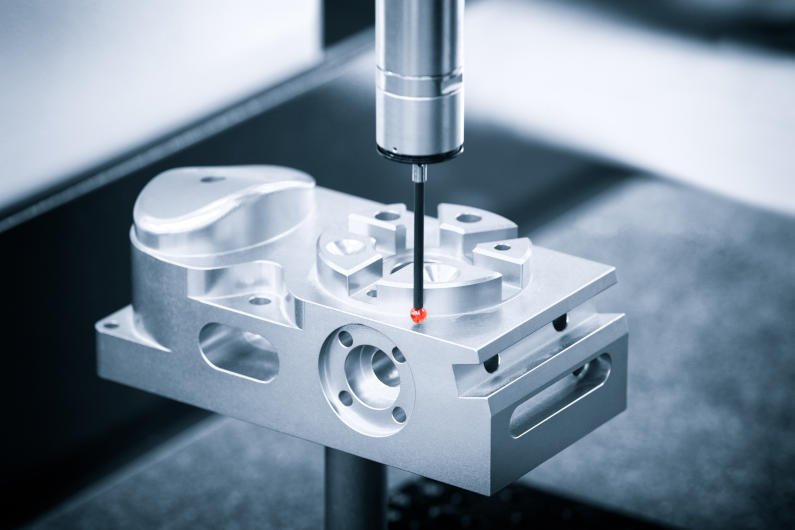
What is CNC
CNC (Numerical Control Machine Tool) is the abbreviation for Computer Numerical Control Machine Tool, which is an automated machine tool controlled by a program. This control system is capable of logically processing programs with control codes or other symbolic instructions, decoding them through a computer to enable the machine tool to perform predetermined actions, and processing raw materials into semi-finished finished parts through tool cutting.
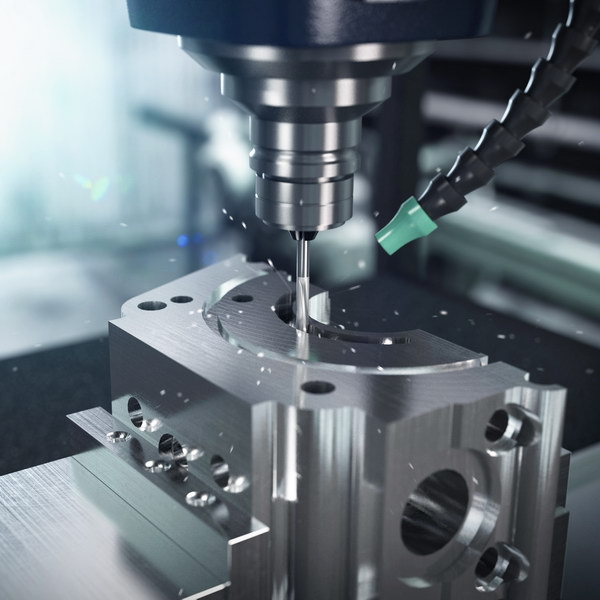
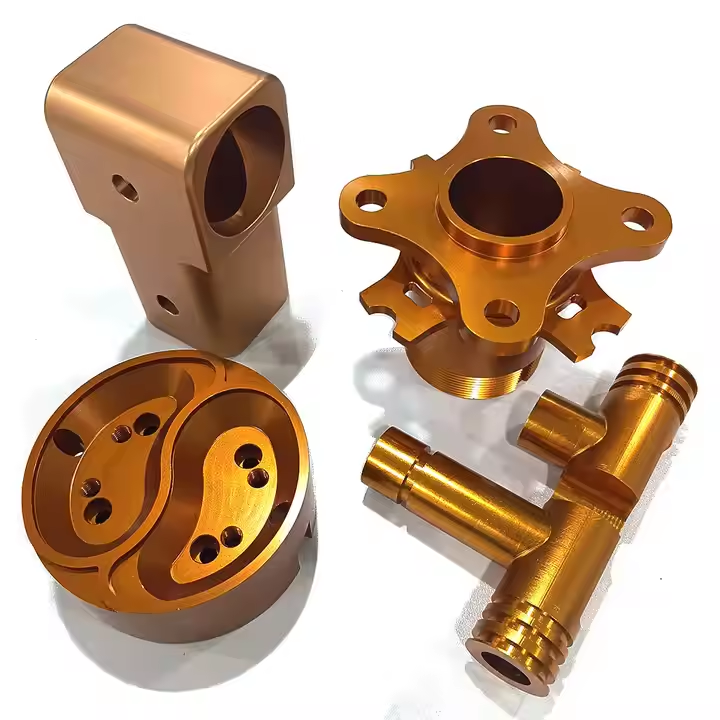
What are the parts suitable for CNC machining?
1) Irregular shaped parts
That is to say, irregularly shaped parts, which usually have poor rigidity and require mixed processing of multiple points, surfaces, lines, etc. The deformation and accuracy of irregular parts are very difficult to guarantee, so ordinary machine tools are generally unable to complete the machining. Need to use CNC machining for processing.
2) Disk, sleeve, board parts
Shaft components with distributed holes on the surface, including keyways, radial holes, and curved surfaces. These types of parts cannot be processed by general machine tools. Curved parts require the use of CNC vertical machining centers, while parts with apertures require CNC horizontal machining centers for processing.
3) Box type components
These types of parts generally have hole systems and cavities inside, with a certain proportion of length, width, and height. Most of them are used in fields such as automotive, medical equipment, and aircraft manufacturing. These types of parts require relatively high processing requirements, usually going through processes such as milling, drilling, expanding, boring, reaming, countersunking, tapping, etc., almost all of which are completed once. Ordinary machine tools take a long time to process and cannot guarantee machining accuracy, so these types of parts are generally processed using CNC machining centers.

CNC numerical control advantages
1) A significant reduction in the number of tooling is required to process parts with complex shapes without the need for complex tooling. If you want to change the shape and size of a part, you only need to modify the part processing program, which is suitable for new product development and modification.
2) Stable processing quality, high processing accuracy, high repeatability, suitable for the processing requirements of aircraft.
3) In the case of multi variety and small batch production, the production efficiency is higher, which can reduce the time for production preparation, machine tool adjustment, and process inspection, and also reduce cutting time due to the use of optimal cutting quantity.
4) It can process complex surfaces that are difficult to process using conventional methods, and even some unobservable machining parts.
How much do you know about the CNC machining process for precision parts?
How to choose between aluminum casting and CNC machining?
Related Article

This article analyzes the prospects of the custom parts industry from three aspects: market demand, technological innovation, and challenges and opportunities, with specific cases to illustrate its development trends.
Analysis of the Prospects of the Custom Parts Industry
This article details CNC precision technology, covering its definition, applications in aerospace and electronics, advantages like high precision and automation, and its promising future in the manufacturing industry.
CNC Precision Technology: The Core Code of Modern Manufacturing and Its Infinite Potential
This part focuses on the shipbuilding industry, presenting a case of CNC technology application in the processing of large - scale ship propellers. It showcases how CNC technology addresses challenges in this field, improving processing efficiency and product quality, thus highlighting its significance in ship manufacturing.
CNC Technology Application Cases (Part 2)
This article focuses on the medical device manufacturing and 3C product manufacturing fields. Through specific cases, it elaborates on the remarkable achievements of CNC technology in manufacturing complex and precise components and improving product quality, demonstrating its crucial role in related industries.
CNC Technology Application Cases (Part 1)