
Principles of Ultrasonic Cleaning
author: DJ-02
2024-12-24

Ultrasonic cleaning is an efficient cleaning method that is widely used in various industries, especially when complex shapes, small pores and precision parts need to be cleaned. The following is a detailed principle of ultrasonic cleaning.
Principles of Ultrasonic Cleaning
Ultrasonic cleaning mainly relies on the propagation of ultrasonic waves in liquids, and usually includes the following key steps and principles:
Ultrasonic generation:
The transducer inside the ultrasonic cleaning machine converts electrical energy into ultrasonic energy, usually operating at a frequency between 20 kHz and 40 kHz.
Sound wave propagation:
Ultrasonic waves propagate in the cleaning liquid, forming high-frequency compression waves and rarefaction waves.
Cavitation phenomenon:
When sound waves propagate into the liquid, they cause periodic changes in the liquid pressure. At the moment of pressure reduction, tiny bubbles in the liquid form and expand rapidly, and then when the pressure increases again, these bubbles quickly collapse to form strong tiny shock waves.
Cleaning effect:
The shock waves and tiny eddies generated by the cavitation phenomenon effectively remove dirt, grease, dust and other contaminants from the surface of the workpiece, especially in hard-to-reach areas such as pores, gaps and complex shapes.
Liquid medium:
The choice of cleaning liquid is also very important. Commonly used cleaning liquids include deionized water, alcohol, detergents, etc. You can choose the appropriate liquid according to the nature of the cleaning object.
Ultrasonic cleaning application scope and advantages
Which spraying process is most suitable for the coating of automotive parts?
Related Article

This article analyzes the prospects of the custom parts industry from three aspects: market demand, technological innovation, and challenges and opportunities, with specific cases to illustrate its development trends.
Analysis of the Prospects of the Custom Parts Industry
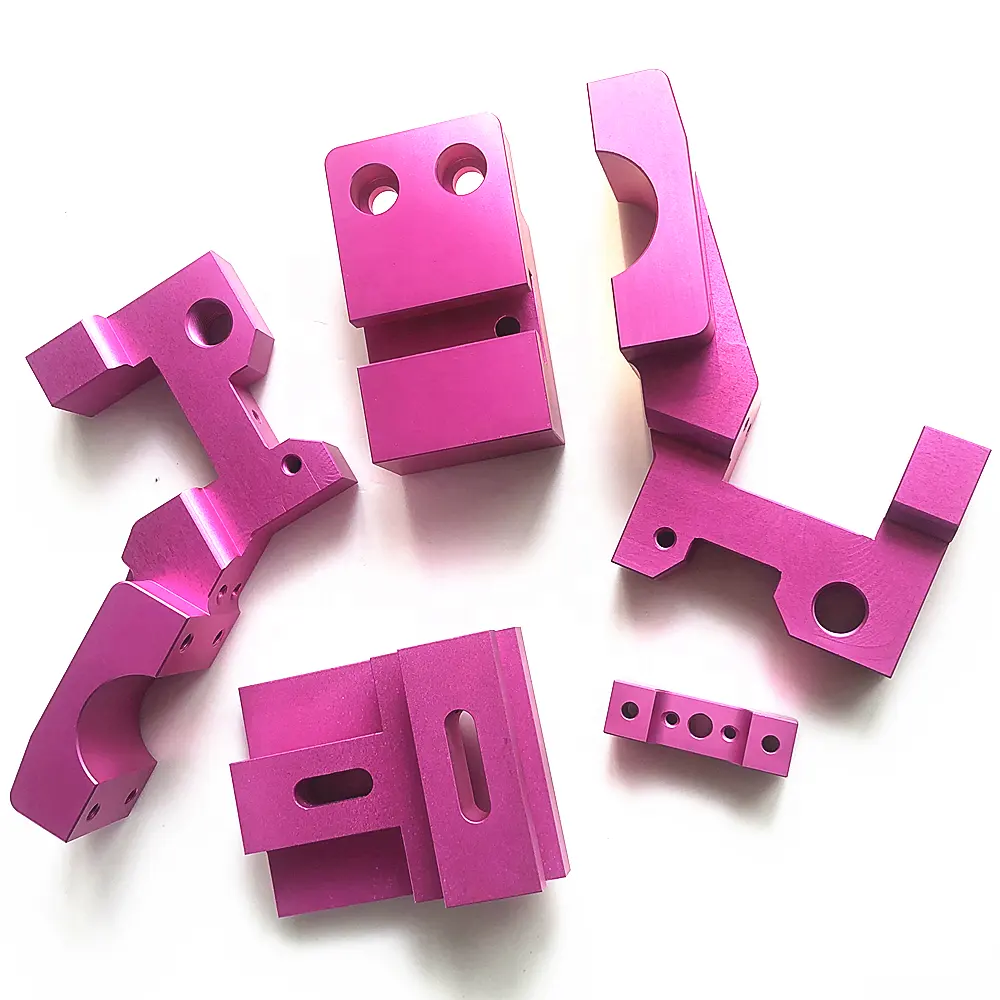
This article details CNC precision technology, covering its definition, applications in aerospace and electronics, advantages like high precision and automation, and its promising future in the manufacturing industry.
CNC Precision Technology: The Core Code of Modern Manufacturing and Its Infinite Potential
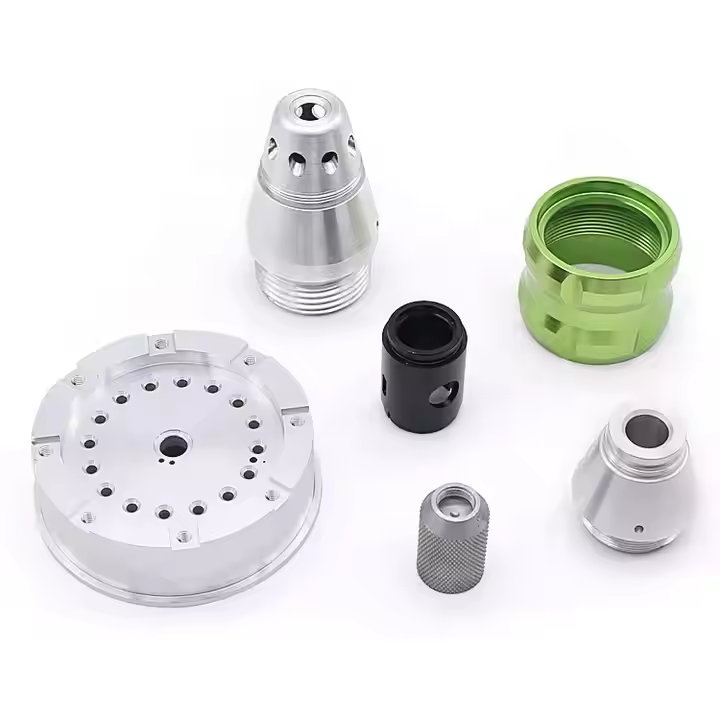
This part focuses on the shipbuilding industry, presenting a case of CNC technology application in the processing of large - scale ship propellers. It showcases how CNC technology addresses challenges in this field, improving processing efficiency and product quality, thus highlighting its significance in ship manufacturing.
CNC Technology Application Cases (Part 2)
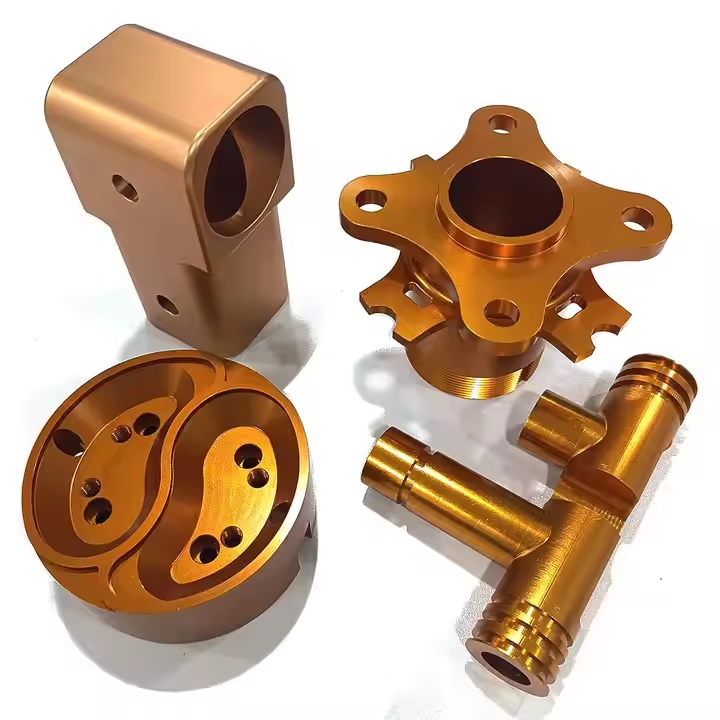
This article focuses on the medical device manufacturing and 3C product manufacturing fields. Through specific cases, it elaborates on the remarkable achievements of CNC technology in manufacturing complex and precise components and improving product quality, demonstrating its crucial role in related industries.
CNC Technology Application Cases (Part 1)