
Anodizing in CNC Machining Industry
author: DJ-04
2024-10-16
Onadizing surface treatment has a wide range of applications in the field of CNC machining, especially in improving the surface hardness, wear resistance and corrosion resistance of parts.
The following are some of the main applications:
1.Improving surface hardness: Anodizing treatment can form a layer of high-hardness film on the metal surface, improving the hardness and wear resistance of parts. This is particularly important for parts that need to withstand high wear or high pressure, and can extend the service life of parts.
2.Improving corrosion resistance: This can effectively prevent the metal surface from being corroded and improve the corrosion resistance of parts. This is of great significance for parts working in harsh environments, such as marine equipment, automotive parts, etc.
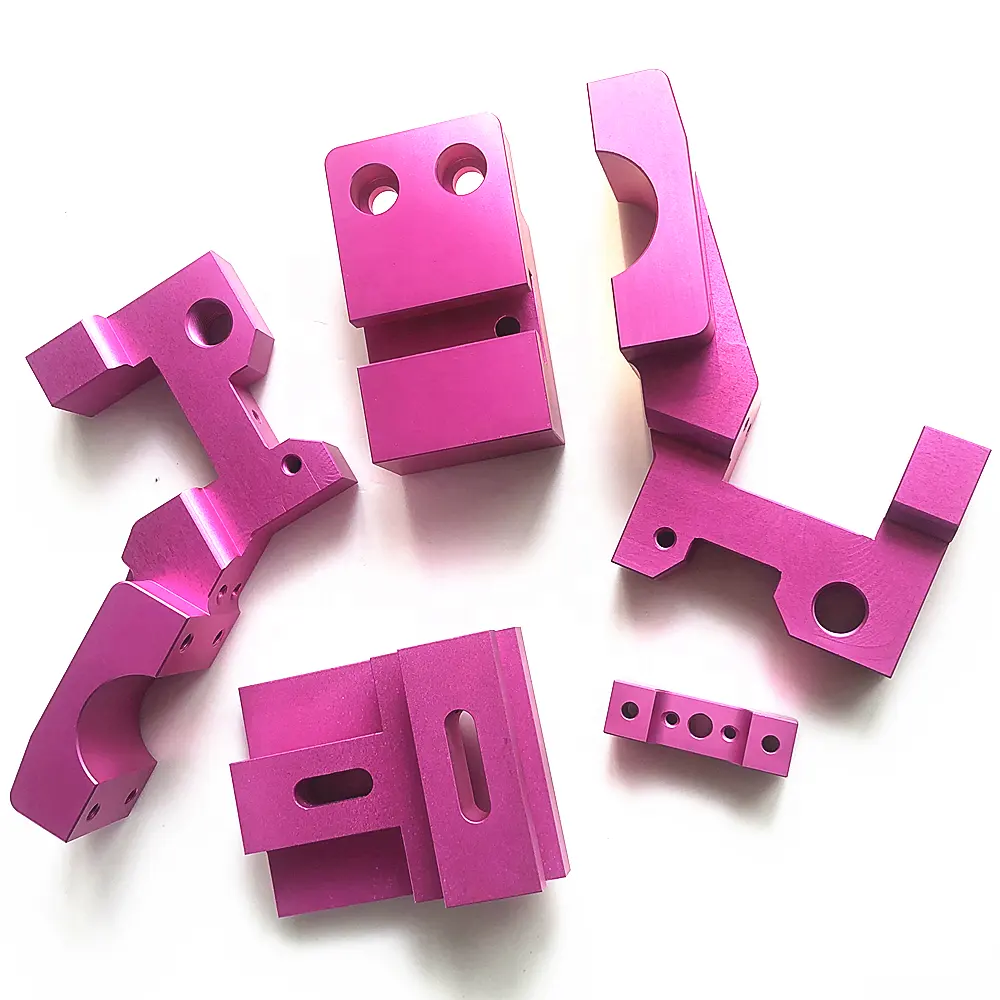
3.Beautifying the surface: It can make the metal surface present different colors and gloss, increasing the beauty and decorativeness of the product. This is important for some products that require exquisite appearance, such as jewelry, watches, etc.
4.Improving lubricity: Anodized surfaces often have better lubricity, which helps to reduce friction between parts and extend the service life of parts.
Identification and anti-counterfeiting: The surface after finishing can be used for identification and anti-counterfeiting. The identification formed by the anodized layer of different colors can be used to identify and distinguish the authenticity of the product.

In CNC machining, anodizing surface treatment is usually used as one of the subsequent processing technologies for parts. Different oxidation methods and process parameters can be selected according to specific requirements to achieve the purpose of enhancing part performance, improving appearance quality and extending service life. Therefore, oxidation surface treatment has a wide range of applications in CNC machining and plays an important role in improving part quality and performance.
Surface treatment technology——radium carving
Aluminum alloy shell CNC machining surface treatment method
Related Article

This article analyzes the prospects of the custom parts industry from three aspects: market demand, technological innovation, and challenges and opportunities, with specific cases to illustrate its development trends.
Analysis of the Prospects of the Custom Parts Industry
This article details CNC precision technology, covering its definition, applications in aerospace and electronics, advantages like high precision and automation, and its promising future in the manufacturing industry.
CNC Precision Technology: The Core Code of Modern Manufacturing and Its Infinite Potential
This part focuses on the shipbuilding industry, presenting a case of CNC technology application in the processing of large - scale ship propellers. It showcases how CNC technology addresses challenges in this field, improving processing efficiency and product quality, thus highlighting its significance in ship manufacturing.
CNC Technology Application Cases (Part 2)
This article focuses on the medical device manufacturing and 3C product manufacturing fields. Through specific cases, it elaborates on the remarkable achievements of CNC technology in manufacturing complex and precise components and improving product quality, demonstrating its crucial role in related industries.
CNC Technology Application Cases (Part 1)