
Which spraying process is most suitable for the coating of automotive parts?
author: DJ-02
2024-12-24
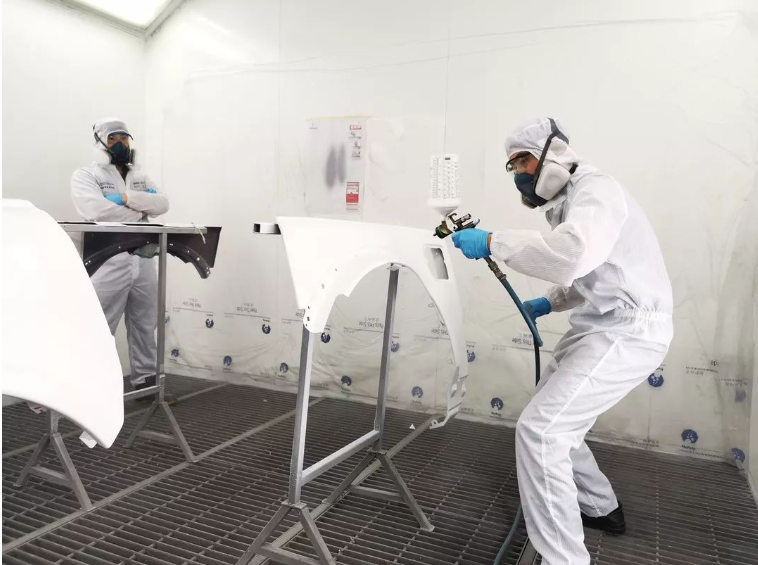
In the coating of automotive parts, the following spraying processes are usually widely used, and each process has its specific advantages and applicable scenarios:
1. Electrostatic spraying
Advantages:
The coating is uniform and has strong adhesion.
Less paint waste and good environmental protection.
Can cover parts with complex shapes.
Application: Suitable for the coating of metal parts, such as body, chassis, etc.
2. Electrophoretic spraying
Advantages:
The coating is uniform and can penetrate into complex shapes and pores.
Excellent anti-corrosion performance, suitable for rust prevention.
Good environmental protection, using water-based paint.
Application: Commonly used for anti-corrosion treatment of chassis and body.
3. Powder spraying
Advantages:
Good environmental protection, solvent-free paint, reducing volatile organic compounds (VOCs) emissions.
The coating has strong wear resistance and adhesion, suitable for outdoor use.
A thicker coating can be obtained to increase protection.
Application: Suitable for parts that require high wear resistance, such as wheels and frames.
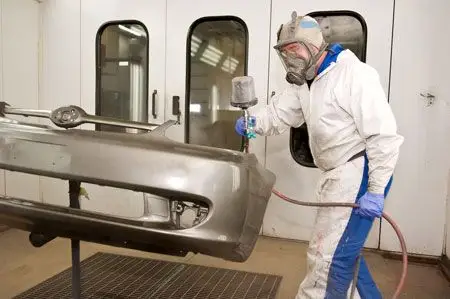
4. Liquid spraying (air gun spraying)
Advantages:
Various types of coatings, strong adaptability.
Different gloss and effects (such as metallic paint, matte paint) can be achieved.
Application: Suitable for coating of automotive exterior parts, such as body paint and decorative parts.
Recommended selection
Taking all factors into consideration, electrophoretic spraying and electrostatic spraying are the most commonly used processes in automotive parts coating. Electrophoretic spraying is usually used for anti-corrosion and primer treatment, while electrostatic spraying is used for topcoat. The combination of the two can provide excellent protection and aesthetics. The specific selection also needs to be comprehensively evaluated based on the material, shape and use environment of the parts.
Principles of Ultrasonic Cleaning
What is the specific difference between quenching and tempering in heat treatment process?
Related Article

This article analyzes the prospects of the custom parts industry from three aspects: market demand, technological innovation, and challenges and opportunities, with specific cases to illustrate its development trends.
Analysis of the Prospects of the Custom Parts Industry
This article details CNC precision technology, covering its definition, applications in aerospace and electronics, advantages like high precision and automation, and its promising future in the manufacturing industry.
CNC Precision Technology: The Core Code of Modern Manufacturing and Its Infinite Potential
This part focuses on the shipbuilding industry, presenting a case of CNC technology application in the processing of large - scale ship propellers. It showcases how CNC technology addresses challenges in this field, improving processing efficiency and product quality, thus highlighting its significance in ship manufacturing.
CNC Technology Application Cases (Part 2)
This article focuses on the medical device manufacturing and 3C product manufacturing fields. Through specific cases, it elaborates on the remarkable achievements of CNC technology in manufacturing complex and precise components and improving product quality, demonstrating its crucial role in related industries.
CNC Technology Application Cases (Part 1)