
What is the effect of different abrasives on the sandblasting effect?
author: DJ-02
2025-01-09

The effect of different abrasives on the sandblasting effect is mainly reflected in the following aspects:
1. Abrasive type
Different types of abrasives have different physical and chemical properties, which will directly affect the effect of sandblasting:
Quartz sand: Commonly used abrasive, suitable for general cleaning and coarsening. High hardness, can effectively remove rust and dirt, but easy to produce fine dust.
Aluminum oxide: High hardness, suitable for fine sandblasting, can provide a higher surface roughness, suitable for metal and plastic surface cleaning.
Steel shot: Used for polishing and removing oxides, usually used on metal surfaces, can improve the smoothness and wear resistance of the surface.
Glass beads: Suitable for cleaning and removing surface dirt, can produce a smooth surface, often used for fine cleaning and decorative treatment.
Plastic particles: Lighter, less damage to the surface, suitable for cleaning fragile materials such as electronic components and glass.
2. Abrasive particle size
The particle size of the abrasive also has a significant effect on the sandblasting effect:
Coarse-grained abrasives: suitable for removing heavy coatings, rust and oxides, can quickly clean the surface, but may cause greater surface damage.
Fine-grained abrasives: more suitable for fine cleaning and surface smoothing, can reduce damage to the substrate, and are suitable for workpieces with high surface quality requirements.
3. Abrasive shape
The shape of the abrasive also affects the sandblasting effect:
Sharp shape: has strong cutting ability, suitable for removing stubborn dirt and surface treatment.
Round abrasives: less cutting ability, more suitable for surface polishing and detailed treatment, can reduce surface damage.
4. Sandblasting speed
The speed and jet pressure of the abrasive also affect the sandblasting effect:
High speed: can improve the decontamination effect, but may cause surface erosion and damage.
Low speed: more suitable for fine treatment, can reduce damage to the material, but the decontamination effect is weaker.
5. Hardness of abrasive
The hardness of abrasive directly affects its decontamination ability:
Hard abrasive: can effectively remove hard dirt and coating, suitable for cleaning metal and heavy dirt.
Soft abrasive: suitable for more fragile materials, reducing damage to the substrate.
Summary
Different abrasives have many effects on the sandblasting effect, including abrasive type, particle size, shape, speed and hardness. Choosing the right abrasive can significantly improve the cleaning effect and surface quality of sandblasting, while reducing the risk of damage to the substrate. Therefore, when performing sandblasting operations, it is necessary to reasonably select abrasives according to specific cleaning needs and material characteristics.
Introduction to Polystyrene
A Detailed Introduction to ABS Materials
Related Article

This article analyzes the prospects of the custom parts industry from three aspects: market demand, technological innovation, and challenges and opportunities, with specific cases to illustrate its development trends.
Analysis of the Prospects of the Custom Parts Industry

This article details CNC precision technology, covering its definition, applications in aerospace and electronics, advantages like high precision and automation, and its promising future in the manufacturing industry.
CNC Precision Technology: The Core Code of Modern Manufacturing and Its Infinite Potential
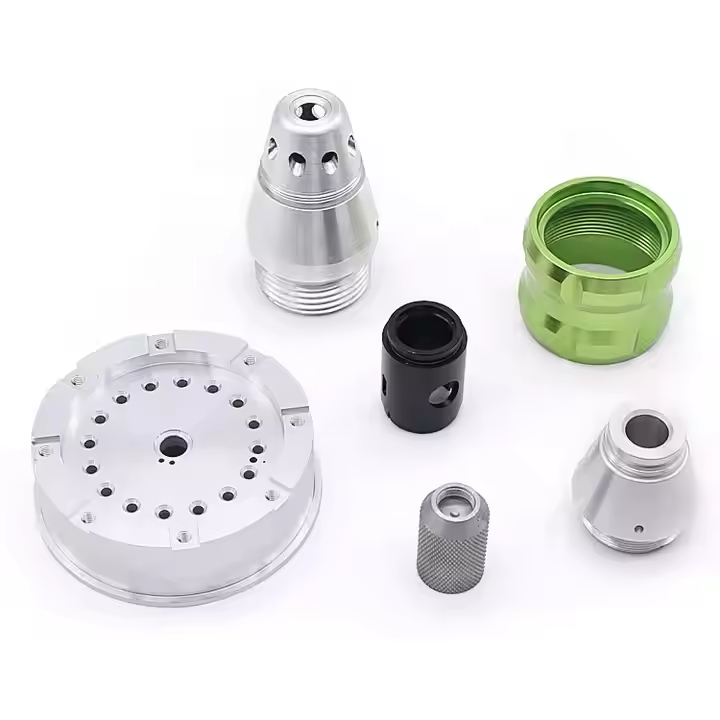
This part focuses on the shipbuilding industry, presenting a case of CNC technology application in the processing of large - scale ship propellers. It showcases how CNC technology addresses challenges in this field, improving processing efficiency and product quality, thus highlighting its significance in ship manufacturing.
CNC Technology Application Cases (Part 2)
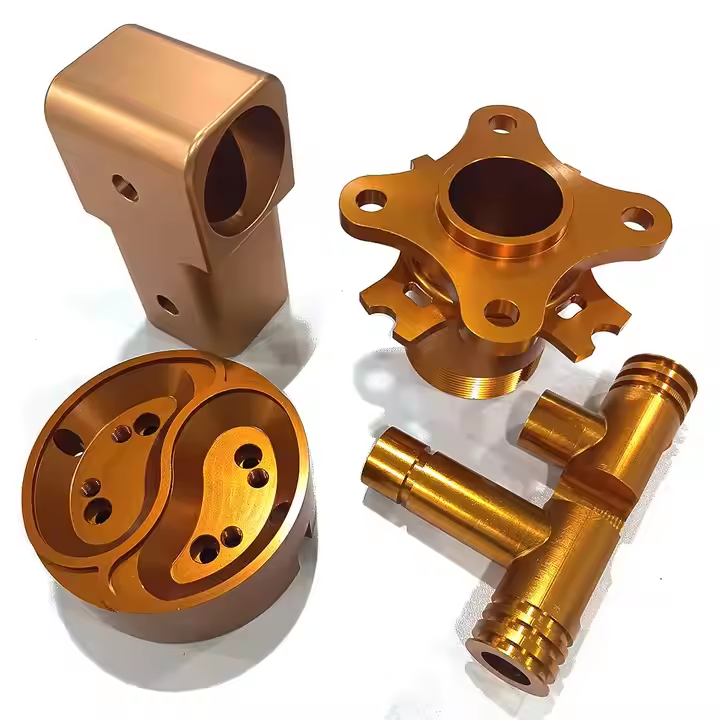
This article focuses on the medical device manufacturing and 3C product manufacturing fields. Through specific cases, it elaborates on the remarkable achievements of CNC technology in manufacturing complex and precise components and improving product quality, demonstrating its crucial role in related industries.
CNC Technology Application Cases (Part 1)