
What is the specific difference between quenching and tempering in heat treatment process?
author: DJ-02
2024-12-24

Quenching and tempering are two common processes in heat treatment process, which have obvious differences in purpose, process and results. Here are their specific differences:
1. Purpose
Quenching:
Purpose: To improve the hardness and strength of the material by rapid cooling and form a martensitic structure.
Tempering:
Purpose: To reduce the internal stress generated during quenching by heating to a certain temperature and then cooling, improve toughness and plasticity, and reduce hardness.
2. Heating and Cooling Process
Quenching:
Heating: Heating the workpiece to the critical temperature (usually within the austenitizing temperature range of steel).
Cooling: Rapidly immersing the workpiece in a cooling medium (such as water, oil or air), usually occurring within a few seconds to a few minutes.
Tempering:
Heating: Heating the quenched workpiece to below the critical temperature (usually between 150°C and 650°C, depending on the material).
Cooling: Usually cooling naturally in air, the holding time depends on the required mechanical properties.
3. Results
Quenching:
Results: The hardness of the material is significantly improved, but the toughness is relatively low, which may lead to increased brittleness and internal stress.
Tempering:
Results: The hardness of the material is reduced, the toughness and plasticity are improved, the internal stress is reduced, the brittleness is reduced, and the comprehensive mechanical properties of the material are improved.
4. Applications
Quenching:
Applications: Commonly used for parts that require high hardness and strength, such as tools, bearings, gears, etc.
Tempering:
Applications: Commonly used for parts that require a certain toughness and wear resistance, usually after quenching to ensure the comprehensive performance of the material.
Summary
Quenching and tempering are complementary heat treatment processes. Quenching is mainly used to increase hardness, while tempering is to improve the brittleness and internal stress caused by rapid cooling after quenching. The combination of the two can optimize the performance of the material and meet the needs of different applications.
Which spraying process is most suitable for the coating of automotive parts?
Development Trends of Precision Machining Equipment
Related Article

This article analyzes the prospects of the custom parts industry from three aspects: market demand, technological innovation, and challenges and opportunities, with specific cases to illustrate its development trends.
Analysis of the Prospects of the Custom Parts Industry
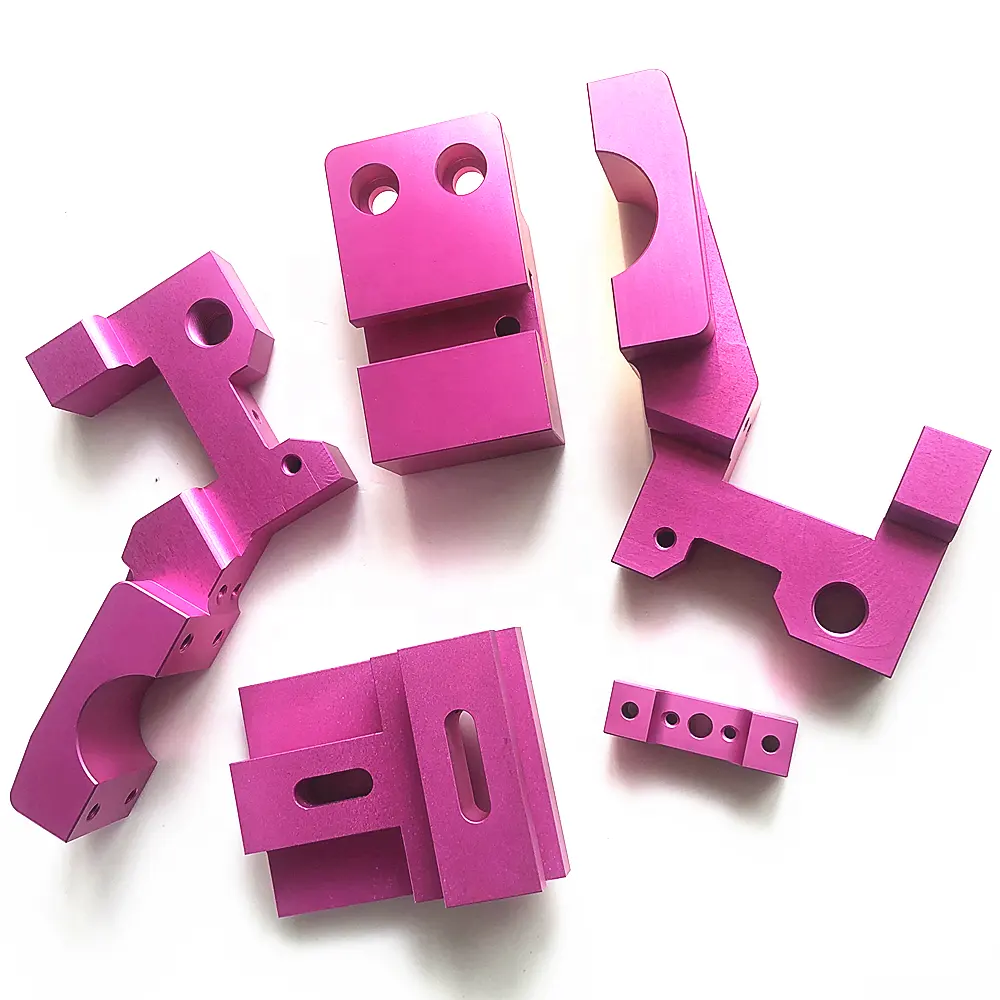
This article details CNC precision technology, covering its definition, applications in aerospace and electronics, advantages like high precision and automation, and its promising future in the manufacturing industry.
CNC Precision Technology: The Core Code of Modern Manufacturing and Its Infinite Potential
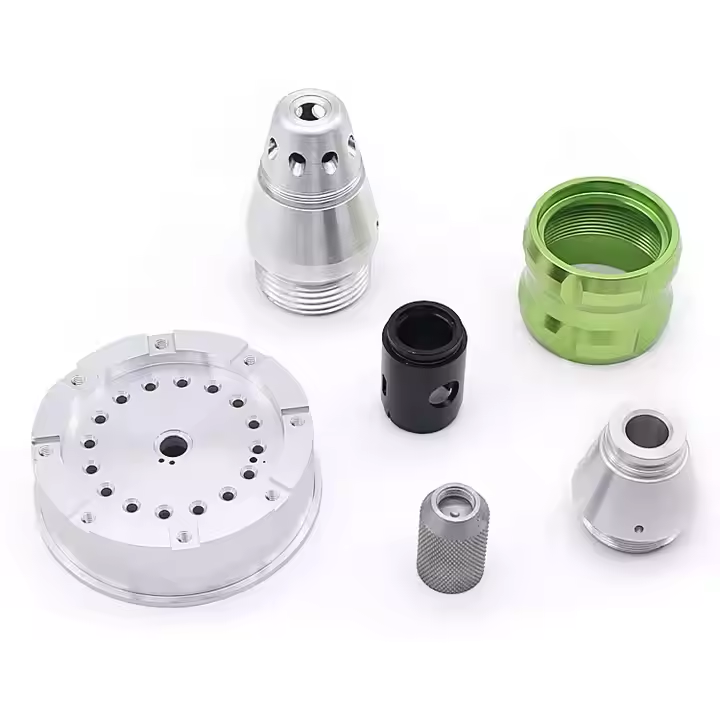
This part focuses on the shipbuilding industry, presenting a case of CNC technology application in the processing of large - scale ship propellers. It showcases how CNC technology addresses challenges in this field, improving processing efficiency and product quality, thus highlighting its significance in ship manufacturing.
CNC Technology Application Cases (Part 2)
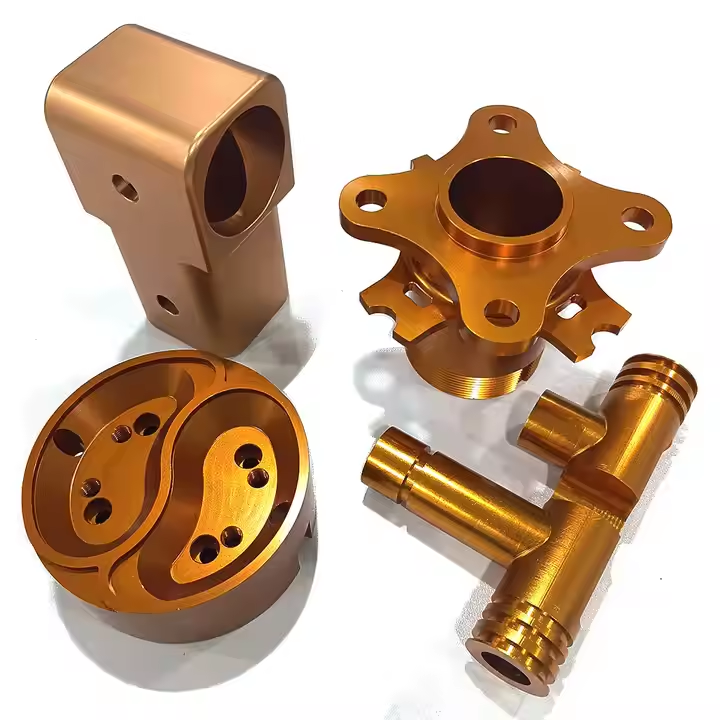
This article focuses on the medical device manufacturing and 3C product manufacturing fields. Through specific cases, it elaborates on the remarkable achievements of CNC technology in manufacturing complex and precise components and improving product quality, demonstrating its crucial role in related industries.
CNC Technology Application Cases (Part 1)