
How does the thickness of the chrome plating affect its corrosion and wear resistance?
author: DJ-02
2025-01-23
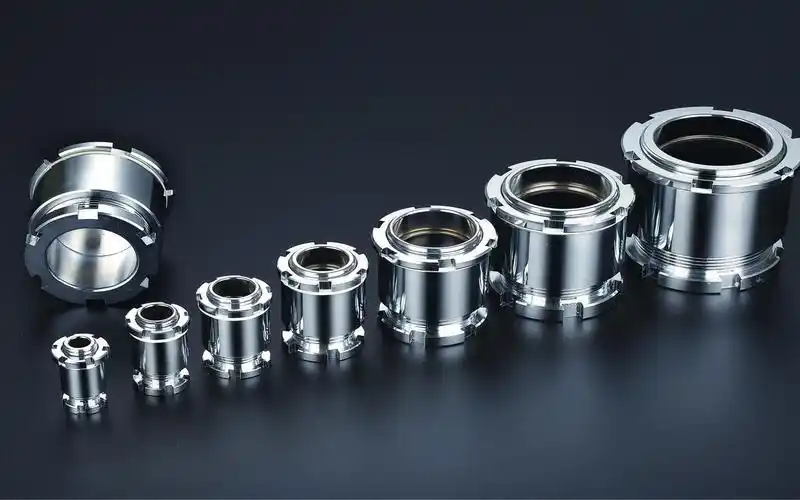
The thickness of the chrome plating has a significant impact on its corrosion and wear resistance, as analyzed below:
Corrosion resistance
Thickness and protective layer:
A thicker chrome plating provides better protection and can effectively isolate the substrate from the external environment (such as moisture, oxygen and corrosive substances), thereby reducing the risk of corrosion.
When the chrome plating is too thin, the substrate is easily exposed to the corrosive environment, resulting in oxidation and rust.
Uniformity:
A chrome plating with uniform thickness can provide consistent protection across the board and prevent localized corrosion.
Uneven plating may result in thinner areas, increasing the risk of corrosion.
Wear resistance
Hardness:
The thickness of the chrome plating is generally proportional to its hardness. Thicker chrome plating can improve wear resistance and prevent abrasion and scratching.
Thin plating may not be able to withstand high wear environments, resulting in rapid wear and failure.
Wear mechanism:
Thicker chrome plating can better maintain its structural integrity during wear, reducing the chrome layer from flaking or damage.
If the coating is too thin, wear may expose the substrate, thereby accelerating the wear process.
Summary
Appropriate thickness: To ensure good corrosion resistance and wear resistance, the thickness of the chrome plating layer should be within a reasonable range (usually a few microns to tens of microns), and the specific thickness depends on the requirements of the application scenario.
Cost and performance balance: Although increasing the coating thickness can improve corrosion resistance and wear resistance, it will also increase costs. Therefore, it is necessary to balance performance and economy when designing and selecting the thickness of the chrome plating layer.
What is the optimal range of chrome plating thickness for different application scenarios?
Chromium plating
Related Article

This article analyzes the prospects of the custom parts industry from three aspects: market demand, technological innovation, and challenges and opportunities, with specific cases to illustrate its development trends.
Analysis of the Prospects of the Custom Parts Industry
This article details CNC precision technology, covering its definition, applications in aerospace and electronics, advantages like high precision and automation, and its promising future in the manufacturing industry.
CNC Precision Technology: The Core Code of Modern Manufacturing and Its Infinite Potential
This part focuses on the shipbuilding industry, presenting a case of CNC technology application in the processing of large - scale ship propellers. It showcases how CNC technology addresses challenges in this field, improving processing efficiency and product quality, thus highlighting its significance in ship manufacturing.
CNC Technology Application Cases (Part 2)
This article focuses on the medical device manufacturing and 3C product manufacturing fields. Through specific cases, it elaborates on the remarkable achievements of CNC technology in manufacturing complex and precise components and improving product quality, demonstrating its crucial role in related industries.
CNC Technology Application Cases (Part 1)