
Electrophoresis
author: DJ-02
2025-01-23
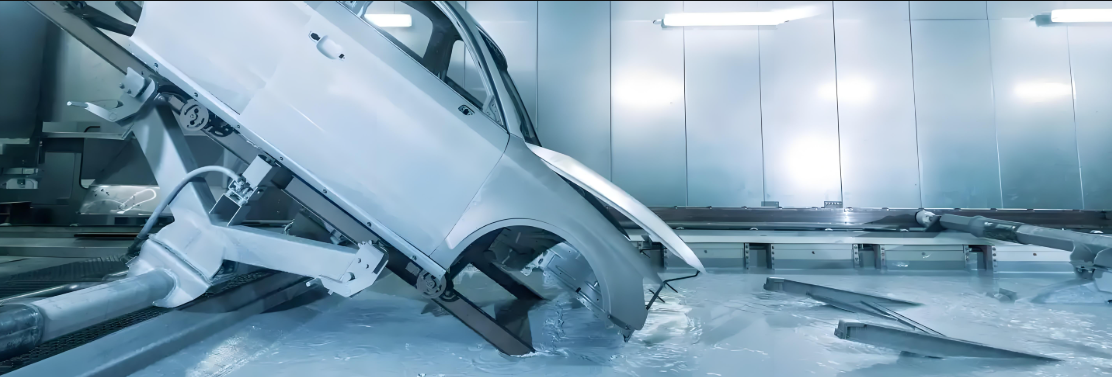
Electrophoresis is a technology that uses electric field forces to move charged particles in liquids. It is widely used in coatings, surface treatment, and biochemistry. The following is a detailed introduction to electrophoresis, including its principles, applications, types, and advantages and disadvantages.
Principle
The basic principle of electrophoresis is to place charged particles (such as paint particles or biomolecules) in an electric field, and the charged particles move to the opposite electrode under the action of the electric field. This process can be achieved by ionization, dispersion, or colloid.
Application Fields
Coating Industry:
Electrophoretic Coating: Used for metal surface coatings to provide good adhesion and corrosion resistance.
Application: Mainly used for anti-corrosion coatings for automobiles, home appliances, and industrial equipment.
Biochemistry:
Separation and Analysis: Used for the separation of DNA, RNA, and proteins, often used in laboratory analysis.
Application: In molecular biology and biotechnology research.
Electronics Industry:
Conductive Coating: Apply conductive coatings on circuit boards and electronic components to improve conductivity and oxidation resistance.
Type
Anodic Electrophoresis:
Negatively charged paint particles are deposited near the anode, suitable for coating metal surfaces.
Cathodic electrophoresis:
Positively charged paint particles are deposited near the cathode, generally providing better coating quality and corrosion resistance.
Advantages and Disadvantages
Advantages
Uniformity: The electrophoretic coating is uniform and can cover parts of complex shapes.
Environmental protection: Water-based electrophoretic coatings are generally more environmentally friendly than solvent-based coatings.
Strong adhesion: The electrophoretic coating has good adhesion to the substrate and can effectively prevent peeling.
Corrosion resistance: Provides good corrosion protection and extends the service life of the product.
Disadvantages
Equipment cost: The electrophoretic coating equipment and process are relatively complex, and the initial investment is high.
Process control: The control requirements for parameters such as current, temperature and time are high, which affects the coating performance.
Summary
Electrophoresis is an efficient and environmentally friendly coating and separation technology that is widely used in many fields. Its superior coating uniformity and corrosion resistance make it widely used in both industry and laboratories. The best electrophoretic effect can be achieved through reasonable process design and parameter control.
What is the specific difference between cathodic electrophoresis and anodic electrophoresis?
Trivalent chromium passivation
Related Article

This article analyzes the prospects of the custom parts industry from three aspects: market demand, technological innovation, and challenges and opportunities, with specific cases to illustrate its development trends.
Analysis of the Prospects of the Custom Parts Industry
This article details CNC precision technology, covering its definition, applications in aerospace and electronics, advantages like high precision and automation, and its promising future in the manufacturing industry.
CNC Precision Technology: The Core Code of Modern Manufacturing and Its Infinite Potential
This part focuses on the shipbuilding industry, presenting a case of CNC technology application in the processing of large - scale ship propellers. It showcases how CNC technology addresses challenges in this field, improving processing efficiency and product quality, thus highlighting its significance in ship manufacturing.
CNC Technology Application Cases (Part 2)
This article focuses on the medical device manufacturing and 3C product manufacturing fields. Through specific cases, it elaborates on the remarkable achievements of CNC technology in manufacturing complex and precise components and improving product quality, demonstrating its crucial role in related industries.
CNC Technology Application Cases (Part 1)