
How does five-axis machining compare to three-axis machining?
author: DJ-02
2024-12-02
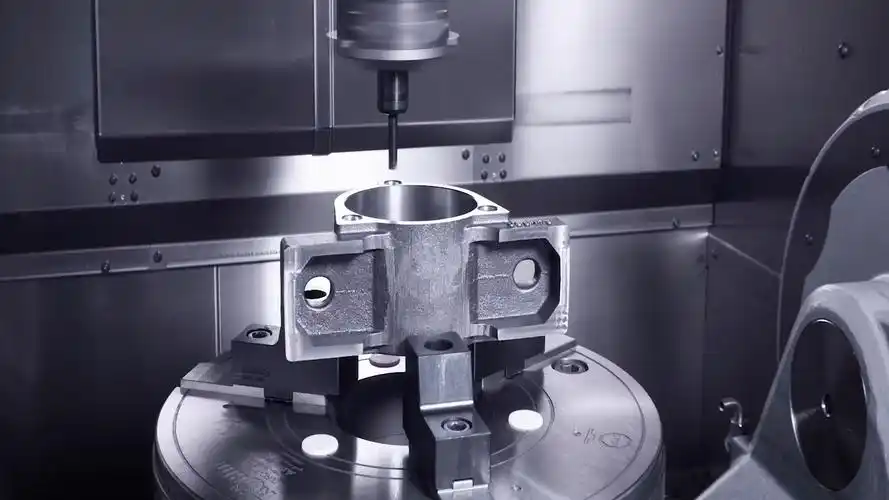
Five-axis machining offers several advantages over three-axis machining, particularly when it comes to complexity, efficiency, and precision. Here’s a comparison of the two:
1. Complexity of Parts
-
Three-Axis Machining: Limited to movement along the X, Y, and Z axes. This can make it challenging to machine complex geometries, requiring multiple setups or fixtures to achieve the desired shape.
-
Five-Axis Machining: Capable of simultaneous movement along the X, Y, Z axes and rotation around two additional axes (usually A and B). This allows for the machining of intricate shapes and contours in a single setup, reducing the need for repositioning.
2. Precision and Surface Finish
-
Three-Axis Machining: May result in less precision for complex parts due to the necessity of multiple setups, which can introduce errors and misalignments.
-
Five-Axis Machining: Provides superior precision and a better surface finish, as the tool can approach the workpiece from various angles without needing to be repositioned. This minimizes the chance of errors.
3. Efficiency and Production Time
-
Three-Axis Machining: Typically slower for complex parts due to the need for multiple setups and longer cycle times.
-
Five-Axis Machining: More efficient for complex parts, as it can complete tasks in fewer setups and often reduces overall machining time.
4. Tooling and Setup
-
Three-Axis Machining: Simpler tooling and setup processes, making it easier to use for basic machining tasks.
-
Five-Axis Machining: Requires more advanced tooling and setup, which can be more complex and may require skilled operators. However, the investment pays off in terms of capability for complex parts.
5. Material Waste
-
Three-Axis Machining: May generate more waste due to the need for additional setups and adjustments.
-
Five-Axis Machining: Generally results in less material waste, as it can achieve the desired shape more efficiently in fewer passes.
6. Cost
-
Three-Axis Machining: Generally lower initial investment and operational costs, making it suitable for simpler projects.
-
Five-Axis Machining: Higher initial investment and operational costs, but often justified by the increased efficiency, precision, and capability to handle complex jobs.
Conclusion
Overall, five-axis machining is superior for producing complex, precise parts efficiently, while three-axis machining remains a viable option for simpler tasks. The choice between the two depends on the specific needs of the project, including part complexity, budget, and production volume.
What are some examples of materials unsuitable for five-axis machining?
Several common methods of making prototypes
Related Article

This article analyzes the prospects of the custom parts industry from three aspects: market demand, technological innovation, and challenges and opportunities, with specific cases to illustrate its development trends.
Analysis of the Prospects of the Custom Parts Industry
This article details CNC precision technology, covering its definition, applications in aerospace and electronics, advantages like high precision and automation, and its promising future in the manufacturing industry.
CNC Precision Technology: The Core Code of Modern Manufacturing and Its Infinite Potential
This part focuses on the shipbuilding industry, presenting a case of CNC technology application in the processing of large - scale ship propellers. It showcases how CNC technology addresses challenges in this field, improving processing efficiency and product quality, thus highlighting its significance in ship manufacturing.
CNC Technology Application Cases (Part 2)
This article focuses on the medical device manufacturing and 3C product manufacturing fields. Through specific cases, it elaborates on the remarkable achievements of CNC technology in manufacturing complex and precise components and improving product quality, demonstrating its crucial role in related industries.
CNC Technology Application Cases (Part 1)