
What are the advantages of five-axis CNC machining in making complex internal cavity structures?
author: DJ-02
2025-01-15
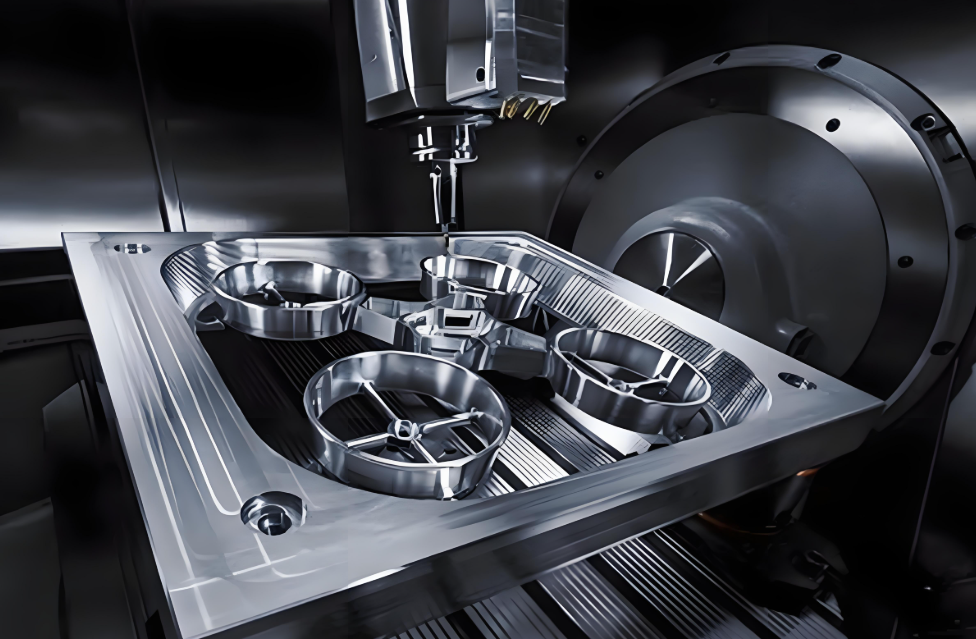
Five-axis CNC machining has significant advantages in making complex internal cavity structures, mainly reflected in the following aspects:
1. Improved accessibility
Multi-angle machining: Five-axis machines are able to process in multiple directions at the same time, which means that the tool can enter the workpiece from different angles and can easily reach complex internal cavities and hard-to-reach areas.
Reduced re-fixturing: Since multiple processing steps can be completed on the same station, the number of re-fixturing of the workpiece is reduced, thereby improving processing efficiency.
2. Higher processing accuracy
Reduced errors: Five-axis machining can perform multiple cuts in the same coordinate system, reducing errors caused by changing fixtures or repositioning, and ensuring high-precision processing results.
Complex geometries: Suitable for processing complex geometries, such as curved surfaces and bevels, it can achieve higher surface finish and finer details.
3. Flexibility and design freedom
Design complexity: Designers can create more complex internal structures, such as complex channels, holes, and curves, without worrying about being unable to achieve them due to processing limitations.
Adapt to different materials: Five-axis machining can handle a variety of materials, including metals, plastics and composites, and has strong adaptability.
4. Reduce the need for post-processing
Less post-processing: Since five-axis machining can directly achieve higher surface quality, the need for post-processing (such as grinding and polishing) is usually reduced, saving time and cost.
One-piece molding: Complex internal cavity structures can be processed in one go, reducing the need for assembly or adding subsequent processes.
5. Improve processing efficiency
Reduce processing time: Due to the reduction in the time for fixture replacement and workpiece repositioning, the overall processing efficiency is significantly improved.
Versatility: Five-axis machine tools can perform multiple operations such as cutting, milling, drilling, etc., which improves the flexibility of processing.
Summary
Five-axis CNC machining provides high accessibility, high precision and design flexibility in making complex internal cavity structures, which can effectively meet the needs of modern manufacturing for complex parts. This processing method not only improves production efficiency, but also reduces the need for post-processing, making it an ideal choice for high-demand part processing.
What types of appearance prototypes are suitable for ABS and PMMA materials?
The Prototype Industry: The Cornerstone and New Journey of Innovation in the Manufacturing Industry
Related Article

This article analyzes the prospects of the custom parts industry from three aspects: market demand, technological innovation, and challenges and opportunities, with specific cases to illustrate its development trends.
Analysis of the Prospects of the Custom Parts Industry
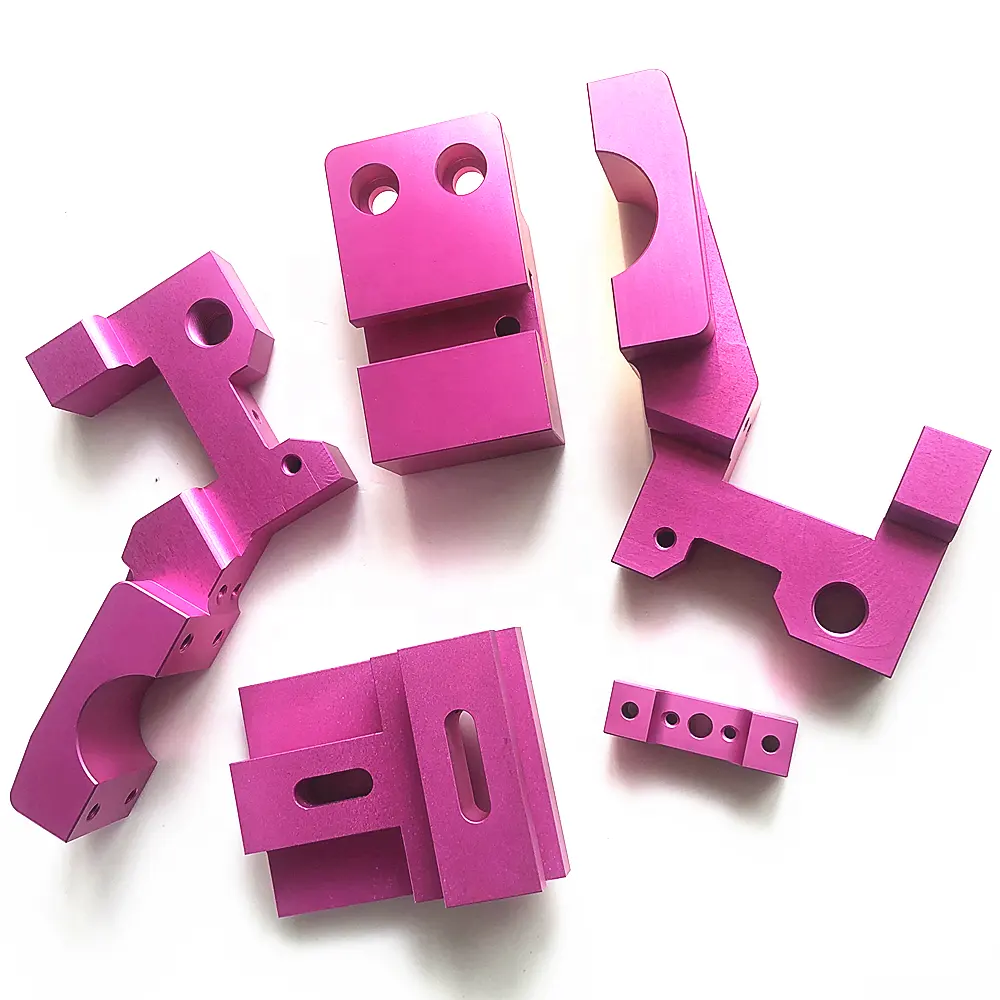
This article details CNC precision technology, covering its definition, applications in aerospace and electronics, advantages like high precision and automation, and its promising future in the manufacturing industry.
CNC Precision Technology: The Core Code of Modern Manufacturing and Its Infinite Potential
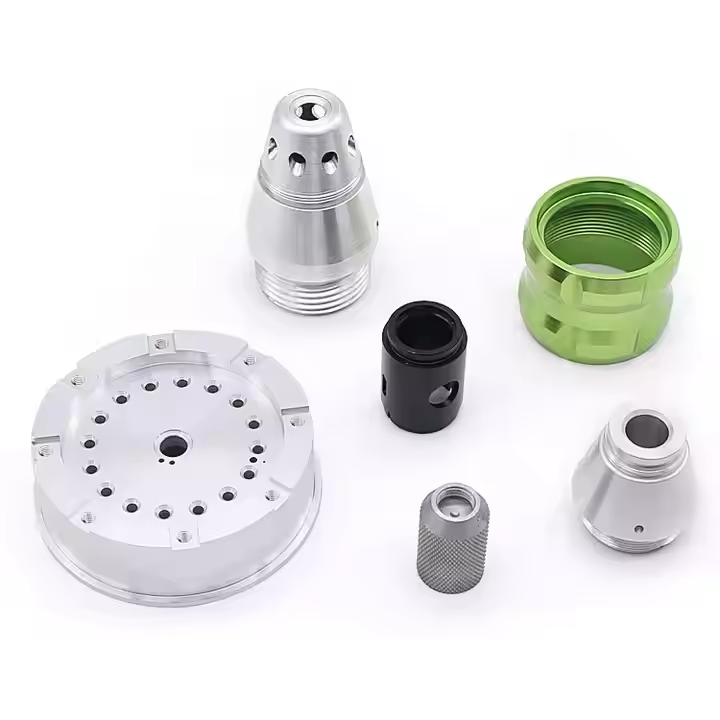
This part focuses on the shipbuilding industry, presenting a case of CNC technology application in the processing of large - scale ship propellers. It showcases how CNC technology addresses challenges in this field, improving processing efficiency and product quality, thus highlighting its significance in ship manufacturing.
CNC Technology Application Cases (Part 2)
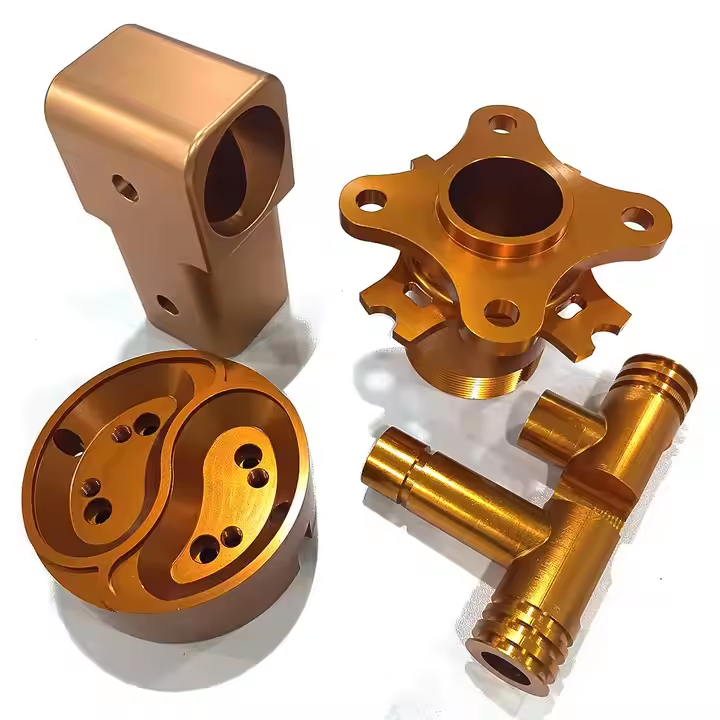
This article focuses on the medical device manufacturing and 3C product manufacturing fields. Through specific cases, it elaborates on the remarkable achievements of CNC technology in manufacturing complex and precise components and improving product quality, demonstrating its crucial role in related industries.
CNC Technology Application Cases (Part 1)