
Fineblanking process-high-tech manufacturing process
author: DJ-02
2024-12-24

精冲-Fineblanking
Fineblanking is a high-tech stamping technology used to produce stamping parts with small size, large load and high precision. It is a precision blanking method developed on the basis of general stamping technology. The fineblanking process includes three forces: blanking force FG, gear ring force FR, and counter pressure FS, which distinguishes fineblanking technology from other ordinary stamping or blanking processes. The workpiece processed by fineblanking has many advantages such as good verticality and bright cut surface without tearing. Because the workpiece is clamped by the blank holder ring in the mold during the fineblanking process, the gap is very small and the parts are particularly flat. Usually, the cut edge of the parts does not require subsequent processing, with small warping and good interchangeability.
After combining processing methods such as upsetting, countersinking, semi-punching and extrusion, many complex parts originally made by general punching, forging, machining, casting and powder metallurgy are gradually replaced. Multifunctional parts can be assembled after punching without subsequent processing, and the production efficiency and cost advantages are very obvious.
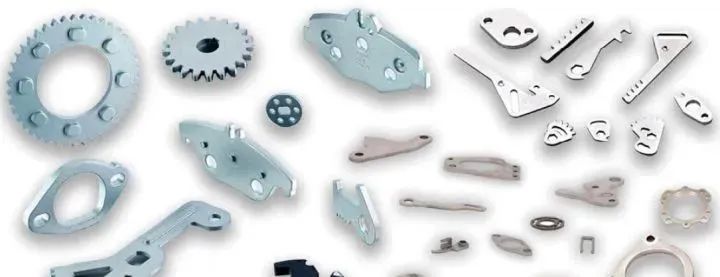
Which parts are suitable for fine blanking technology?
Fine blanking is widely used in safety parts of the automotive industry to ensure stable operation and no mistakes in harsh and dangerous situations. The production of automobile fine blanking parts is mainly based on strong edge pressing precision blanking. The geometric shape, dimensional tolerance, form and position tolerance and shear surface quality are much higher than those of ordinary blanking parts. There are more than 200 common automotive parts: powertrain parts, namely gearbox steel sheets, engine sprocket chains, brake components, shock absorber parts and camshaft adjustment device parts; seat height adjusters, seat angle adjusters, seat slide rail parts; seat belt tensioners, airbag locks; diesel engine injector nozzle chucks, multi-V belt pulleys, air conditioning compressor valve plates, torque converter clutch steel sheets and clutch gear hubs, planetary carriers and drive discs, brake discs, parking gears and ratchets, clutch gear hubs; brake pads and wheel hub trays in chassis.
Parts similar to the above parts in industries such as machinery, medical, electronics, hardware, and electrical tools can also be produced by fine blanking.
What are the common challenges in CNC machining?
Plastic Parts 3D Printing Manufacturing: Technological Frontiers and Breakthroughs from Dilemmas
Related Article

This article analyzes the prospects of the custom parts industry from three aspects: market demand, technological innovation, and challenges and opportunities, with specific cases to illustrate its development trends.
Analysis of the Prospects of the Custom Parts Industry
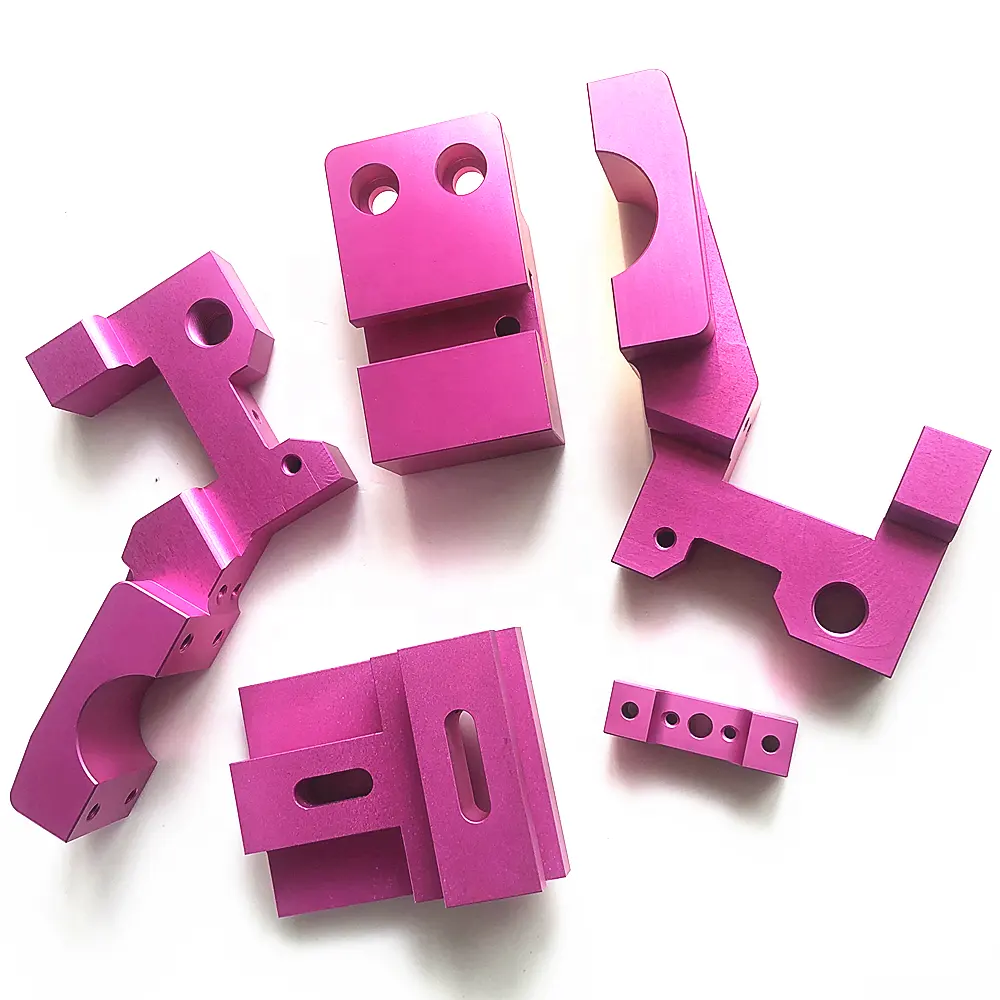
This article details CNC precision technology, covering its definition, applications in aerospace and electronics, advantages like high precision and automation, and its promising future in the manufacturing industry.
CNC Precision Technology: The Core Code of Modern Manufacturing and Its Infinite Potential
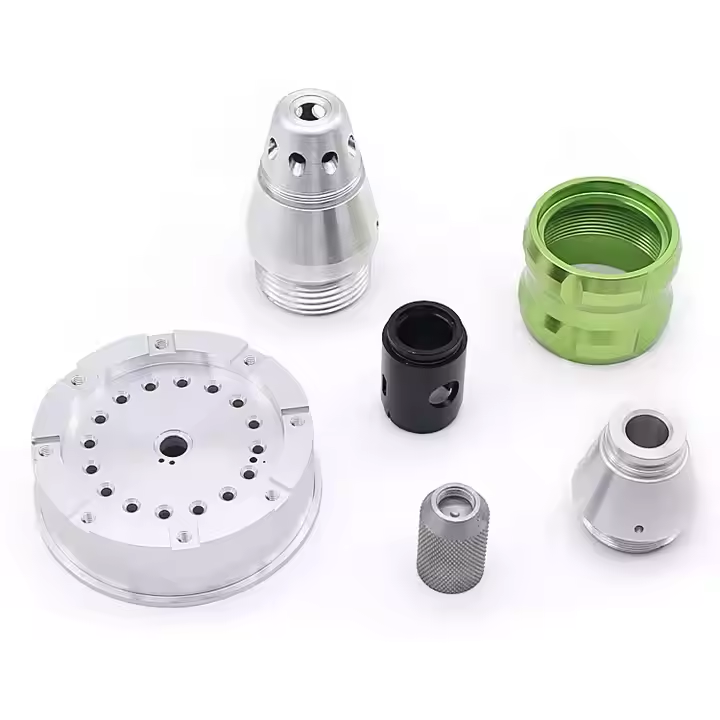
This part focuses on the shipbuilding industry, presenting a case of CNC technology application in the processing of large - scale ship propellers. It showcases how CNC technology addresses challenges in this field, improving processing efficiency and product quality, thus highlighting its significance in ship manufacturing.
CNC Technology Application Cases (Part 2)
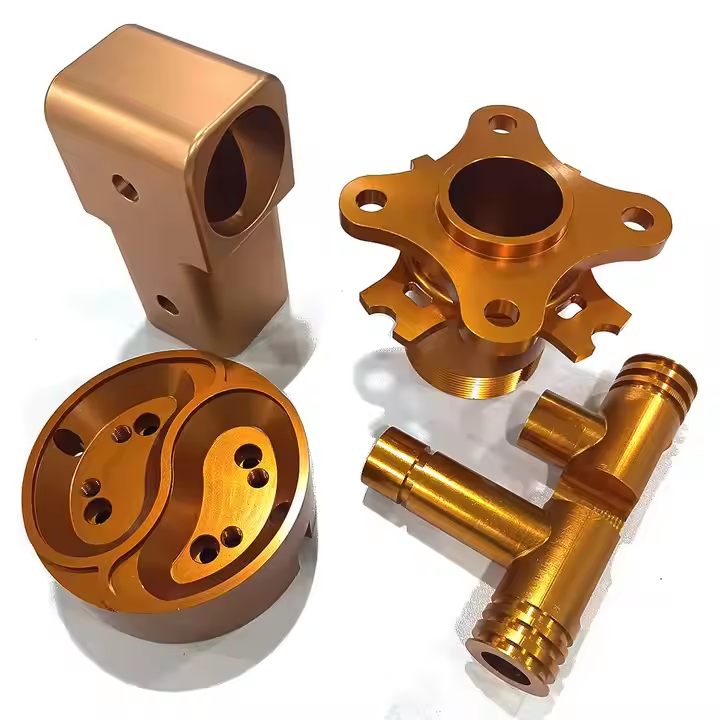
This article focuses on the medical device manufacturing and 3C product manufacturing fields. Through specific cases, it elaborates on the remarkable achievements of CNC technology in manufacturing complex and precise components and improving product quality, demonstrating its crucial role in related industries.
CNC Technology Application Cases (Part 1)