
Common knowledge you must know about CNC engraving machine processing (1)
author: DJ-02
2024-10-18
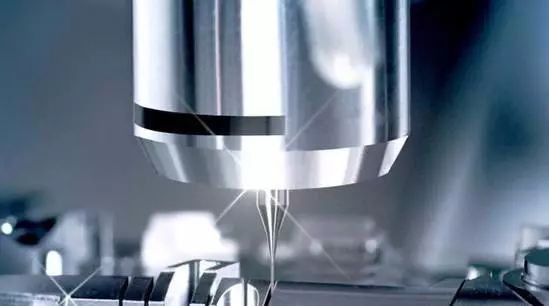
1. What is the main difference between CNC engraving and CNC milling?
Both CNC engraving and CNC milling use the milling principle. The main difference is in the tool diameter used. The commonly used tool diameter range for CNC milling is 6-40 mm, while the tool diameter for CNC engraving is 0.2-3 mm.
2. Can CNC milling only do roughing, and CNC engraving only do fine processing?
Before answering this question, let's first understand the concept of the process. The roughing process has a large amount of processing, and the fine processing has a small amount of processing, so some people habitually regard roughing as "heavy cutting" and fine processing as "light cutting". In fact, roughing, semi-finishing, and fine processing are process concepts, which represent different processing stages. Therefore, the accurate answer to this question is that CNC milling can do heavy cutting and light cutting, while CNC engraving can only do light cutting.
3. Can CNC engraving do rough processing of steel materials?
Whether CNC engraving can process a certain material depends mainly on the size of the tool that can be used. The tool used in CNC engraving determines its maximum removal capacity. If the shape of the mold allows the use of a tool with a diameter greater than 6 mm, it is strongly recommended to use CNC milling first, and then use engraving to remove the remaining material.
Factors to consider when selecting materials for CNC machining (1)
Stainless steel material processing difficulties
Related Article

This article analyzes the prospects of the custom parts industry from three aspects: market demand, technological innovation, and challenges and opportunities, with specific cases to illustrate its development trends.
Analysis of the Prospects of the Custom Parts Industry
This article details CNC precision technology, covering its definition, applications in aerospace and electronics, advantages like high precision and automation, and its promising future in the manufacturing industry.
CNC Precision Technology: The Core Code of Modern Manufacturing and Its Infinite Potential
This part focuses on the shipbuilding industry, presenting a case of CNC technology application in the processing of large - scale ship propellers. It showcases how CNC technology addresses challenges in this field, improving processing efficiency and product quality, thus highlighting its significance in ship manufacturing.
CNC Technology Application Cases (Part 2)
This article focuses on the medical device manufacturing and 3C product manufacturing fields. Through specific cases, it elaborates on the remarkable achievements of CNC technology in manufacturing complex and precise components and improving product quality, demonstrating its crucial role in related industries.
CNC Technology Application Cases (Part 1)