
What are the differences in thickness ranges between different types of chromium plating, such as trivalent chromium and hexavalent chromium?
author: DJ-02
2025-01-23

There are some differences in thickness ranges and characteristics between different types of chromium plating, such as trivalent chromium and hexavalent chromium. Here is a comparison of the two types of chromium plating:
1. Hexavalent chromium plating
Recommended thickness: Usually between 5-25 microns.
Characteristics:
Corrosion resistance: Hexavalent chromium plating has good corrosion resistance and wear resistance and is commonly used in automotive, home appliances, and tools.
Gloss: Provides high gloss and decorative effects, suitable for applications that require beautiful appearance.
Environmental impact: Hexavalent chromium is considered toxic and potentially harmful to the environment and health, so its use is restricted in many countries and regions.
2. Trivalent chromium plating
Recommended thickness: Usually between 1-20 microns.
Characteristics:
Corrosion resistance: Trivalent chromium plating has relatively good corrosion resistance, but generally not as good as hexavalent chromium plating. Its wear resistance is also moderate.
Gloss: Trivalent chromium coatings usually have a lower gloss and are not as bright as hexavalent chromium coatings, but the gloss can be improved through post-treatment.
Environmentally friendly: Trivalent chromium is considered a more environmentally friendly choice because it is less toxic and suitable for use in environmentally stringent applications.
Summary
Thickness range: Hexavalent chromium coatings have a wider thickness range, usually required between 5-25 microns, while trivalent chromium coatings are generally thinner, usually between 1-20 microns.
Selection basis: When choosing the type of chrome coating, it is necessary to weigh corrosion resistance, wear resistance, appearance requirements and environmental factors. For applications that require high corrosion resistance and gloss, hexavalent chromium coatings may be preferred; while in places where environmental protection and safety are important, trivalent chromium coatings will be a better choice.
In actual applications, it is recommended to conduct a detailed evaluation and selection based on specific needs and standards.
Trivalent chromium passivation
What is the optimal range of chrome plating thickness for different application scenarios?
Related Article

This article analyzes the prospects of the custom parts industry from three aspects: market demand, technological innovation, and challenges and opportunities, with specific cases to illustrate its development trends.
Analysis of the Prospects of the Custom Parts Industry
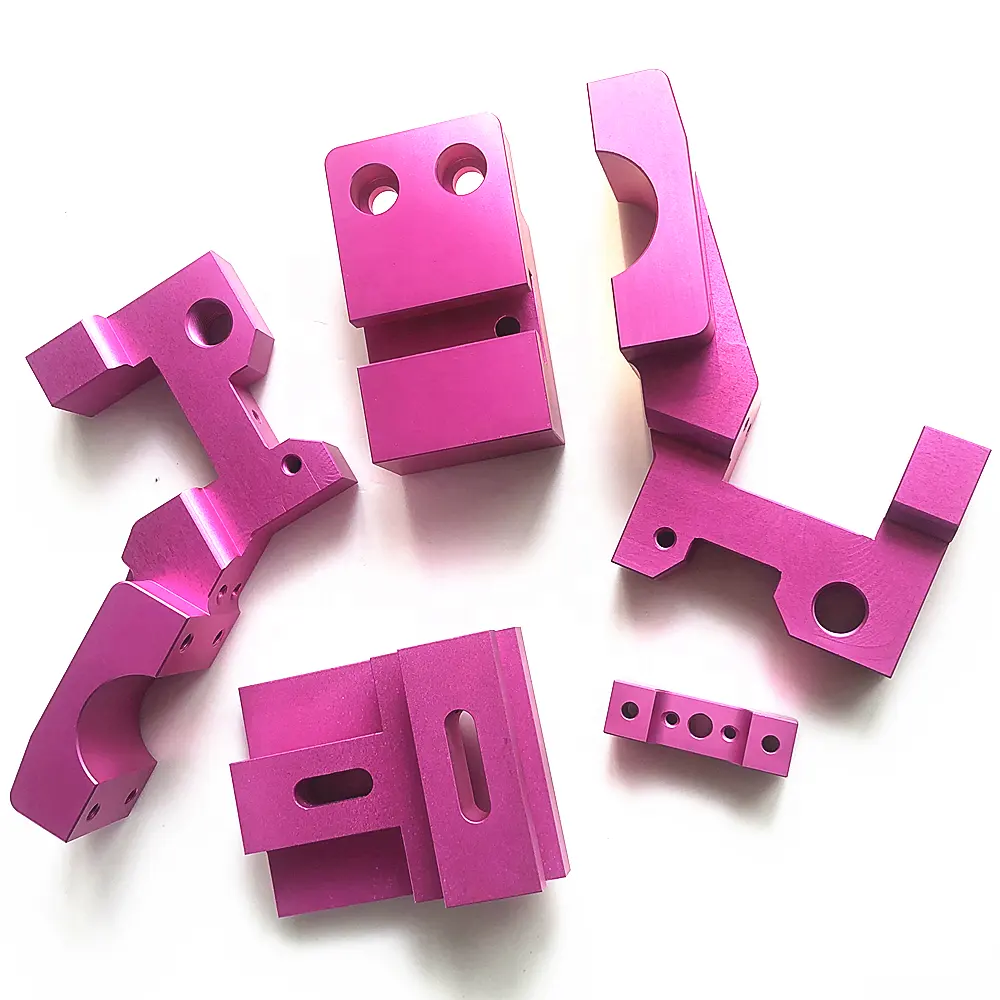
This article details CNC precision technology, covering its definition, applications in aerospace and electronics, advantages like high precision and automation, and its promising future in the manufacturing industry.
CNC Precision Technology: The Core Code of Modern Manufacturing and Its Infinite Potential
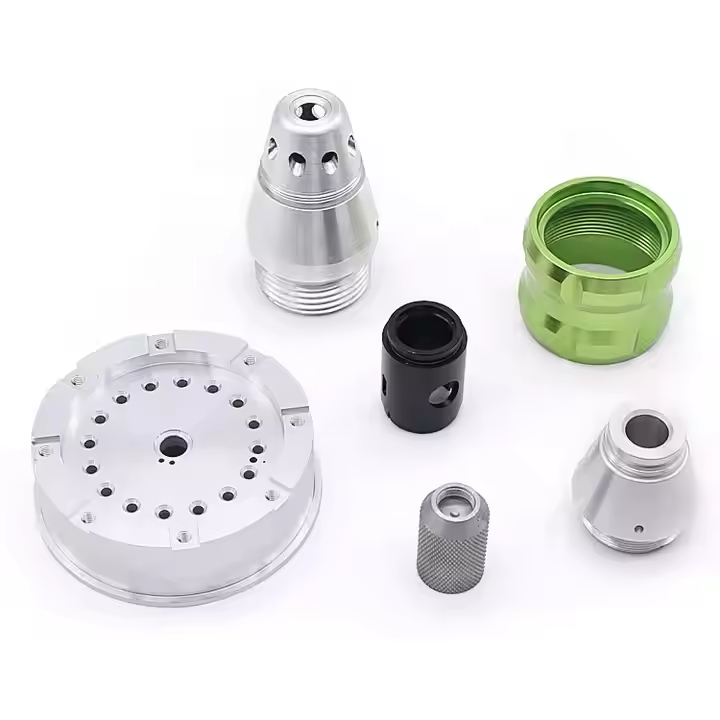
This part focuses on the shipbuilding industry, presenting a case of CNC technology application in the processing of large - scale ship propellers. It showcases how CNC technology addresses challenges in this field, improving processing efficiency and product quality, thus highlighting its significance in ship manufacturing.
CNC Technology Application Cases (Part 2)
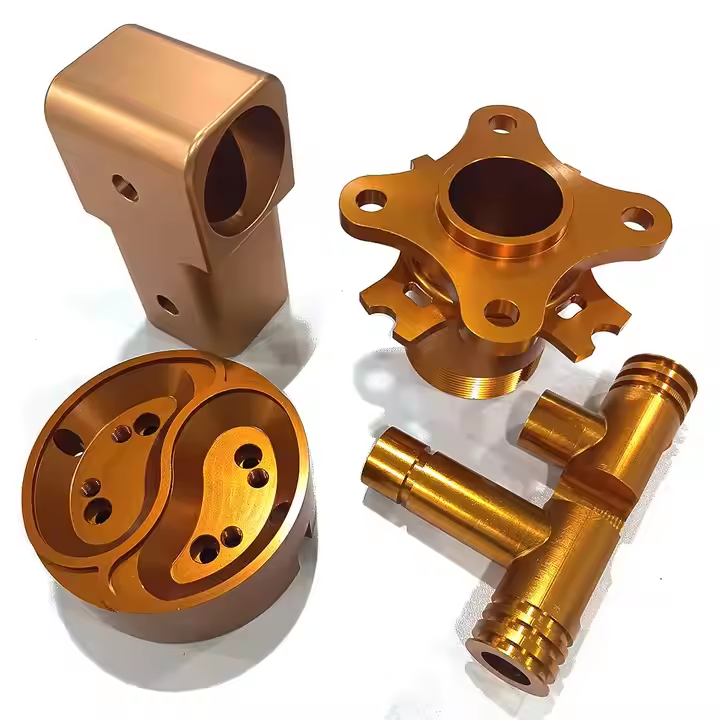
This article focuses on the medical device manufacturing and 3C product manufacturing fields. Through specific cases, it elaborates on the remarkable achievements of CNC technology in manufacturing complex and precise components and improving product quality, demonstrating its crucial role in related industries.
CNC Technology Application Cases (Part 1)