
What temperatures are required for quenching and tempering?
author: DJ-02
2025-01-06
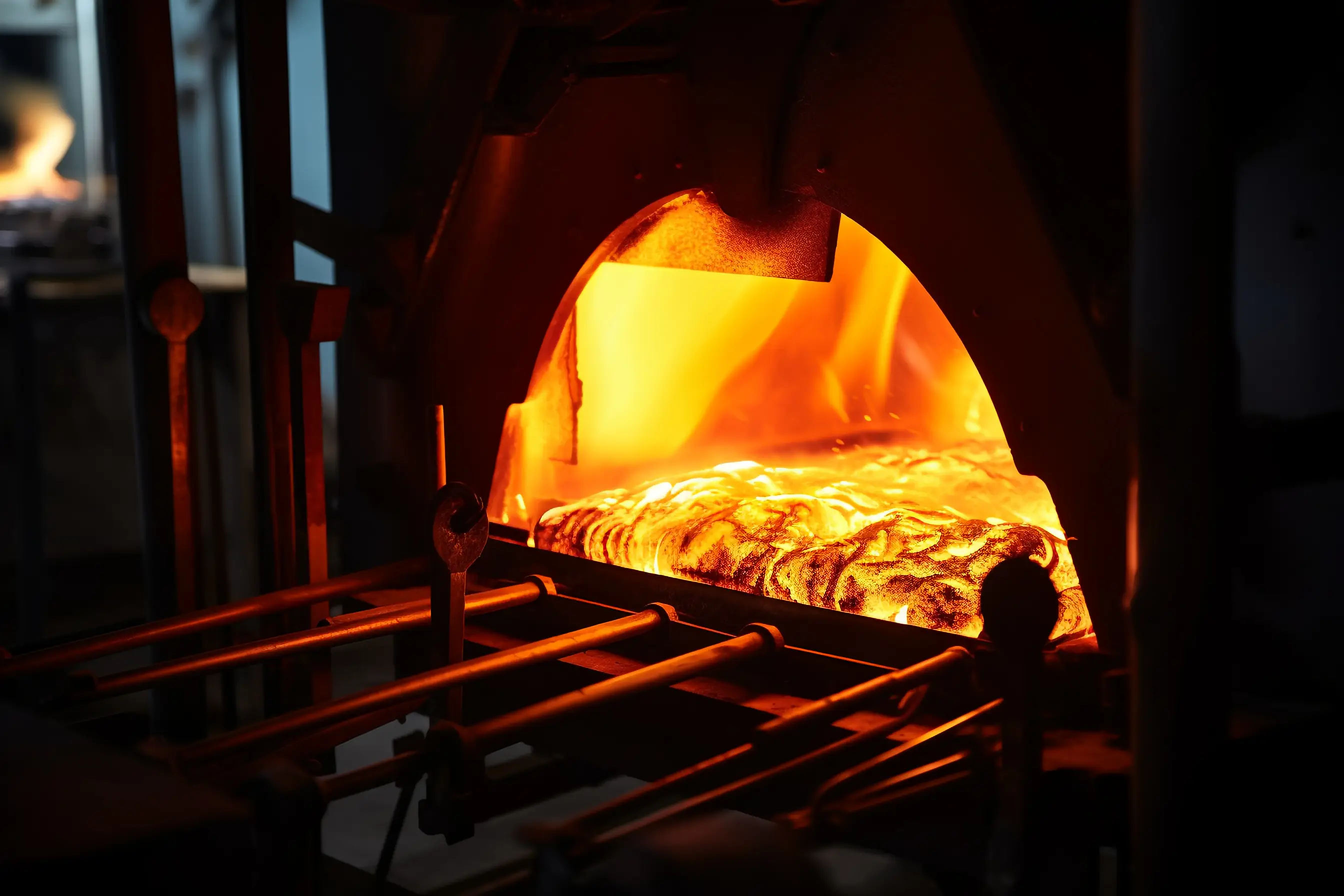
The temperatures for quenching and tempering depend on the material used and the hardness and toughness required. Here are the temperature ranges for general situations:
1. Quenching
Temperature range: Usually between 800°C and 900°C (about 1470°F to 1650°F).
Specific temperature: For example, carbon steel is often quenched at around 850°C (1560°F), while alloy steel may be quenched at higher temperatures.
2. Tempering
Temperature range: Usually between 150°C and 700°C (about 300°F to 1300°F).
Specific temperature:
Low-temperature tempering: about 150°C to 250°C (about 300°F to 480°F), suitable for improving toughness.
Medium-temperature tempering: about 300°C to 450°C (about 570°F to 840°F), is used to balance hardness and toughness.
High-temperature tempering: about 500°C to 700°C (about 930°F to 1300°F), can be used to reduce hardness and increase plasticity.
Specific quenching and tempering temperatures should be adjusted according to the material's composition and desired properties.
Current situation and development of CNC industry
Aluminum Parts: The Perfect Combination of Lightness and Practicality
Related Article

This article analyzes the prospects of the custom parts industry from three aspects: market demand, technological innovation, and challenges and opportunities, with specific cases to illustrate its development trends.
Analysis of the Prospects of the Custom Parts Industry
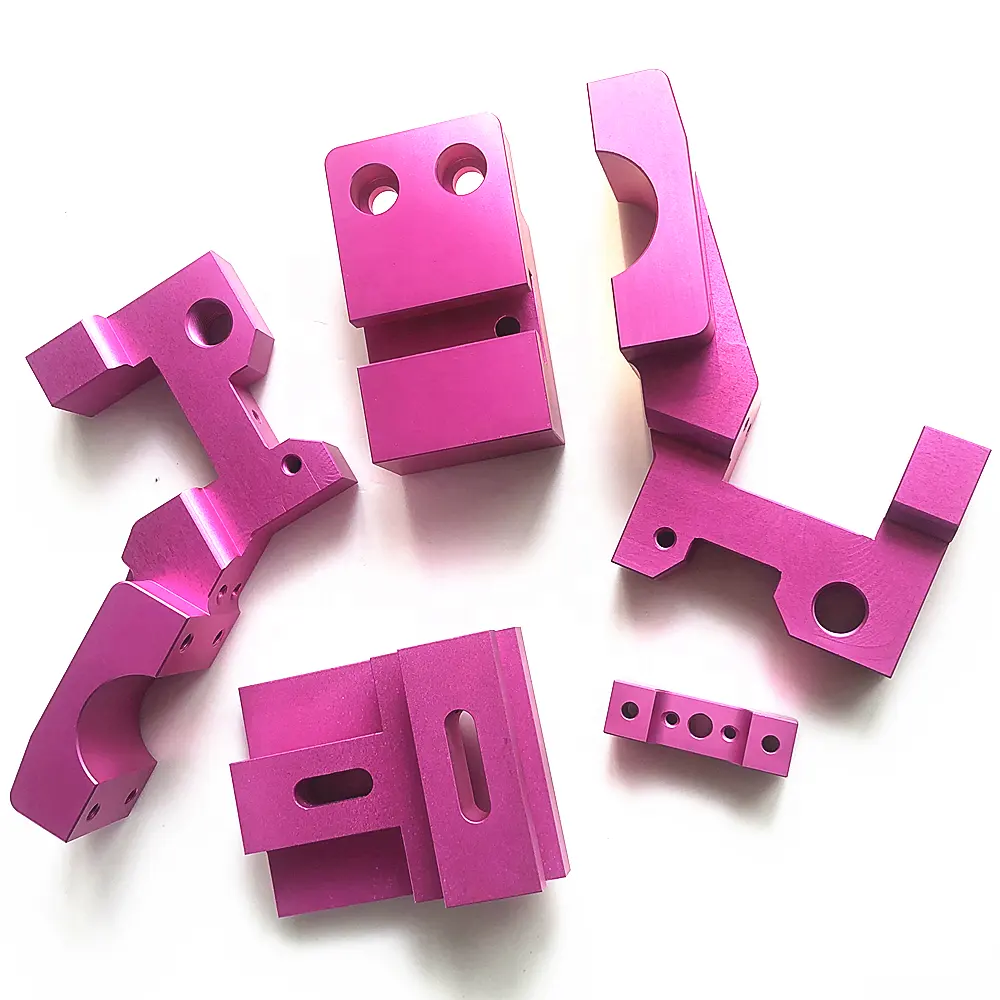
This article details CNC precision technology, covering its definition, applications in aerospace and electronics, advantages like high precision and automation, and its promising future in the manufacturing industry.
CNC Precision Technology: The Core Code of Modern Manufacturing and Its Infinite Potential
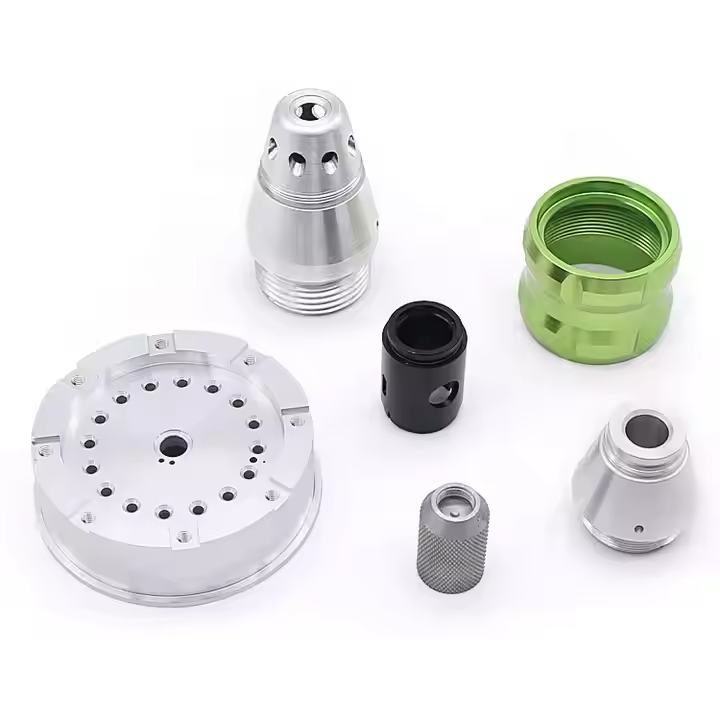
This part focuses on the shipbuilding industry, presenting a case of CNC technology application in the processing of large - scale ship propellers. It showcases how CNC technology addresses challenges in this field, improving processing efficiency and product quality, thus highlighting its significance in ship manufacturing.
CNC Technology Application Cases (Part 2)
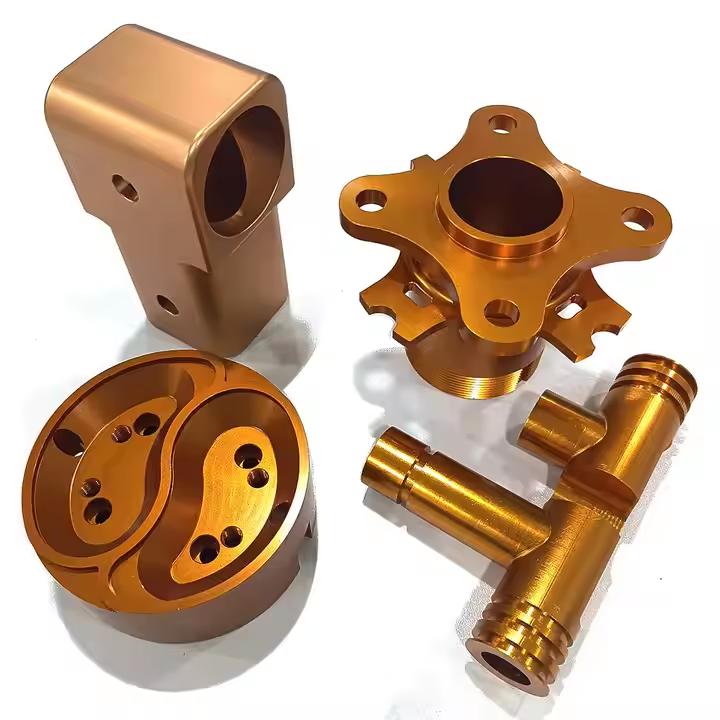
This article focuses on the medical device manufacturing and 3C product manufacturing fields. Through specific cases, it elaborates on the remarkable achievements of CNC technology in manufacturing complex and precise components and improving product quality, demonstrating its crucial role in related industries.
CNC Technology Application Cases (Part 1)