
To manufacture aluminum alloy samples, you must know these processes!
author: DJ-03
2024-10-09
To manufacture aluminum alloy samples, you must know these processes!
In the manufacture of aluminum alloy samples, there are many processes to choose from. Let's introduce them in detail.
1. Casting process

1. Sand casting:
- - Features: low cost, strong adaptability, and can manufacture aluminum alloy samples with extremely complex shapes. However, the precision of the castings is relatively low, and the surface quality is also relatively general.
- - Applicable situation analysis: It is suitable for the manufacture of samples with complex shapes and small batches that do not require high precision and surface quality.
2. Metal mold casting:
- - Features analysis: The castings have high precision, good surface quality, and relatively high production efficiency. However, the mold cost is high, so it is not suitable for small batch production.
- - Applicable situation interpretation: For aluminum alloy samples with certain requirements for precision and surface quality and moderate batches, metal mold casting is more suitable.
3. Die casting:
- - Features: It can produce aluminum alloy samples with complex shapes, high dimensional accuracy and smooth surface. The production efficiency is extremely high, which is very suitable for mass production.
- - Applicable situation description: If the accuracy and surface quality requirements of the sample are very high, and there is a possibility of large-scale production in the future, then the die casting process can be considered. However, for the manufacture of small batches of samples, the cost will be higher.

2. plastic processing technology
1. Forging:
- - Features: Forging can improve the internal structure of aluminum alloys, thereby improving their mechanical properties. Forged samples have high strength and good toughness, but the shape is relatively simple.
- - Applicable situation explanation: It is suitable for the manufacture of aluminum alloy samples with high mechanical properties requirements and not too complex shapes.
2. Extrusion:
- - Features interpretation: It can produce aluminum alloy profiles of various cross-sectional shapes, with high dimensional accuracy and high production efficiency.
- - Applicable situation points out: If the sample is in the shape of a profile, the extrusion process is a good choice.

3.mechanical processing technology
1. CNC machining:
- - Features: It can accurately process aluminum alloy samples of various complex shapes with high precision and good surface quality. However, the material utilization rate is relatively low and the processing cost is high.
- - Applicable situation emphasis: CNC machining is a commonly used process for aluminum alloy samples with complex shapes and high precision requirements.
2. Electrospark machining:
- - Features: It can process very complex shapes, especially suitable for processing high-hardness materials. However, the processing speed is slow and the cost is high.
- - Applicable situation tips: When the shape of the aluminum alloy sample is very complex and it is difficult to achieve with other processing methods, electrospark machining can be considered.

4.special processing technology
1. 3D printing:
- - Features: It can quickly produce aluminum alloy samples with complex shapes without molds, which greatly shortens the development cycle. However, the mechanical properties of 3D printed aluminum alloy samples may be slightly lower than those of traditional processes.
- - Summary of applicable situations: 3D printing has great advantages for the manufacturing of aluminum alloy samples with complex shapes, small batches, and urgent needs.
When choosing the manufacturing process of aluminum alloy samples, it is necessary to make comprehensive considerations based on specific needs and situations and choose the most suitable process to ensure the quality and performance of the samples. ?
The development history of CNC machine tools
What is Sheet Metal Processing?
Related Article

This article analyzes the prospects of the custom parts industry from three aspects: market demand, technological innovation, and challenges and opportunities, with specific cases to illustrate its development trends.
Analysis of the Prospects of the Custom Parts Industry
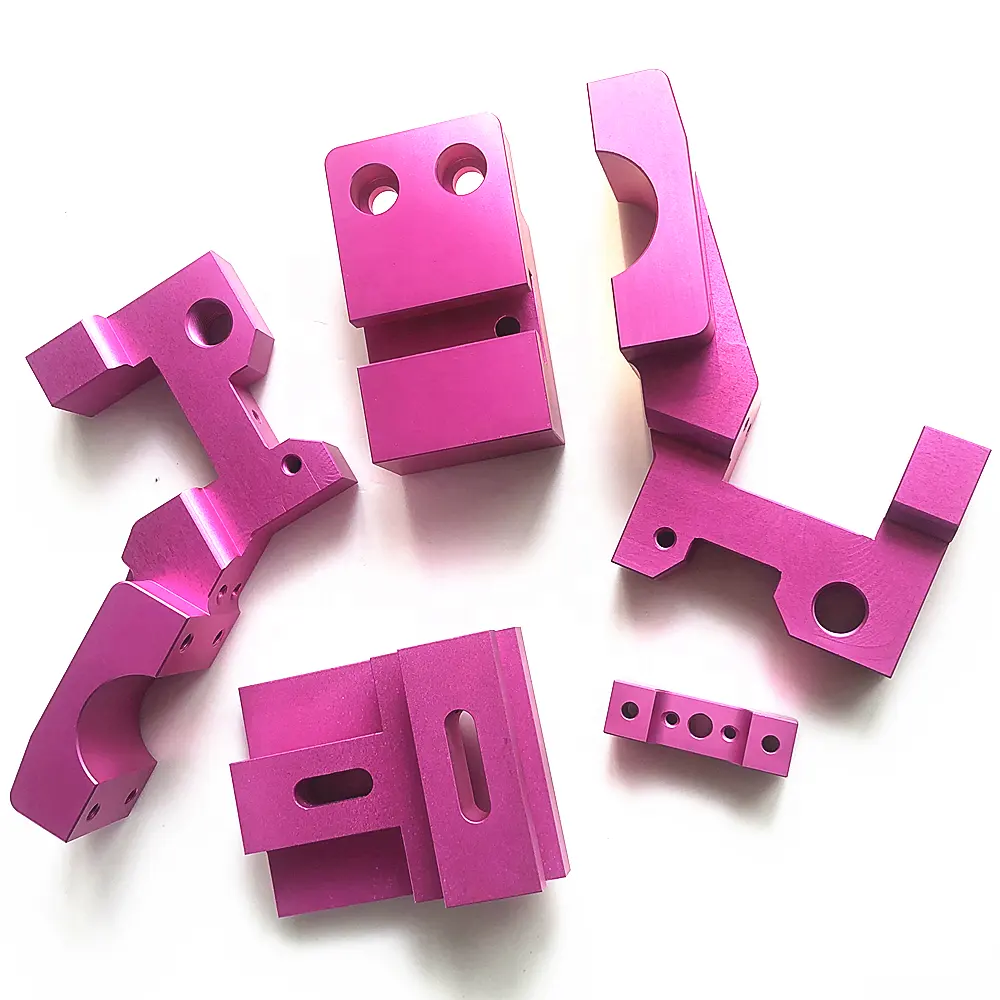
This article details CNC precision technology, covering its definition, applications in aerospace and electronics, advantages like high precision and automation, and its promising future in the manufacturing industry.
CNC Precision Technology: The Core Code of Modern Manufacturing and Its Infinite Potential
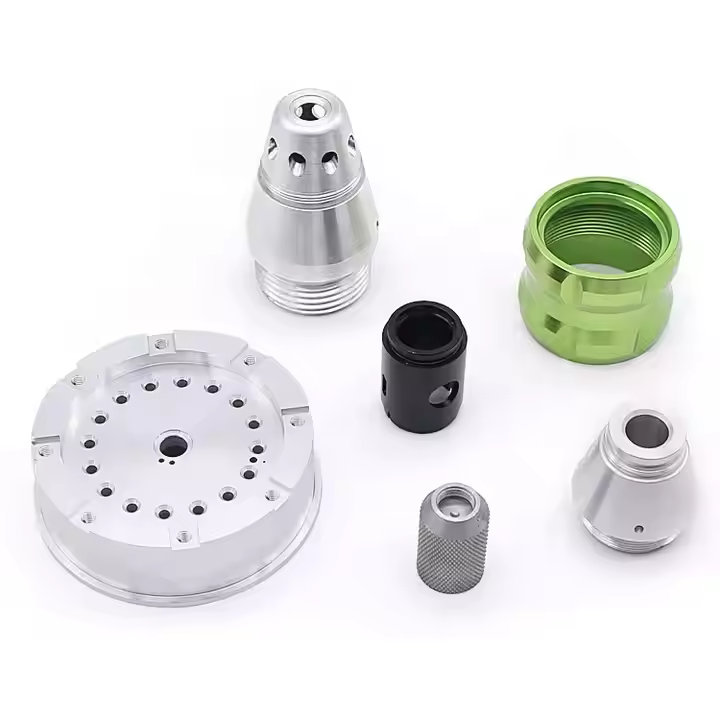
This part focuses on the shipbuilding industry, presenting a case of CNC technology application in the processing of large - scale ship propellers. It showcases how CNC technology addresses challenges in this field, improving processing efficiency and product quality, thus highlighting its significance in ship manufacturing.
CNC Technology Application Cases (Part 2)
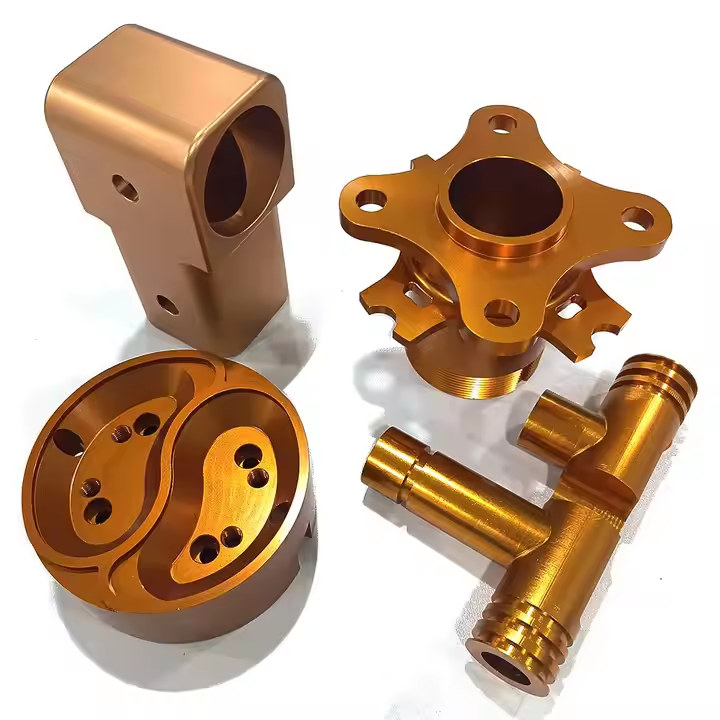
This article focuses on the medical device manufacturing and 3C product manufacturing fields. Through specific cases, it elaborates on the remarkable achievements of CNC technology in manufacturing complex and precise components and improving product quality, demonstrating its crucial role in related industries.
CNC Technology Application Cases (Part 1)